Zimbabwean Court Acquits Journalist of Charges Linked to Alleged Hostility Toward President Mnangagwa
A Zimbabwean court has acquitted journalist Blessed Mhlanga of charges accusing him of transmitting messages inciting hostility against President Emmerson Mnangagwa, in a ruling hailed by press freedom advocates as a victory for independent journalism.
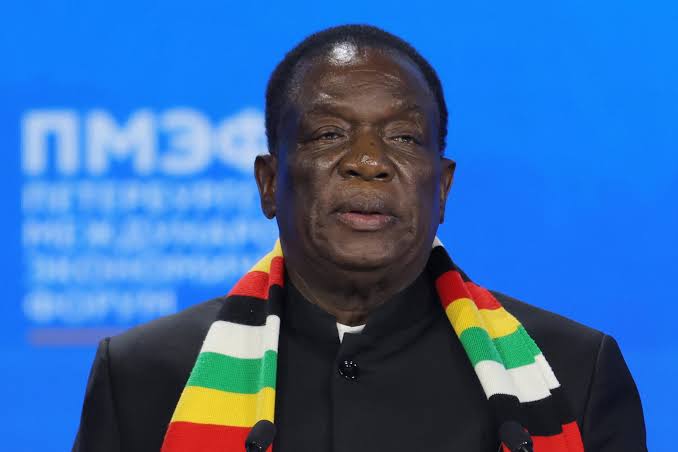
A Zimbabwean court has acquitted prominent journalist Blessed Mhlanga of charges alleging that he transmitted messages intended to incite hostility against President Emmerson Mnangagwa, delivering a landmark ruling that has been welcomed by media freedom advocates and human rights organizations.
The decision, handed down by the High Court in Harare on Monday, ends months of legal uncertainty for the journalist, who had faced prosecution under Zimbabwe's controversial cybercrime legislation after broadcasting interviews with a vocal government critic. The court ruled that prosecutors had failed to establish sufficient evidence to prove that Mhlanga had committed any criminal offence. (Reuters)
Mhlanga, a senior reporter with the independent broadcaster Heart & Soul TV (HStv), was arrested earlier this year after airing interviews with Blessed Geza, a war veteran and outspoken critic of President Mnangagwa's administration.
Authorities alleged that the interviews contained messages capable of inciting public hostility toward the president and accused Mhlanga of unlawfully transmitting material likely to provoke violence or public disorder.
The journalist consistently denied the allegations, arguing that his role was limited to reporting matters of public interest and providing a platform for differing political opinions.
In delivering its judgment, the High Court found that prosecutors had not demonstrated that Mhlanga personally endorsed or encouraged the views expressed during the interviews.
The judge ruled that simply broadcasting statements made by an interview subject, without evidence of intent to incite violence or hatred, did not constitute a criminal offence under Zimbabwean law.
The court further emphasized that journalists cannot automatically be held liable for opinions expressed by guests during news interviews unless prosecutors can prove active participation in promoting unlawful conduct.
Legal experts described the ruling as an important affirmation of constitutional protections for freedom of expression and media independence.
Outside the courthouse, Mhlanga expressed relief at the verdict and thanked his legal team, fellow journalists, and civil society groups that had campaigned for his release.
"This judgment is not just about me," he told reporters. "It is about protecting journalism and ensuring that reporters are able to carry out their professional responsibilities without fear of criminal prosecution."
He added that independent journalism plays a vital role in strengthening democracy by providing citizens with access to diverse viewpoints and holding those in power accountable.
Media organizations quickly welcomed the decision.
The Zimbabwe Union of Journalists described the acquittal as a victory for press freedom and called on authorities to end what it characterized as the growing use of criminal laws against members of the media.
International rights organizations echoed those sentiments, arguing that the case illustrated the challenges journalists continue to face while reporting on politically sensitive issues in Zimbabwe.
Several advocacy groups have repeatedly criticized Zimbabwe's Cyber and Data Protection Act, saying its provisions are sometimes applied too broadly and risk discouraging investigative journalism and open political debate.
Government officials, however, have defended the legislation, insisting that it is necessary to combat misinformation, cybercrime, hate speech, and online incitement to violence.
The prosecution had argued that Mhlanga knowingly disseminated material that could inflame political tensions and undermine public order.
Defence lawyers countered that criminalizing journalistic interviews would have a chilling effect on independent reporting and violate constitutional guarantees protecting freedom of expression.
The court ultimately sided with the defence, concluding that prosecutors failed to demonstrate any criminal intent on Mhlanga's part.
The ruling comes at a politically sensitive time for Zimbabwe.
President Mnangagwa's government has faced growing criticism from opposition parties, civil society organizations, and international observers over governance, economic challenges, and restrictions on political freedoms.
Journalists operating in the country have periodically reported arrests, intimidation, and legal action linked to their reporting, particularly on issues involving politics, corruption, and human rights.
Media watchdogs have consistently ranked Zimbabwe below many African countries in global press freedom assessments, citing concerns over restrictive legislation and pressure on independent news organizations.
Despite recent reforms introduced by the government, critics argue that reporters continue to operate in an environment where legal uncertainty can discourage robust investigative journalism.
The acquittal of Mhlanga may therefore represent an important judicial precedent.
Legal analysts say the judgment reinforces the principle that journalists should not be prosecuted merely for reporting controversial statements made by news sources, provided they do not actively encourage unlawful conduct.
Some observers also believe the ruling demonstrates an increasing willingness by Zimbabwe's courts to scrutinize prosecutions involving freedom of expression.
While the government has not yet indicated whether it will appeal the decision, legal experts note that the High Court's reasoning could influence future cases involving journalists, broadcasters, and digital media platforms.
International media organizations welcomed the judgment while urging authorities to continue strengthening protections for press freedom.
They argued that independent journalism remains essential for democratic accountability, transparency, and informed public debate.
For Mhlanga, the verdict ends months of uncertainty that had drawn widespread attention both inside Zimbabwe and abroad.
For Zimbabwe's media industry, it provides renewed hope that courts will continue to uphold constitutional safeguards protecting journalists from criminal liability simply for carrying out their professional duties.
Although challenges facing press freedom in Zimbabwe remain significant, Monday's decision has been widely viewed as an encouraging step toward reinforcing judicial independence and protecting the role of the media in a democratic society.
As debate continues over the balance between national security, public order, and freedom of expression, the ruling is likely to serve as a reference point in future legal battles involving journalists and media organizations across Zimbabwe.