Zelensky Urges US and Elon Musk to Lift Starlink Restrictions, Says They Must Be on 'Right Side of History'
Ukrainian President Volodymyr Zelensky has urged the United States and Elon Musk to lift restrictions on Starlink's military satellite services, warning that the limitations are weakening Ukraine's defences against Russian drone attacks ahead of winter.
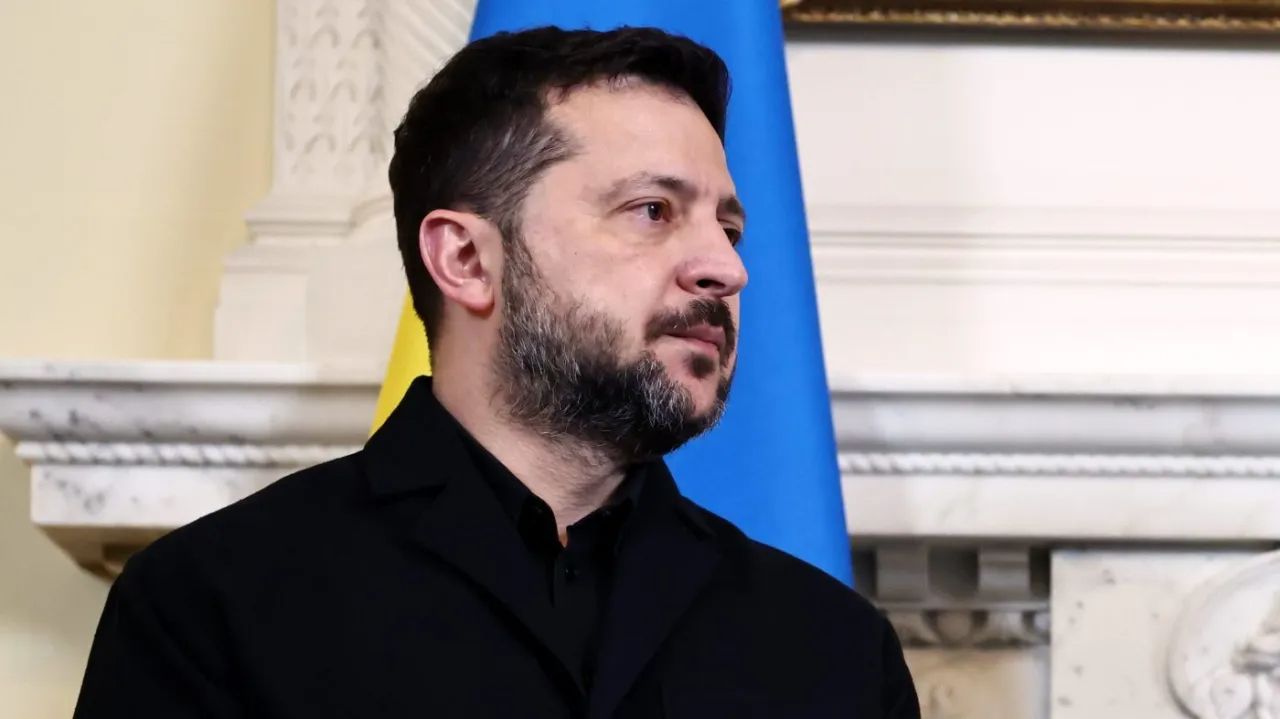
Ukrainian President Volodymyr Zelensky has appealed to the United States government and billionaire entrepreneur Elon Musk to immediately lift restrictions affecting Ukraine's military satellite communications system, warning that the limitations are putting civilian lives and critical energy infrastructure at risk.
In an emotional appeal on Sunday, November 15, 2026, Zelensky urged Washington and Musk's SpaceX to ensure that Ukraine receives the satellite connectivity required to defend itself against Russian attacks.
The Ukrainian leader called on the American government and the technology billionaire to be on the "right side of history", stressing that the protection of Ukrainian lives and energy infrastructure ahead of winter depended on restoring unrestricted access.
The appeal follows renewed disruptions affecting Starshield, the military-grade satellite communications service operated by SpaceX for the United States government and used by Ukrainian forces.
According to Zelensky, restrictions on the system have prevented Ukrainian interceptor drones from maintaining connections with their operators when travelling at speeds exceeding 161 kilometres per hour (100 miles per hour).
The development has raised serious concerns about Ukraine's ability to intercept Russian jet-powered Shahed drones, which have increasingly been deployed against electricity infrastructure, military positions and civilian areas.
In a statement shared on social media, Zelensky said he had instructed Ukraine's Ministry of Foreign Affairs, Ministry of Defence and the Presidential Office to work closely with their American counterparts and SpaceX to resolve the problem.
"We are counting on these restrictions being lifted. The protection of lives and Ukraine's energy infrastructure before winter directly depends on this," he said.
He added: "It is important to be on the right side of history. We need to help Ukraine."
The appeal underscores Ukraine's growing dependence on satellite technology as Russia intensifies its attacks on the country's infrastructure during the ongoing war (The Journal)
Starlink restrictions weaken Ukraine's drone defence capabilities
At the centre of the dispute is the reported speed restriction affecting Starshield, a military satellite communications system based on SpaceX's Starlink technology.
Ukraine relies on satellite connectivity to maintain communications between military units, coordinate battlefield operations and operate certain unmanned aerial vehicles.
The system has become particularly important because Ukrainian forces use interceptor drones to identify and destroy incoming Russian unmanned aircraft before they reach their intended targets.
However, Zelensky said the speed restrictions have created serious operational difficulties.
According to the Ukrainian president, interceptor drones lose communication with their operators when travelling faster than 161 kilometres per hour, making it difficult for them to catch up with Russian jet-powered Shahed drones.
The limitations have also affected Ukraine's ability to conduct certain mid-range drone operations against Russian military targets in occupied territories.
Zelensky previously told journalists that the restrictions appeared to affect the entire frontline and temporarily occupied Ukrainian territories.
He questioned the explanation provided by SpaceX, suggesting that the restrictions appeared to have political implications rather than being purely technical.
In an interview with international journalists, including representatives of The Guardian, Zelensky said the restrictions had been in place for several days and were affecting Ukrainian military operations.
He also instructed military officials to raise the issue with SpaceX, the Pentagon and the US State Department.
SpaceX and Elon Musk dispute responsibility for restrictions
The latest controversy has renewed tensions between Kyiv and SpaceX over the control and availability of satellite communications technology during wartime.
Starlink is SpaceX's commercial satellite internet service, while Starshield is its military-focused system supplied to the United States government. Although the technologies are related, their operational arrangements are different.
The distinction is important because Ukraine uses ordinary Starlink services extensively for battlefield communications, while Starshield provides military-grade connectivity for specific defence operations.
Elon Musk has previously argued that Starshield is controlled by the US government, suggesting that decisions concerning its military use are not solely his responsibility.
During an earlier disruption in October, Musk accused Ukrainian forces of violating Starlink's terms of service through the use of the technology for offensive drone operations.
SpaceX subsequently denied that it had introduced new restrictions when Zelensky reported renewed disruptions in November.
The company told reporters that there had been no change to its service, contradicting the Ukrainian president's account.
The conflicting explanations have made it difficult to establish precisely who authorised the restrictions, why they were imposed and whether they were intended to limit particular military applications.
US President Donald Trump has also denied responsibility for the restrictions. Following the October controversy, he said he had instructed Musk to restore the service.
The disagreement has consequently become more than a technical dispute, raising questions about the influence of private technology companies over military operations and national security decisions (BBC)
US senators demand answers from Musk and SpaceX
The controversy has also attracted attention in Washington, where Democratic lawmakers have demanded greater transparency concerning the restrictions affecting Ukraine's satellite communications.
On November 13, US Senators Jeanne Shaheen and Chris Coons sent a letter to Musk requesting that SpaceX preserve all documents, communications and electronically stored information relating to Starlink and Starshield operations in Ukraine.
The senators expressed concern that restrictions imposed between October 13 and October 24, followed by renewed disruptions on November 12, had affected Ukraine's ability to defend civilian population centres against Russian aerial attacks.
They also questioned the extent of SpaceX's control over communications infrastructure considered essential to US national security and the safety of American personnel.
The lawmakers requested records covering communications involving Musk, SpaceX executives, the White House and the US Department of Defense.
They directed the company to preserve relevant information dating back to September 1 and respond to their oversight inquiries by November 30.
The intervention reflects growing concerns among American lawmakers about the accountability of private companies providing strategically important services during international conflicts.
It also raises questions about whether the US government has sufficient safeguards to ensure continuity of critical military communications when those services depend on private-sector technology providers.
The senators' letter did not establish who was responsible for the restrictions but indicated that Congress intends to examine the circumstances surrounding the disruptions.
Russian attacks intensify as Ukraine approaches winter
Zelensky's appeal comes at a particularly difficult time for Ukraine as Russian forces continue targeting energy infrastructure ahead of the winter season.
Electricity substations, power facilities, railway infrastructure and other critical installations have been among the targets of repeated Russian drone and missile attacks.
Ukraine fears that further damage to its energy network could leave millions of people without reliable electricity, heating and essential services during the coldest months of the year.
On November 15, Ukrainian authorities reported Russian attacks on energy infrastructure across several regions, including Zaporizhzhia, Sumy, Odesa, Zhytomyr and Kirovohrad.
The attacks have increased pressure on Ukraine's air-defence systems, particularly as the country continues to face shortages of advanced American-made Patriot missile interceptors.
The use of relatively inexpensive drones by Russia has also created a difficult challenge for Ukrainian forces, which must deploy costly defensive systems and innovative interception technologies to protect important facilities.
Against this background, the reported Starshield restrictions have become a major concern for Kyiv.
Ukraine believes that maintaining reliable satellite connectivity is essential to coordinating its interceptor drones and preventing Russian unmanned aircraft from reaching their targets.
According to the Associated Press, Zelensky said Russia had launched more than 2,300 drones, 1,590 guided bombs and 15 missiles against Ukraine over the preceding week.
The figures underline the scale of the pressure facing Ukrainian defences.
Satellite technology becomes a strategic weapon in modern warfare
The dispute has highlighted the growing importance of commercial satellite technology in modern warfare.
Before the Russian invasion in February 2022, satellite internet was largely viewed as a means of providing connectivity to remote communities and locations with limited telecommunications infrastructure.
However, the war has demonstrated how satellite networks can become essential military assets, supporting battlefield communications, intelligence coordination, drone operations and logistical planning.
Starlink has played an important role in keeping Ukrainian military units and civilian institutions connected despite extensive damage to traditional telecommunications infrastructure.
Its importance has also created a strategic dilemma for governments that depend on privately owned technology platforms during military conflicts.
Unlike traditional military communication systems, commercial satellite networks operate under corporate policies, contractual arrangements and government agreements that can influence their availability.
The Ukrainian controversy has therefore raised a broader international question: should private technology companies have the power to influence the operational capabilities of countries defending themselves against military aggression?
For Ukraine, the immediate concern is ensuring that its forces retain access to the communications infrastructure required to protect civilians and critical national assets.
For the United States, the issue presents a challenge involving military procurement, national security and the relationship between government agencies and private technology providers.
Zelensky's appeal comes amid renewed US-led peace efforts
The Starlink dispute is unfolding alongside renewed diplomatic efforts by the Trump administration to negotiate an end to the Russia-Ukraine war.
American special envoys Steve Witkoff and Jared Kushner have been involved in discussions with Russian President Vladimir Putin and Ukrainian officials as Washington seeks to revive stalled peace negotiations.
Recent talks in Abu Dhabi produced no comprehensive breakthrough, although both sides agreed to pursue further discussions and arrangements for prisoner exchanges.
The diplomatic process remains complicated by disagreements over territorial concessions, security guarantees and Ukraine's future relationship with NATO.
Zelensky's appeal to Washington and Musk therefore comes at a sensitive moment when Kyiv is seeking continued American support while facing pressure to consider difficult compromises.
The Ukrainian president has maintained that his country needs reliable security guarantees and the necessary military capabilities to defend its sovereignty.
Any reduction in access to critical military technology could consequently affect not only Ukraine's battlefield position but also its negotiating strength.
Conclusion: Ukraine demands uninterrupted access to critical technology
Zelensky's appeal to the United States and Elon Musk highlights the growing dependence of modern warfare on privately operated technological infrastructure.
His warning that restrictions on Starshield could undermine Ukraine's ability to protect lives and energy facilities has placed renewed attention on the responsibilities of companies supplying critical military communications services.
While SpaceX disputes claim that it introduced new restrictions, Ukrainian officials insist that connectivity problems are affecting operations along the frontline.
The intervention by US senators further demonstrates that the issue is no longer simply a disagreement between Kyiv and a technology company. It has become a matter of international security, corporate accountability and American foreign policy.
As winter approaches and Russian attacks on Ukraine's infrastructure continue, Zelensky is seeking a clear resolution.
His message to Washington and Musk is straightforward: reliable communications are essential to Ukraine's defence, and decisions affecting those capabilities could have consequences far beyond the technology industry.