Zelensky to Press NATO for More Air Defense Systems After Intensified Russian Missile and Drone Strikes
Ukrainian President Volodymyr Zelensky is set to urge NATO allies to provide additional air defense systems following a wave of intensified Russian missile and drone attacks across Ukraine.
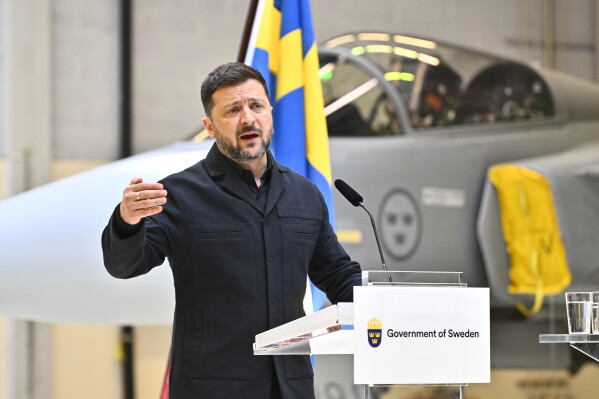
Ukrainian President Volodymyr Zelensky is expected to renew calls for additional air defense systems from NATO allies following one of the most intense waves of Russian missile and drone attacks in recent months, as Kyiv seeks stronger military support to protect its cities and critical infrastructure.
The renewed appeal comes amid escalating Russian aerial assaults targeting residential neighborhoods, energy facilities, industrial sites, and military installations across several Ukrainian regions. Ukrainian officials say the attacks have underscored the urgent need for more advanced air defense capabilities to intercept increasingly sophisticated missile and drone barrages.
Zelensky is expected to raise the issue during high-level engagements with NATO leaders and partner nations, emphasizing that strengthening Ukraine's air shield remains essential for protecting civilians and maintaining the country's resilience as the war enters another critical phase.
Russia Intensifies Aerial Campaign
In recent weeks, Russia has significantly increased the frequency and scale of long-range attacks using a combination of ballistic missiles, cruise missiles, and Iranian-designed Shahed attack drones. Ukrainian air defense forces have intercepted many incoming threats, but officials acknowledge that the sheer volume of projectiles has placed considerable pressure on existing defense systems.
Several cities, including Kyiv and other major urban centers, have experienced repeated overnight attacks that have damaged civilian infrastructure, disrupted electricity supplies, and caused casualties.
Military analysts say Russia's strategy appears aimed at exhausting Ukraine's air defense resources while creating sustained pressure on both military logistics and civilian morale.
Ukraine's Air Force has repeatedly warned that maintaining an effective defensive network requires a steady supply of interceptor missiles, radar systems, and additional Western-made air defense platforms.
Zelensky Seeks Expanded NATO Support
Zelensky has consistently argued that modern air defense systems save lives by intercepting incoming missiles before they reach populated areas. Ukrainian officials have frequently highlighted the effectiveness of Western-supplied systems, including the Patriot, NASAMS, IRIS-T, and SAMP/T air defense platforms, in defending major cities and strategic facilities.
The Ukrainian president is expected to ask NATO members to accelerate deliveries of additional batteries, replenish interceptor missile stockpiles, and expand training programs for Ukrainian personnel operating advanced defense equipment.
Kyiv also wants allies to improve coordination on maintenance, logistics, and long-term support to ensure existing systems remain operational under continuous combat conditions.
According to Ukrainian officials, expanding the country's air defense network would not only reduce civilian casualties but also protect energy infrastructure, hospitals, schools, and industrial facilities that have frequently come under attack.
NATO Reaffirms Commitment
NATO members have repeatedly reaffirmed their support for Ukraine since Russia launched its full-scale invasion in February 2022. While the alliance itself is not directly involved in the conflict, individual member states have provided billions of dollars in military assistance, humanitarian aid, intelligence support, and financial assistance.
Western governments have supplied Ukraine with advanced weapons, armored vehicles, artillery systems, fighter aircraft commitments, and sophisticated air defense technologies designed to strengthen the country's ability to defend its territory.
Alliance officials continue to describe Ukraine's security as closely linked to broader European stability, with many leaders pledging continued assistance for as long as necessary.
However, the availability of additional air defense systems remains constrained by production capacity and competing security demands among NATO member states.
Air Defense Remains a Strategic Priority
Military experts widely regard air defense as one of Ukraine's highest operational priorities.
Unlike offensive weapons designed to strike enemy positions, air defense systems provide direct protection for civilian populations by intercepting incoming missiles and drones before impact.
Experts note that every successful interception helps preserve critical infrastructure and reduces economic disruption caused by repeated attacks on power grids, transportation networks, and industrial facilities.
The importance of air defense has grown as Russia increasingly relies on large-scale drone swarms alongside precision-guided missile strikes intended to overwhelm defensive capabilities.
Analysts say Ukraine's ability to sustain its defensive operations depends heavily on maintaining sufficient stocks of interceptor missiles, which are expensive to produce and often consumed rapidly during periods of intense bombardment.
International Cooperation Continues
Several NATO countries have recently announced additional military aid packages for Ukraine, including ammunition, armored vehicles, drones, and training support.
European governments are also investing in expanding defense production to accelerate the manufacture of air defense missiles and other critical military equipment.
At the same time, Ukraine continues to strengthen domestic defense production through partnerships with international manufacturers aimed at reducing dependence on external supplies over the long term.
Defense analysts believe a combination of increased local production and sustained international assistance will be necessary to maintain Ukraine's defensive capabilities if the conflict continues.
Humanitarian Impact of Continued Strikes
Beyond their military objectives, repeated missile and drone attacks continue to impose significant humanitarian costs.
Damage to electricity infrastructure has disrupted power supplies in several regions, while strikes on residential areas have forced families to seek shelter during frequent air raid alerts.
Hospitals, schools, and public services have also faced operational challenges as authorities work to restore damaged infrastructure.
International humanitarian organizations continue to provide emergency assistance, including medical supplies, temporary shelter, and reconstruction support for affected communities.
Ukrainian officials argue that expanding air defense coverage remains one of the most effective ways to minimize civilian suffering by preventing attacks before they reach populated areas.
Looking Ahead
As NATO leaders continue discussions on long-term security support for Ukraine, Zelensky is expected to make a strong case that additional air defense systems represent one of the country's most urgent military needs.
While allies have repeatedly pledged continued support, the pace of future deliveries will depend on production capacity, political decisions, and the availability of equipment among partner nations.
With Russia showing no sign of easing its aerial campaign, Ukraine's leadership believes strengthening the country's air defense network will remain central to protecting civilians, safeguarding critical infrastructure, and sustaining national resilience throughout the ongoing conflict.
The outcome of Zelensky's renewed appeal could play a significant role in shaping Ukraine's defensive posture in the months ahead as both sides continue to adapt their military strategies in one of Europe's most consequential conflicts in decades.