‘Your Tenure of Propaganda Coming to an End’ Atiku Blasts Tinubu Over Hardship, Insecurity
Former Vice President Atiku Abubakar has attacked President Bola Tinubu’s administration over worsening hardship, insecurity, and economic decline, declaring that the “era of propaganda” in Nigeria is coming to an end.
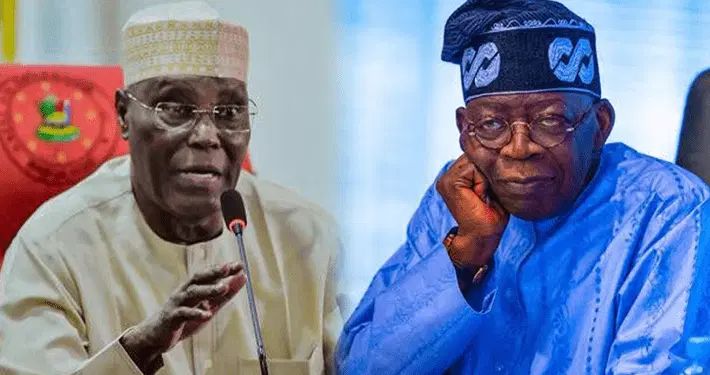
Former Vice President Atiku Abubakar has launched a fresh attack on the administration of President Bola Ahmed Tinubu, declaring that the current government’s “tenure of propaganda” is rapidly coming to an end amid worsening economic hardship, insecurity, and rising public frustration across Nigeria.
Atiku, who recently emerged as the presidential candidate of the African Democratic Congress (ADC), made the remarks on Friday in a strongly worded statement released through his Senior Special Assistant on Public Communication, Phrank Shaibu.
The former vice president accused the Tinubu administration of prioritizing media campaigns and political spin over genuine governance, insisting that ordinary Nigerians are suffering under the weight of inflation, unemployment, insecurity, and economic uncertainty.
According to Atiku, the most accurate assessment of the Tinubu government’s three years in office is not contained in official speeches or government advertisements, but in the daily struggles faced by millions of Nigerians.
“The era of excuses is ending. The era of accountability is approaching. The era of propaganda is fading. And with the support of Nigerians, a new chapter of competence, prosperity, security, and genuine hope shall begin,” Atiku stated.
“Let no one be deceived. The era of complacency is over. The era of propaganda is ending. The era of taking Nigerians for granted is ending. The people are awake. The people are watching. And when the time comes, they will deliver their verdict through the ballot.”
The comments come amid increasing political tension ahead of the 2027 general elections, with opposition parties intensifying criticism of the federal government’s handling of the economy and security situation.
Atiku argued that President Tinubu came into office promising “Renewed Hope” but has instead delivered “renewed hardship, renewed insecurity, renewed poverty, and renewed hopelessness.”
He claimed that food prices have become unbearable for ordinary Nigerians, while inflation continues to erode purchasing power and force many businesses to shut down.
The former vice president also criticized the administration’s borrowing practices, questioning the transparency surrounding trillions of naira reportedly borrowed by the federal government over the past year.
According to him, Nigerians deserve answers regarding how public funds are being spent, especially at a time when economic conditions continue to deteriorate.
“Nigerians are therefore entitled to ask a simple question: where did the rest of the money go?” Atiku asked while referencing reports on government borrowing and capital expenditure.
He further alleged that the administration was creating a perception that government spending disproportionately benefits politically connected individuals and companies while ordinary citizens bear the burden of economic reforms.
The opposition leader specifically questioned the awarding of major infrastructure projects, including the Lagos-Calabar Coastal Highway and the Badagry-Sokoto Highway, to firms allegedly linked to allies of the president. (Punchng)
Atiku also attacked the Tinubu administration over worsening insecurity across several parts of the country, citing recent cases of school abductions and violent attacks in northern and southwestern Nigeria.
Describing Nigeria as increasingly unsafe, he argued that the resurgence of mass kidnappings and attacks on schools represents one of the strongest indictments against the current government.
“The tragedy of Borno and Oyo is not merely a security failure. It is the inevitable consequence of a government that has become detached from reality and addicted to propaganda,” he said.
The former presidential candidate accused the government of attempting to create an illusion of progress through carefully managed public relations campaigns, while the realities on the ground tell a different story.
He warned that Nigerians’ patience should not be mistaken for approval of government policies or performance.
The Tinubu administration has repeatedly defended its economic reforms, insisting that painful policy decisions such as the removal of fuel subsidy and the unification of the foreign exchange market were necessary to stabilize Nigeria’s economy in the long term.
In his recent anniversary address marking three years in office, President Tinubu maintained that his administration had made difficult but essential decisions aimed at ending corruption linked to fuel subsidy payments and foreign exchange manipulation.
The presidency has also dismissed opposition criticism as politically motivated.
Presidential spokesman Bayo Onanuga recently downplayed threats posed by opposition coalitions, insisting that President Tinubu remains focused on governance and national development.
Despite the criticism, government officials argue that economic indicators are gradually improving and that Nigerians will eventually benefit from ongoing reforms.
However, opposition parties continue to insist that the hardship being experienced nationwide reflects policy failures rather than temporary adjustment pains.
Political analysts believe Atiku’s latest remarks signal the beginning of a more aggressive opposition campaign ahead of the next election cycle. (Vanguard)
The former vice president has repeatedly positioned himself as a leading challenger to Tinubu’s re-election ambitions, despite ongoing divisions within opposition ranks.
Recent political developments have seen some opposition alliances weakened by internal disagreements and defections, but Atiku continues to insist that Nigerians are increasingly united by frustration over economic hardship and insecurity.
His statement has generated widespread reactions across social media platforms, with supporters praising his criticism of the government while opponents accuse him of exploiting national difficulties for political gain.
Some Nigerians also questioned whether opposition politicians, including Atiku himself, possess practical solutions to the country’s longstanding governance and economic challenges.
Nonetheless, the exchange reflects the growing intensity of Nigeria’s political climate as preparations for the 2027 elections gradually gather momentum.
With inflation still high, insecurity persisting in several regions, and public dissatisfaction rising, analysts say the coming months are likely to witness even sharper confrontations between the government and opposition figures.
For now, Atiku insists that Nigerians are becoming increasingly aware of what he described as “governance by deception” and will ultimately use the ballot box to demand accountability from the current administration.