World Leaders Return to UN as Middle East and Ukraine Wars Dominate 2026 General Assembly
Nearly 130 world leaders gather at the UN as wars in the Middle East and Ukraine, AI risks, global security and the future of multilateralism dominate the 2026 General Assembly.
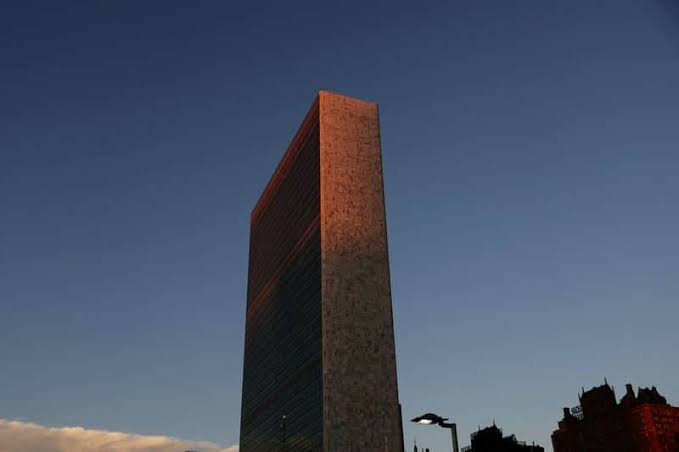
World leaders are returning to New York for the 81st United Nations General Assembly, with wars in the Middle East and Ukraine, artificial intelligence, global security and the future of international cooperation dominating the diplomatic agenda.
The high-level week, running from September 21 to 25, 2026, brings nearly 130 heads of state and government to the United Nations headquarters at a time when the international system is facing multiple overlapping crises. The UN says the broader high-level programme runs from September 18 to 28. (United Nations)
The gathering comes as fighting and diplomatic tensions continue across the Middle East while Russia's war against Ukraine enters another year, putting pressure on governments to find ways of containing conflicts that have already produced significant humanitarian and economic consequences.
Middle East conflict at the centre of attention
The escalating Middle East crisis is expected to be one of the most urgent issues confronting leaders.
The conflict involving Iran, Israel and the United States has widened regional tensions, while attacks linked to Yemen's Houthi movement have added pressure on regional security and international shipping.
Reuters reported ahead of the assembly that discussions would centre heavily on the widening Middle East conflicts and Ukraine, with the UN Security Council expected to consider high-level meetings on both crises. (Reuters)
The situation also has implications far beyond the region. Disruptions to energy supplies and shipping routes have contributed to concerns about oil prices, inflation and global economic stability.
The United Nations has continued to call for diplomatic solutions and renewed international efforts to address the conflict. Secretary-General António Guterres has reiterated support for a two-state solution to the Israeli-Palestinian conflict while also calling for an end to the fighting and greater protection for civilians.
Ukraine remains a major diplomatic challenge
Russia's war against Ukraine is another central issue at this year's General Assembly.
Ukrainian President Volodymyr Zelenskyy and Russian Foreign Minister Sergey Lavrov are among the prominent figures expected to address the international community. The war has continued to affect European security, global food supplies and energy markets.
The conflict also remains a major test of the UN's ability to address wars involving major powers. Russia is a permanent member of the Security Council, giving it veto power over substantive resolutions.
Guterres has called for a ceasefire between Russia and Ukraine and stressed the continuing humanitarian consequences of the conflict. The UN has also highlighted the importance of maintaining the flow of food, fertiliser and energy exports from the region. (United Nations)
Trump's return to the UN podium
US President Donald Trump is returning to the General Assembly for a second consecutive year, making his appearance one of the most closely watched moments of the gathering.
His administration has sharply challenged aspects of the existing international system, including US funding for international organisations, while simultaneously using American diplomatic and economic power to pursue its foreign-policy objectives.
Reuters reported that Washington has cut contributions to the UN and withdrawn from dozens of UN bodies, adding to concerns about the organisation's financial and political position.
Trump's presence therefore comes at a particularly consequential moment for the relationship between the United States and the United Nations.
Xi Jinping takes a different route
Chinese President Xi Jinping will not attend the General Assembly in person this year.
Instead, he is expected to travel to Washington for direct talks with Trump. The decision has attracted attention because China is one of the world's most influential powers and a permanent member of the UN Security Council.
Xi's absence from New York means that some of the most important US-China discussions will take place outside the UN framework, highlighting the continued importance of direct bilateral diplomacy alongside multilateral institutions.
AI emerges as another global security issue
Artificial intelligence is also expected to feature prominently during the gathering.
The rapid development of increasingly powerful AI systems has raised questions about misinformation, employment, national security, autonomous weapons and the possibility of technological competition between major powers.
Guterres has described runaway AI as one of the major existential threats facing humanity, alongside climate change and deepening inequalities. He has urged governments to establish international rules and safeguards rather than allowing technological development to proceed without common standards.
The issue is particularly significant because AI development is increasingly concentrated among powerful governments and technology companies, raising questions about how developing countries can participate in shaping the rules governing the technology.
A UN facing its own crisis
The General Assembly is taking place against the backdrop of questions about the effectiveness and future of the United Nations itself.
The organisation is facing financial pressure, geopolitical divisions and criticism over its ability to respond decisively to major conflicts.
The situation is further complicated by the impending end of Guterres' tenure as secretary-general in December 2026. Diplomats are therefore also watching the process of selecting his successor.
The next secretary-general will inherit an organisation confronting wars, climate change, technological disruption, humanitarian emergencies and growing competition among major powers.
The International Crisis Group has described the UN as being caught in an ongoing crisis involving financial constraints and disagreements among major powers. (Crisis Group)
Iran's presence adds another layer
Iran's participation is also attracting attention given its confrontation with the United States and Israel.
The United States approved visas for senior Iranian officials to attend the General Assembly, although Iran's delegation is expected to be smaller than in previous years amid US restrictions. (Al Jazeera)
The presence of Iranian officials in New York could provide opportunities for diplomatic contacts even as tensions remain high.
For many governments, the UN week offers a rare opportunity to conduct multiple bilateral meetings alongside formal speeches, creating channels for diplomacy that may not exist during periods of intense conflict.
Can diplomacy deliver results?
The central question hanging over this year's General Assembly is whether international diplomacy can produce concrete progress on the conflicts confronting the world.
The UN remains one of the few institutions where virtually every country can participate in the same diplomatic process. Yet divisions among permanent Security Council members have repeatedly limited its ability to take decisive action on major conflicts.
Still, the gathering provides an opportunity for governments to negotiate, exchange proposals and coordinate humanitarian responses.
The UN itself has framed the 2026 high-level week around restoring trust, managing transformation and strengthening international cooperation.
As presidents, prime ministers and foreign ministers gather in New York, the world's attention will therefore extend beyond the speeches.
The Middle East wars, Russia's war in Ukraine, AI governance, climate pressures, economic instability and the future of multilateralism will test whether governments can find common ground despite their growing differences.
For an international organisation established after the Second World War to help prevent another global catastrophe, the stakes of this year's gathering could hardly be higher.