Wike’s “Shoot” Remark and Nigeria’s Democracy: Media Intimidation in a Heated Political Climate
An in-depth analysis of Nyesom Wike’s controversial threat against Channels TV anchor Seun Okinbaloye, the backlash it triggered, and what it means for press freedom and Nigeria’s fragile democracy.
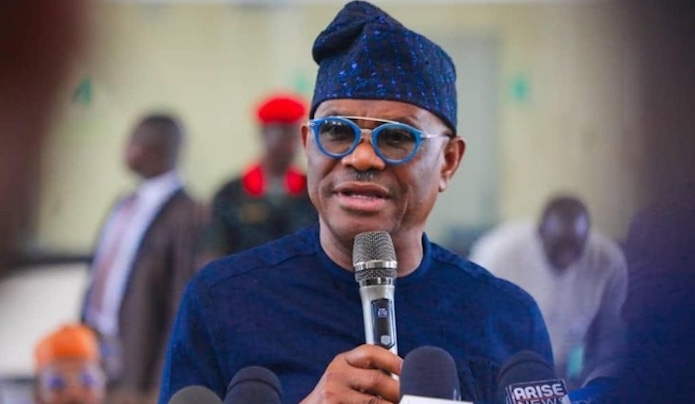
Nigeria’s already charged political atmosphere took a dangerous turn in early April 2026 after a controversial statement by Nyesom Wike, who said he “would have shot” a television journalist during a live broadcast. The remark, directed at Seun Okinbaloye of Channels Television, has sparked outrage across political, media, and civil society spaces.
While some defenders have attempted to frame the statement as rhetorical exaggeration, many Nigerians see it as something far more troubling: a reflection of growing intolerance, shrinking democratic space, and the normalization of intimidation in public discourse.
The Incident That Sparked National Outrage
The controversy began during a media interaction in Abuja when Wike reacted angrily to comments made by Okinbaloye on Politics Today. The journalist had raised concerns about Nigeria drifting toward a one-party state ahead of the 2027 elections.
In response, Wike said:
“If there was any way to break the screen, I would have shot him.” (Channels Television)
Although he later clarified that he did not mean it literally, the damage was already done. The statement quickly went viral, triggering widespread condemnation.
Reports indicate that Wike accused the journalist of abandoning neutrality and taking sides in a politically sensitive debate. (Legit.ng - Nigeria news.)
Immediate Backlash from Political and Civil Society Actors
The reaction was swift and fierce. Opposition figures, including allies of Atiku Abubakar, described the statement as reckless and dangerous.
According to a statement, the remark was:
“a chilling signal of how far this government has descended into intolerance.” (Channels Television)
Civil society organizations and international bodies also weighed in. Amnesty International condemned the comment as “reckless and violent,” warning that such rhetoric could normalize attacks on journalists.
A coalition of media rights groups echoed this concern, noting that even non-literal threats from powerful officials can create a climate of fear and intimidation. (News Express)
The Context: A Politically Heated Nigeria
This incident did not occur in isolation. Nigeria is entering a politically sensitive period ahead of the 2027 general elections. The controversy surrounding the Independent National Electoral Commission and opposition parties have already heightened tensions.
Okinbaloye’s comments about potential one-party dominance touched a nerve because they reflect a broader national anxiety:
The fear that democratic competition is shrinking.
Wike’s reaction, therefore, is being interpreted not just as personal anger but as part of a larger pattern of political defensiveness.
When Power Meets the Press
At the heart of the controversy lies a fundamental democratic principle:
the role of the media as a watchdog.
Channels Television, like other independent media institutions, has built its reputation on holding power accountable. (Wikipedia)
When a senior government official publicly expresses violent frustration toward a journalist, it raises critical questions:
- Can journalists freely question power?
- Are dissenting views becoming dangerous?
- Is criticism now seen as hostility?
These are not abstract concerns, and they go to the core of democratic survival.
The Danger of Normalizing Violent Rhetoric
One of the most alarming aspects of the incident is not the statement itself, but what it represents.
Civil society groups warned that such rhetoric could:
- Encourage hostility toward journalists
- Legitimize violence against dissenting voices
- Undermine Nigeria’s already fragile press freedom environment (News Express)
Nigeria already ranks poorly on global press freedom indices, with journalists facing harassment, arrest, and in extreme cases, violence.
When powerful figures adopt the language of violence even metaphorically, it lowers the threshold for real-world consequences.
Fear, Power, and Political Culture
Wike is known for his combative political style. However, this incident highlights a deeper issue within Nigerian politics:
the personalization of power and intolerance for criticism.
Rather than engaging the substance of Okinbaloye’s argument, the response was emotional and aggressive. This reflects a broader political culture where:
- Criticism is often seen as disloyalty
- Journalists are expected to be cautious, not probing
- Power resists scrutiny rather than embracing accountability
This culture is dangerous because it discourages open debate - the lifeblood of democracy.
What This Means for Nigerians
1. Shrinking Civic Space: When journalists are threatened, even rhetorically, it sends a message to ordinary citizens:
Speak carefully or face consequences.
This can lead to self-censorship, where people avoid expressing opinions for fear of backlash.
2. Weakening of Democratic Institutions: Free press is essential for democracy. If media independence is undermined, institutions become less transparent and less accountable.
3. Rising Political Tension: Nigeria is already politically polarized. Incidents like this deepen divisions and increase mistrust between government and citizens.
4. Loss of International Credibility: Statements perceived as hostile to press freedom can damage Nigeria’s global image, affecting investment, diplomacy, and partnerships.
5. Psychological Impact on Journalists: For journalists, such remarks are not just headlines, they are warnings. Even if not acted upon, they create an environment of fear that affects how stories are reported.
Between Clarification and Accountability
Wike’s attempt to clarify his statement as non-literal does little to erase its impact. In politics, words matter especially when spoken by those in power.
The key issue is not intent, but effect.
As Amnesty International noted, such statements “carry the danger of normalizing violence.”
The expectation from many Nigerians is clear:
Public officials must be held to a higher standard of speech and conduct.
Conclusion: A Warning Sign for Nigerian Democracy
The Wike-Seun controversy is more than a media spat - it is a warning sign.
It reveals a political environment where tensions are high, tolerance is low, and the line between rhetoric and intimidation is increasingly blurred.
For Nigerians, the implications are profound. Democracy is not only about elections, it is about the freedom to question, to speak, and to hold power accountable without fear.
If those freedoms are threatened, even subtly, the entire system is at risk.
As Nigeria moves closer to another election cycle, the challenge is clear:
will the country strengthen its democratic values Sor allow them to erode under the weight of power and intolerance?