Why the UK May Review Chagos Islands Deal After Trump Opposition
The UK is reviewing its Chagos Islands agreement with Mauritius after US President Donald Trump rejected the deal, putting the future of the Diego Garcia military base at the centre of the dispute.
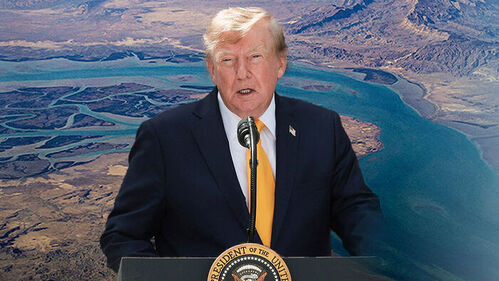
The United Kingdom is set to review its agreement with Mauritius over the future of the Chagos Islands after United States President Donald Trump renewed his opposition to the deal, raising fresh questions about the future of the strategically important Diego Garcia military base.
The development came after Trump described the agreement as a “terrible deal” during his first face-to-face meeting with new British Prime Minister Andy Burnham on the sidelines of the United Nations General Assembly in New York.
Britain's Defence Secretary Wes Streeting subsequently confirmed that the agreement, in its current form, cannot proceed without American support. He said London would now work with Washington and Mauritius to find an arrangement that could secure the future of the military base.
What Is the Chagos Islands Deal?
The dispute centres on the Chagos Archipelago, an Indian Ocean island group that Britain has administered as the British Indian Ocean Territory.
Under an agreement signed by Britain and Mauritius in May 2025, the UK agreed to recognise Mauritian sovereignty over the Chagos Archipelago while retaining rights to operate the joint UK-US military facility on Diego Garcia, the largest island in the group.
The proposed arrangement would give Britain a 99-year lease to continue operating the base, with the possibility of an extension. Britain would make payments to Mauritius for those rights, with the total financial commitment estimated at around £3.4 billion over the life of the arrangement.
The agreement was presented by the previous UK government as a way of resolving the long-running sovereignty dispute while guaranteeing continued British and American military access to Diego Garcia.
However, the treaty has not been fully implemented. The British Parliament has not completed the legislation required to put the agreement into effect, leaving room for further political and diplomatic negotiations. (Reuters)
Why Is Britain Reviewing the Agreement?
The immediate reason for the review is Washington's opposition.
Streeting said the British government had to reconsider the arrangement because the United States does not support the agreement in its current form.
He said Britain needs to work with its American allies to reach an arrangement that can command the support of the UK, US and Mauritius.
“The reason why that is important is that we are trying to safeguard, not just now but for the longer term, the base at Diego Garcia,” Streeting said, according to The Guardian.
The military installation is strategically important to both Britain and the United States. It has been used for military operations and provides a significant logistical position in the Indian Ocean.
A recent UK parliamentary response described the joint UK-US base as crucial to the security of Britain and its key allies, while stating that maintaining long-term operational control of Diego Garcia is central to the UK-Mauritius agreement.
Trump’s Change of Position
Trump's position has become one of the most significant obstacles to the agreement.
According to AFP, Trump initially supported the proposed arrangement before subsequently turning against it. His latest criticism came during his meeting with Burnham, when he again described the agreement as a “terrible” deal.
Burnham indicated that Britain would reconsider the issue and work towards a resolution involving the different parties. Streeting later said Trump's latest remarks provided clarity that Washington's position had not changed. (AFP)
The disagreement is particularly important because Diego Garcia is operated jointly by Britain and the United States. Any arrangement concerning the island therefore has implications beyond the bilateral UK-Mauritius sovereignty dispute.
Payments to Mauritius Put on Hold
The British government has also paused payments associated with the proposed agreement.
Streeting confirmed that annual payments to Mauritius, which were expected to be at least £120 million under the arrangement, would not be made “at this stage” while the government works through the dispute.
Under the terms previously reported, Mauritius was expected to receive £165 million annually during the first three years, followed by £120 million per year from the fourth year. The overall value of the agreement was estimated at £3.4 billion over 99 years.
The suspension of payments highlights the fact that the agreement remains unsettled despite having been signed.
The Legal Dimension
The Chagos dispute also has a significant international-law dimension.
Mauritius has long argued that the Chagos Archipelago should have remained part of its territory when it gained independence from Britain in 1968.
In 2019, the International Court of Justice issued an advisory opinion concluding that Britain's administration of the Chagos Archipelago should end as rapidly as possible and that the separation of the territory from Mauritius had not been consistent with the right to self-determination.
Britain has subsequently argued that reaching an agreement with Mauritius provides a practical means of resolving the dispute while securing continued operation of Diego Garcia.
Streeting has also warned that simply abandoning negotiations could create another legal challenge concerning the future of the military base.
Mauritius Remains Central to Any Solution
Despite the disagreement between London and Washington, Mauritius remains an essential party to any future settlement.
The UK government said earlier in September that it continued to engage with Mauritius regarding the agreement and Diego Garcia, although it declined to provide details of the ongoing discussions. (UK Parliament)
Burnham also held discussions with Mauritian Prime Minister Navin Ramgoolam before travelling to New York, with the two sides agreeing that their foreign ministers should meet during the UN General Assembly.
This means that any revised arrangement would have to address three interconnected interests: Mauritius's sovereignty claim, Britain's security interests and Washington's concerns about the future of Diego Garcia.
What Happens Next?
For now, the original agreement remains signed but has not been fully implemented.
The British government has indicated that it wants to find a revised arrangement rather than simply ignore the dispute. Streeting described the process as difficult and said negotiations would require detailed work with the United States and Mauritius. (The Guardian)
The central question is therefore whether Britain can modify the agreement sufficiently to satisfy Washington while preserving the core elements of the settlement with Mauritius.
The outcome could have implications not only for sovereignty over the Chagos Islands but also for the future of one of the most strategically significant military installations in the Indian Ocean.
For Mauritius, the issue concerns sovereignty and the completion of its decolonisation process. For Britain and the United States, Diego Garcia remains an important military and logistical asset.
As negotiations continue, the future of the Chagos Islands will depend on whether those competing interests can be reconciled in a revised agreement acceptable to all the key parties.