Why Lionel Messi Was Stopped from Returning to Barcelona: The Laporta Decision Explained
Why did Barcelona president Joan Laporta stop Lionel Messi from returning to the club? An in-depth look at the financial, political, and sporting reasons behind the failed comeback.
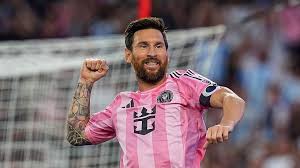
For millions of football fans around the world, the possibility of Lionel Messi returning to FC Barcelona once seemed like the perfect ending to one of football’s greatest stories.
Messi spent more than two decades at Barcelona, winning numerous trophies and becoming the club’s all-time top scorer. Yet despite speculation about a dramatic comeback after his departure, the return never happened.
Recent revelations from former Barcelona coach Xavi Hernández have reignited debate about why the move failed, with allegations that club president Joan Laporta personally blocked the deal.
Here is what happened and why Messi’s dream of returning to Barcelona never materialized.
Messi’s Emotional Departure from Barcelona
Messi’s original exit from Barcelona in 2021 shocked the football world.
The Argentine legend left the club after 21 years because Barcelona could not register his new contract under the financial rules of La Liga. Even though both sides had reached an agreement on a new deal, the club’s enormous debt and salary obligations made it impossible to comply with the league’s financial regulations.
Barcelona had accumulated more than €1.35 billion in debt, with its wage bill exceeding its total income, forcing drastic financial restructuring. (Wikipedia)
As a result, Messi joined Paris Saint‑Germain before eventually moving to Inter Miami CF in the United States.
Plans for a Barcelona Comeback
After Messi won the 2022 FIFA World Cup with Argentina, talk of a return to Barcelona intensified.
According to Xavi, discussions began in early 2023 about bringing Messi back to the club for what many fans described as a “last dance.” Negotiations reportedly progressed significantly, with the player enthusiastic about returning to the club where he became a global superstar.
Xavi later claimed that the deal had even received approval from La Liga and that Messi’s camp was ready to finalize the move. (ElHuffPost)
However, the transfer collapsed before it could be completed.
Xavi’s Claim: Laporta Blocked the Move
In a controversial interview, Xavi accused Laporta of personally stopping the transfer.
According to the former Barcelona coach, the club president feared that Messi’s return could create a power struggle inside the club’s leadership structure. (ESPN.com)
Xavi said Laporta believed the Argentine superstar’s presence could challenge his authority or influence decisions within the club. (Diario AS)
The former midfielder claimed the agreement was already close to completion before Laporta decided to cancel the operation.
Such claims triggered intense debate among Barcelona supporters and football analysts about the true reason behind the failed reunion.
Laporta’s Version of Events
Laporta has strongly disputed these accusations.
According to the Barcelona president, the club genuinely explored the possibility of bringing Messi back but ultimately concluded that it was financially impossible. (Barca Universal)
Barcelona was still dealing with strict salary limits imposed by La Liga and ongoing efforts to stabilize its finances after years of economic turmoil.
Laporta has repeatedly insisted that the club’s priority was rebuilding its financial stability and protecting its long-term sporting project.
He also later described speculation about Messi’s return as “not realistic.” (beIN SPORTS)
Instead of a playing return, Laporta suggested that Barcelona would honor Messi with a tribute at the renovated Camp Nou.
Financial Obstacles Remained a Major Factor
Even if both sides wanted the reunion, the financial barriers were significant.
Barcelona had already been forced to cut wages and sell players to comply with La Liga’s financial fair play regulations. The club struggled to register new signings and had limited flexibility in its salary structure.
Adding a global superstar like Messi-one of the highest-paid players in football history-would have required major financial sacrifices.
Although Messi was reportedly willing to accept a reduced salary, analysts say the move still posed serious risks to Barcelona’s fragile economic recovery.
The Political Dimension Inside Barcelona
The controversy surrounding Messi’s return has also become intertwined with Barcelona’s internal politics.
Laporta stepped down temporarily as president in 2026 to run for re-election, with several rivals challenging his leadership.
Some critics argue that the handling of the Messi saga has damaged Laporta’s reputation among fans.
Others believe the president made a difficult but necessary decision to prioritize the club’s long-term stability over emotional sentiment.
The disagreement between Laporta and Xavi has also exposed deeper divisions within the club’s leadership.
Messi’s Legacy at Barcelona
Despite the controversy, Messi’s legacy at Barcelona remains unparalleled.
During his career with the club, he scored 672 goals in 778 appearances and helped Barcelona win multiple domestic and international trophies, including four UEFA Champions League titles. (CBS Sports)
Many fans still hope the Argentine legend will one day return to the club in a non-playing role.
Laporta himself has acknowledged Messi’s historic contribution and said the club plans to honor him with a major tribute at Camp Nou.
Conclusion
The failure of Lionel Messi’s return to Barcelona reflects a complex mix of financial reality, internal politics, and leadership decisions.
While Xavi claims Joan Laporta personally blocked the deal out of fear of a power struggle, Laporta insists that financial constraints made the move impossible.
Whatever the truth may be, the episode highlights the difficult balancing act faced by modern football clubs: honoring legendary players while navigating strict financial rules and institutional priorities.
For Barcelona supporters, the dream of seeing Messi in the famous blue-and-red jersey again may have faded, but his legacy at the club remains immortal.