Why CAF Rescheduled 2026 Awards: European Clubs' Refusal to Release African Stars Behind Date Change
CAF has moved the 2026 Awards from December 7 to December 2 in Lagos following reports that European clubs were unwilling to release nominated African players for the original date.
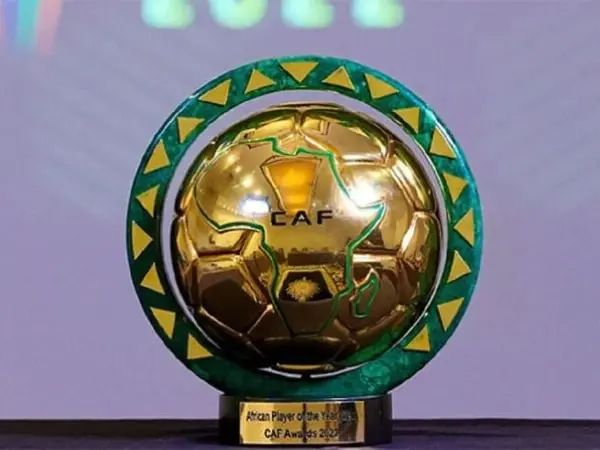
The Confederation of African Football (CAF) has brought forward the 2026 CAF Awards ceremony by five days, following reports that European football clubs were reluctant to release some of their African players for the event's originally scheduled date.
The prestigious ceremony, initially scheduled for Monday, December 7, 2026, will now take place on Wednesday, December 2, in Lagos, Nigeria.
The decision followed concerns that several nominated footballers, particularly those playing in European leagues, might be unable to attend the ceremony because of their clubs' commitments and unwillingness to release them during the competitive season.
November 11, UK-based Nigerian journalist Osasu Obayiuwana disclosed that a CAF official had confirmed the issue, explaining that the governing body had little choice but to adjust the schedule to improve the chances of having the eventual winners present.
The journalist quoted the official as saying that CAF faced a choice between organising an awards ceremony without some of its winners or changing the date to accommodate their availability.
The development highlights the scheduling difficulties facing African football's governing body as it seeks to recognise the continent's leading football talents while navigating the demands of international club football.
Why CAF Changed the Original Date
The central issue behind the reported rescheduling is the availability of nominated players who are contracted to European clubs.
A significant number of Africa's leading footballers play for clubs in England, Spain, France, Germany, Italy and other European leagues. December is traditionally a busy period in several of these competitions, with domestic league and cup fixtures continuing during the festive season.
Unlike international football tournaments, CAF's annual awards ceremony is not automatically part of the mandatory release arrangements governing national-team competitions.
Consequently, players may need permission from their employers to travel for the ceremony, particularly when their attendance involves missing training sessions, matches or other club obligations.
European clubs were unwilling to release some nominees for the original December 7 date, creating the possibility that winners might not be physically present to receive their awards.
CAF reportedly decided that moving the ceremony forward would provide a better opportunity to secure the attendance of the players.
However, the governing body has not publicly confirmed this explanation in its official announcement. Punch also reported that officials of the Lagos State Government and the Nigeria Football Federation could not independently confirm the reason for the change at the time of publication.
This distinction is important because the reported player-availability concerns should not be mistaken for an officially stated explanation from CAF.
December 2 Becomes the New Date
In its announcement on Tuesday, November 10, CAF confirmed that the awards would now hold on Wednesday, December 2, 2026, at the Professor Wole Soyinka Centre for Culture and the Arts, popularly known as the National Theatre, in Lagos.
The ceremony will begin at 7:00 p.m. Nigerian time, corresponding to 8:00 p.m. in Cairo and 6:00 p.m. GMT.
The event will bring together the continent's leading players, coaches, teams and football administrators to celebrate achievements across African football.
The change does not affect Lagos as the host city or the designated venue.
The rescheduling also comes as preparations continue for one of the most prominent events on the African football calendar.
Interestingly, the revised date has also raised questions about scheduling, as several European leagues have midweek fixtures on December 2, while many clubs with nominated players reportedly do not have matches scheduled for December 7.
This scheduling detail has generated further discussion about whether the adjustment will ultimately resolve the availability concerns that reportedly prompted it.
Lagos to Host CAF Awards for First Time Since 2014
The 2026 edition marks the return of the CAF Awards to Lagos for the first time since 2014.
Nigeria has a long association with the ceremony, having hosted previous editions in 2008, 2013 and 2014.
The return to Lagos is expected to provide an opportunity to showcase Nigeria's cultural heritage, entertainment industry and capacity to host major international sporting events.
The Professor Wole Soyinka Centre for Culture and the Arts will provide the setting for the gathering of Africa's football personalities, with music, cultural performances and entertainment expected to complement the awards.
The Lagos State Government had earlier indicated its readiness to support the event through arrangements covering security, logistics, branding and venue access.
The hosting responsibility is particularly significant for Nigeria, given the country's history of producing prominent African footballers and its influence within the continental game.
Eighteen Categories to Be Recognised
The 2026 CAF Awards will recognise outstanding performances across 18 categories.
The headline honours include the CAF Men's Player of the Year and CAF Women's Player of the Year awards.
Other categories will celebrate the achievements of goalkeepers, coaches, young players, clubs and national teams.
The awards are designed to recognise excellence across different levels of African football, including individual performances and collective achievements.
CAF opened voting on November 5, with the process scheduled to close on November 20.
The selection process involves CAF Member Associations and clubs, with eligible national-team coaches and captains participating in the voting arrangements. CAF says independent monitoring will help safeguard the integrity of the results.
The eventual winners will be announced at the Lagos ceremony on December 2.
Nigeria's Representation in the 2026 Awards
Despite hosting the ceremony, Nigeria faces an unusual situation in the headline individual categories.
For the first time, no Nigerian footballer was shortlisted for either the Men's or Women's Player of the Year award.
However, the country has nominees in other categories.
Flamingos players Kemisola Adegbuyi and Janet Akekoromowei are in contention for the Women's Young Player of the Year award, while Edo Queens goalkeeper Christiana Uzoma has been nominated for the Women's Goalkeeper of the Year prize.
The absence of Nigeria's leading players from the headline categories has attracted attention, particularly considering the country's history of success at the awards.
Former Super Falcons forward Asisat Oshoala remains one of the competition's most successful players, having won the Women's Player of the Year award six times.
What the Rescheduling Means for African Football
The decision to move the ceremony illustrates the continuing challenge of coordinating African football activities with the increasingly demanding European club calendar.
Many of the continent's most celebrated players earn their living outside Africa, making their participation in CAF events dependent, in some circumstances, on the cooperation of their clubs.
For CAF, securing the presence of award winners is important to the credibility, visibility and prestige of the ceremony.
An awards night without some of its biggest winners could diminish the occasion, particularly when the event is intended to celebrate their achievements before supporters, administrators and football stakeholders.
Nevertheless, whether the new date will resolve the reported availability difficulties remains to be seen.
With voting continuing until November 20, attention will now turn to the final preparations for the December 2 ceremony and the arrival of Africa's football stars in Lagos.
Ultimately, the 2026 CAF Awards will be an important opportunity for the continent to celebrate its football achievements, while Nigeria prepares to welcome the African football community back to Lagos after more than a decade.