Week 40 In Retrospect: Top 10 Global Headlines That Shaped the World (September 14–20, 2026)
From the widening Iran-Yemen-Saudi crisis and Russia's parliamentary election to the Fed's rate hike, AI tensions and Duterte's ICC appearance, here are 10 major global stories from September 14 - 20, 2026.
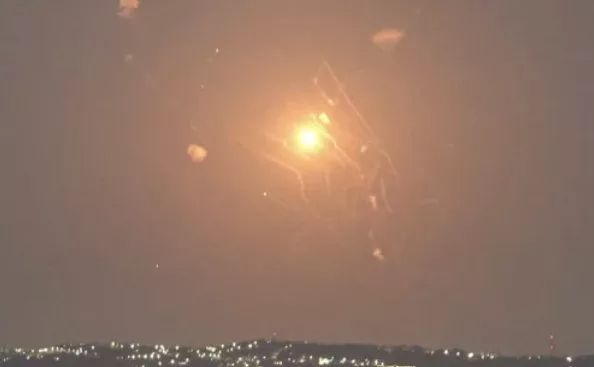
The week of September 14 - 20, 2026, was marked by intensifying geopolitical tensions, economic uncertainty, military confrontations and growing debates over artificial intelligence and global governance. From the Middle East to Europe, Asia, Africa and the Americas, several developments commanded international attention and underscored the increasingly interconnected nature of global affairs.
Here are 10 major headlines that shaped the world during the week.
1. Middle East crisis widens as Houthis attack Saudi Arabia: The escalating conflict involving Iran, the United States and Israel expanded further into Yemen and Saudi Arabia during the week.
Iran-backed Houthi forces intensified attacks against Saudi targets, including strikes around Riyadh, while Saudi forces continued military operations against Houthi positions in Yemen. The confrontation raised fresh concerns about the security of the Red Sea and the wider Middle East.
The developments also affected global energy markets. Attacks on Saudi infrastructure and disruption around major shipping routes kept oil prices above $100 a barrel for much of the week, although prices eased toward the weekend amid diplomatic signals and efforts to maintain oil exports.
The crisis demonstrated once again how conflict in one part of the Middle East can rapidly affect energy supplies, shipping, inflation and financial markets worldwide.
2. US-Iran tensions dominate global diplomacy: The possibility of renewed diplomacy between Washington and Tehran emerged alongside the continuing military confrontation.
U.S. President Donald Trump indicated that he was willing to meet Iranian President Masoud Pezeshkian during the United Nations General Assembly, while Iran continued to demand conditions for a return to negotiations.
At the same time, U.S. officials reportedly held discussions with Houthi representatives in Oman. China also urged Iran to help restrain Houthi attacks after Saudi Arabia sought Beijing's assistance.
The diplomatic activity highlighted the complicated network of relationships involved in the conflict, with the United States, Iran, Saudi Arabia, China and Yemen all playing important roles.
3. Federal Reserve raises US interest rates: The U.S. Federal Reserve delivered one of the week's most consequential economic decisions, raising its benchmark interest rate by 25 basis points to 3.75% - 4.00%.
The Fed said persistent inflation remained a concern and signalled that additional increases could be necessary. The decision came as the Middle East conflict continued to put pressure on energy prices and broader inflation.
The rate increase immediately affected financial markets, with the dollar strengthening and gold initially falling before recovering later in the week.
The decision was also politically significant because Trump continued to criticise the Federal Reserve's interest-rate policy, arguing for substantially lower borrowing costs.
4. Russia's wartime parliamentary election: Russia held its first parliamentary election since the full-scale invasion of Ukraine in 2022.
Early results showed the Kremlin-aligned United Russia party dominating the vote. The election took place amid restrictions on opposition activity and continuing controversy over voting in Ukrainian territories that Russia claims to have annexed.
Ukraine and Western governments have rejected Russia's territorial claims, while Russian authorities presented the election as a demonstration of domestic political support.
The vote occurred as fighting between Russia and Ukraine continued, with both sides maintaining long-range drone and missile attacks.
5. Russian drone strikes raise concern near Poland: The war in Ukraine generated another major international headline after a Russian drone struck a passenger train close to Ukraine's border with NATO member Poland.
The train was travelling toward Poland and had reportedly carried European officials and other international figures shortly before the attack. No casualties were reported.
The incident intensified concerns about the proximity of the Russia-Ukraine war to NATO territory. Ukrainian officials described the strike as part of a broader campaign targeting infrastructure close to Ukraine's western borders.
The episode added to European concerns about the possibility of accidental or deliberate spillover from the war.
6. Brazil's presidential race tightens: Brazil's presidential election campaign became another major international story as President Luiz Inácio Lula da Silva and Senator Flávio Bolsonaro remained closely matched in opinion polls.
The contest has attracted global attention because of Brazil's importance as Latin America's largest economy and its role in climate, trade and international diplomacy.
Polls released during the week produced differing measurements of the race, illustrating how closely contested the election could be. The campaign also revived political divisions associated with former President Jair Bolsonaro, Flávio Bolsonaro's father.
With the election approaching, Brazil remained a significant focus of political and economic attention across the Americas.
7. AI becomes a growing global security concern: Artificial intelligence emerged as a major international policy issue during the week.
U.N. Secretary-General António Guterres warned about the risks posed by rapidly advancing AI, while debate intensified over whether governments should impose stronger safeguards on increasingly powerful systems.
The United States and China remained at the centre of the technology competition. Chinese officials rejected suggestions that Beijing should be prevented from advancing its AI capabilities, while American technology leaders continued debating the risks of uncontrolled development.
AI was also expected to feature prominently during the United Nations meetings, reflecting the growing recognition that the technology has implications for national security, employment, misinformation, military applications and global economic competition.
8. Former Philippine President Rodrigo Duterte appears before ICC: Former Philippine President Rodrigo Duterte appeared in person before the International Criminal Court in The Hague for the first time since his transfer to the court.
Duterte faces allegations connected with killings during his administration's controversial campaign against illegal drugs. His appearance focused partly on procedural questions ahead of the planned trial.
The case is being closely watched because it represents a major test of international accountability for alleged crimes committed during a national government's security campaign.
Duterte has denied wrongdoing, while prosecutors have presented allegations concerning killings associated with the drug war.
9. Indonesia battles its worst wildfire crisis in years: Indonesia faced a severe wildfire and air-pollution crisis, with fires across parts of Sumatra and Borneo producing thick haze.
The smoke affected communities in Indonesia and contributed to unhealthy air conditions in neighbouring Malaysia and Singapore. Authorities reported growing respiratory problems, while Indonesia's government announced tougher measures against individuals and companies responsible for illegal land clearing.
Japan also sent assistance, including personnel and helicopters, to support Indonesia's firefighting efforts.
The crisis once again highlighted the regional consequences of Southeast Asia's recurring forest fires and the links between land management, climate conditions, public health and cross-border pollution.
10. UK air traffic control failure exposes technology vulnerabilities: The fallout from a major British air traffic control disruption also remained in the headlines.
The National Air Traffic Services said a software defect caused the system failure that disrupted hundreds of thousands of passengers and contributed to more than 2,000 flight cancellations.
The incident renewed questions about the resilience of critical digital infrastructure and the risks posed by ageing or vulnerable computer systems.
Although the disruption occurred earlier in September, the publication of the technical findings during Week 40 brought the issue back into international focus, particularly as governments and businesses increasingly depend on complex digital infrastructure.
Conclusion
Week 40 of 2026 demonstrated how closely connected today's global crises have become. Military developments in the Middle East affected oil prices and inflation; Russia's war in Ukraine continued to influence European security; decisions by the U.S. Federal Reserve affected global financial markets; and the growing AI competition between major powers raised questions about the future of technology and international security.
At the same time, developments in Brazil, the Philippines and Indonesia showed that political accountability, elections, environmental disasters and public health remained important parts of the global news agenda.
As world leaders gathered for the United Nations General Assembly at the beginning of the following week, many of these issues were expected to dominate international diplomacy: war and peace, energy security, economic stability, climate change, artificial intelligence and the future of the international order.