Week 33 In Retrospect: Top 10 Global Headlines That Shaped the World, August 3 - 9, 2026
From the Iran-US war and Gaza crisis to Ukraine, China’s Typhoon Dolphin, Congo’s Ebola outbreak and global economic uncertainty, here are the top 10 world headlines that shaped Week 33 of 2026.
The first full week of August 2026 was dominated by conflict, diplomacy, humanitarian emergencies, extreme weather and growing geopolitical competition.
From the Middle East to Eastern Europe and from Africa to Asia, events between August 3 and August 9 carried consequences far beyond their immediate locations.
The following are the 10 global headlines that made the biggest impact during Week 33 of 2026.
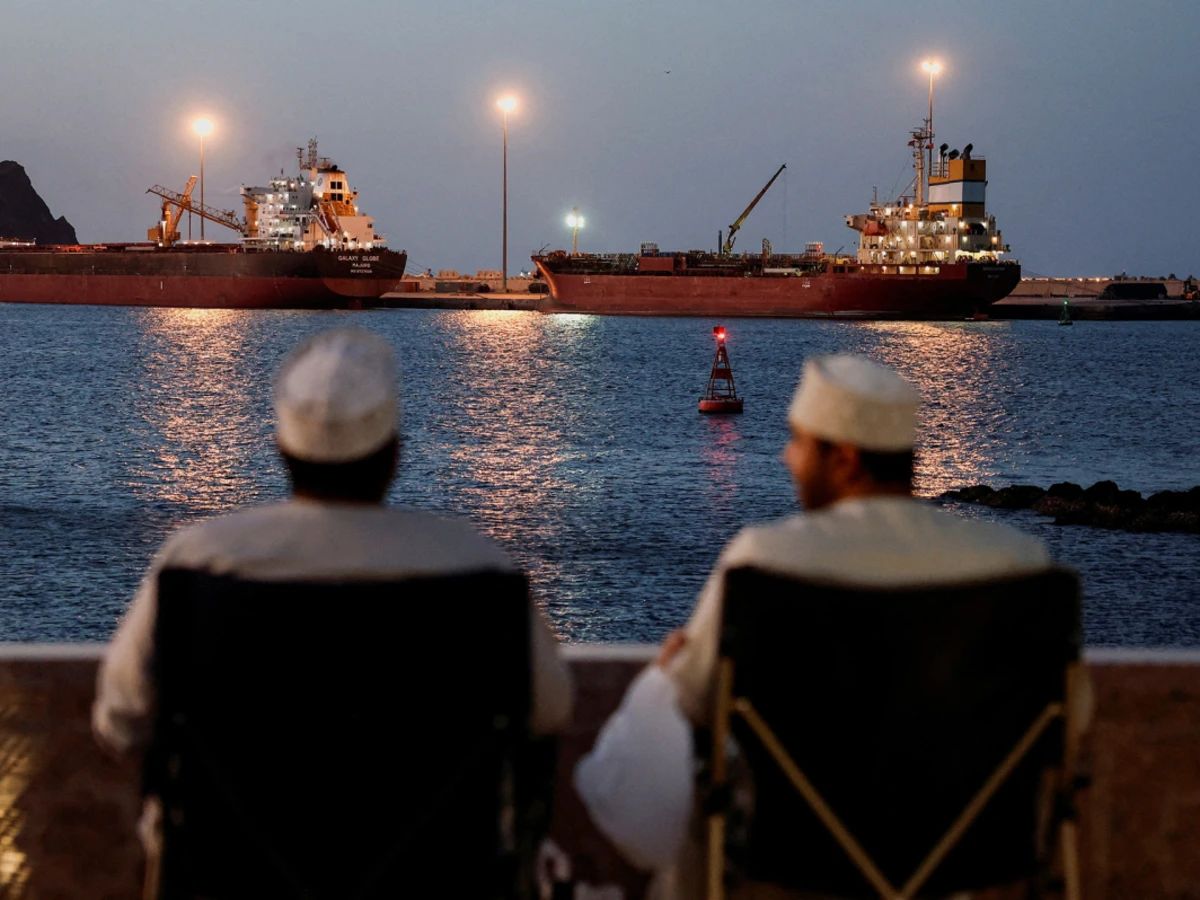
1. Iran-US conflict keeps the Strait of Hormuz at the centre of global attention: The escalating conflict between the United States and Iran remained the biggest international story of the week.
Washington temporarily held off on further attacks as diplomatic efforts continued, while Tehran intensified pressure over the strategic Strait of Hormuz, a vital route for global energy shipments. Reuters reported that mediators, including Qatar, were working to advance efforts to end the conflict. (Reuters)
By the end of the week, however, hopes of a quick breakthrough had weakened. Iran said reopening the waterway would depend on Washington meeting several demands, including an end to sanctions and military threats. (Reuters)
The crisis also continued to affect energy markets and airlines, with higher fuel costs creating new pressure on international carriers. (Reuters)
2. Netanyahu rejects Trump's latest Gaza peace plan: The Gaza war produced another major diplomatic confrontation after Israeli Prime Minister Benjamin Netanyahu rejected US President Donald Trump's proposed 15-point Gaza peace plan.
Netanyahu said Israel would not withdraw its forces until Hamas was fully disarmed, effectively challenging Washington's effort to establish a new framework for ending the conflict. (Reuters)
The rejection represented a significant disagreement between the two governments and raised fresh questions about whether Washington can persuade Israel and Hamas to accept a comprehensive settlement.
The development also underscored the continuing difficulty of resolving the Gaza conflict despite renewed international diplomatic efforts.
3. Russia intensifies attacks as Ukraine war enters another critical phase: The Russia-Ukraine war remained one of the world's most dangerous conflicts during Week 33.
Russian forces continued offensive operations while Ukrainian cities came under intensified bombardment. European reports said Russian attacks for 24 hours killed at least 13 people and wounded about 90 others. (euronews)
Another major development came from Ukrainian President Volodymyr Zelenskyy, who said as many as 50,000 North Korean troops could be deployed in Russia to participate in the war. The claim highlighted the increasingly international characteristic of the conflict. (Reuters)
Ukraine's top negotiator, Rustem Umerov, was also appointed to head the country's foreign intelligence service, adding another significant political and security development. (Reuters)
4. Typhoon Dolphin batters China, forcing mass evacuations: Extreme weather became another defining story after Typhoon Dolphin struck China's eastern coast.
Reuters described Dolphin as the most powerful tropical cyclone to hit China in 2026. More than one million people were evacuated as authorities prepared for torrential rain, flooding and destructive winds. (Reuters)
Shanghai and surrounding areas experienced major disruption, with hundreds of flights cancelled or grounded. The storm subsequently dumped heavy rainfall across eastern China, affecting transportation and daily life. (Reuters)
The disaster again demonstrated how extreme weather events can rapidly become international economic and humanitarian concerns, particularly in highly populated coastal regions.
5. Taiwan raises defence spending amid growing China tensions: Taiwan's security situation also dominated Asian headlines.
Taipei announced plans to increase defence spending by 16% in 2027, taking the country's defence budget above one trillion Taiwan dollars, or roughly $31 billion. (Reuters)
The announcement came as Taiwan conducted annual military exercises designed to simulate responses to a potential Chinese attack. President Lai Ching-te personally observed coastal strike drills involving missile boats and drones. (Reuters)
Taiwan also carried out exercises involving fighter jets and other military assets, reflecting concerns over China's expanding military capabilities.
The developments added to tensions between Beijing, Taipei and Washington and reinforced Taiwan's position as one of the world's most sensitive geopolitical flashpoints.
6. Congo's Ebola outbreak surpasses 4,000 confirmed cases: Africa faced a major public-health emergency as the Ebola outbreak in the Democratic Republic of Congo surpassed 4,000 confirmed cases.
Government data cited by Reuters showed 4,053 confirmed infections and 1,850 deaths, making the outbreak the world's second-largest recorded Ebola epidemic after the 2014–2016 West African outbreak. (Reuters)
Health officials face significant challenges, including conflict, weak surveillance, delayed detection, misinformation and shortages of vaccines and treatments.
The outbreak's rapid spread has raised concerns about the ability of health authorities to contain transmission, particularly in areas affected by insecurity.
7. Wildfires force more than 20,000 people to flee British Columbia: Canada's wildfire crisis intensified during the week, with British Columbia declaring a provincial state of emergency.
More than 20,000 people were forced to flee their homes as wildfire spread through parts of the province. (Reuters)
The fires added to a wider North American wildfire crisis that has already produced dangerous smoke, evacuations and major environmental damage.
The scale of the fires again placed climate change, drought, heat and emergency preparedness at the centre of international discussions.
8. Weak US jobs data shakes global financial markets: Economic concerns also emerged as the United States released weaker-than-expected employment figures.
US payrolls fell by 23,000 jobs, contradicting expectations for an increase of about 80,000. The figures prompted speculation that the Federal Reserve could have greater room to keep interest rates unchanged while assessing inflation and other economic indicators. (Reuters)
Financial markets reacted quickly. The dollar weakened, while US stocks and bonds rallied, and gold reached a seven-week high as investors reassessed expectations for monetary policy. (Reuters)
The report was particularly significant because US interest-rate decisions influence borrowing costs, currencies, investment flows and economic conditions across the world.
9. US-China technology trade tensions deepen: Washington further tightened its economic competition with Beijing by imposing new measures affecting polysilicon, a critical raw material used in solar panels and semiconductor production.
The White House imposed price floors and a 15% tariff on affected products, with the policy aimed at strengthening US domestic supply chains and reducing dependence on China. (Reuters)
The move was another indication that the strategic rivalry between the world's two largest economies extends beyond traditional trade into artificial intelligence, semiconductors, renewable energy and national security.
The US-China competition is increasingly shaping global investment decisions and supply chains.
10. Bangladesh's political crisis remains in the global spotlight: Bangladesh also featured prominently in Asian political news after former Prime Minister Sheikh Hasina delivered a virtual address from India.
Hasina called for the ban on her Awami League party to be lifted, keeping the country's political transition in the international spotlight. (Reuters)
The development came amid continuing tensions between Hasina's supporters and the authorities in Bangladesh following her removal from power and subsequent exile.
Her political future remains closely watched because of the implications for Bangladesh's democratic transition, regional relations and stability in South Asia.
Conclusion
Week 33 of 2026 demonstrated how interconnected global crises have become.
The Iran-US conflict and the uncertain future of the Strait of Hormuz showed how a regional confrontation can immediately affect energy markets, airlines and the wider global economy. The Gaza crisis once again exposed the difficulty of achieving peace even when major powers intervene diplomatically.
In Europe, the Russia-Ukraine war continued to evolve, while North Korean involvement underscored its increasingly international dimensions. In Asia, China's typhoon disaster and rising tensions around Taiwan demonstrated the region's vulnerability to both natural and geopolitical shocks.
Africa faced its own emergency as Congo's Ebola outbreak crossed the 4,000-case threshold, while Canada's wildfires showed that extreme weather remains a global challenge.
Taken together, the headlines of August 3 - 9 revealed a world confronting simultaneous security, humanitarian, economic and environmental pressures. As Week 33 closed, diplomacy remained the preferred route for resolving several crises, but events across the globe showed just how fragile that path had become.