Week 23 in Retrospect: Top 10 Global Headlines That Shaped the World from June 1 - 6, 2026
From escalating Middle East tensions and Ukraine-Russia conflict developments to AI investments, climate concerns, and global political shifts, here are the 10 biggest world headlines that defined Week 23 of 2026.
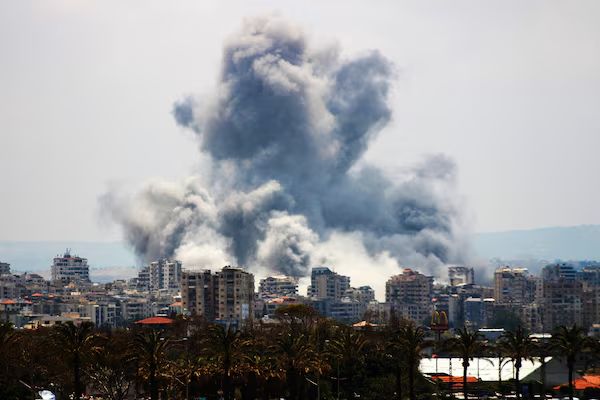
The first week of June 2026 delivered a dramatic mix of geopolitical tensions, economic developments, technological breakthroughs, and global security concerns. From renewed military confrontations in the Middle East to major artificial intelligence investments in Europe, Week 23 was packed with events that captured international attention.
Here is a retrospective look at the 10 biggest global headlines that defined the period between June 1 and June 6, 2026.
1. Israel-Iran Tensions Escalate Again: The fragile ceasefire between Israel and Iran came under severe strain after fresh missile exchanges and retaliatory strikes were reported across the Gulf region. Iran reportedly launched ballistic missiles and drones toward Bahrain and Kuwait, while Israel responded with airstrikes targeting Iranian military infrastructure.
The renewed conflict raised fears of a broader regional war and triggered emergency diplomatic meetings among world powers. The United States urged restraint as concerns grew over disruptions to global oil supplies and maritime security in the Gulf.
The confrontation became one of the most dominant international stories of the week due to its implications for global stability and energy markets.
2. Ukraine Intensifies Deep Strikes Inside Russia: The Russia-Ukraine war entered another volatile phase as Ukraine reportedly carried out deep strikes targeting Russian oil and military infrastructure. Several reports indicated that strategic facilities tied to Moscow’s energy network were damaged.
The attacks marked a significant evolution in Kyiv’s strategy and demonstrated its growing capability to hit targets far from the frontline. Russia responded with intensified drone and missile attacks on Ukrainian cities.
Global leaders continued to debate military support packages, while fears of further escalation remained high throughout the week.
3. SoftBank Announces €75 Billion AI Investment in France: Japanese tech giant SoftBank unveiled plans to invest €75 billion in France to expand Europe’s artificial intelligence infrastructure. The massive initiative is expected to create one of Europe’s largest AI data center ecosystems.
French officials described the project as a landmark move aimed at strengthening Europe’s technological competitiveness against the United States and China. Analysts also noted that the investment reflects growing global demand for AI infrastructure following the rapid adoption of generative AI technologies.
The announcement became one of the biggest business and technology stories of the week.
4. Global Heatwaves and Climate Concerns Intensify: Extreme weather conditions continued to affect several parts of the world during the week. Reports from Europe, Australia, Southeast Asia, and North America highlighted rising temperatures, drought fears, and growing climate-related disruptions.
Meteorologists warned that 2026 could become one of the hottest years ever recorded globally. Several governments issued heat advisories while environmental experts renewed calls for urgent climate action.
The worsening climate situation remained a recurring topic across international news platforms throughout the week.
5. China Tightens Foreign Investment and Tech Rules: China introduced stricter regulations on outbound investments and foreign technology partnerships as Beijing intensified efforts to protect its strategic technological interests.
The move was widely interpreted as part of the broader global competition between China and Western powers over artificial intelligence, semiconductors, and advanced technologies.
International investors reacted cautiously, with analysts warning that increasing restrictions could further deepen economic tensions between China and the West.
6. France Boards Russia-Linked Oil Tanker: French naval forces intercepted and boarded a Russia-linked tanker in the Atlantic Ocean as part of sanctions enforcement operations tied to the Ukraine war.
The dramatic operation underscored Europe’s continued efforts to crack down on Russian oil exports and prevent sanctions evasion. The incident also highlighted growing maritime tensions connected to the ongoing conflict.
Security experts warned that similar operations could become more frequent as Western nations tighten restrictions on Russian trade activities.
7. North Korea Rejects U.S. Denuclearization Push
Date: June 6, 2026
North Korea strongly criticized renewed U.S. calls for denuclearization, describing the demand as an “anachronistic dream.” Statements from Pyongyang signaled that diplomatic relations between Washington and North Korea remain deeply strained.
The comments raised concerns over possible future missile tests and renewed military provocations in East Asia. Regional allies including South Korea and Japan closely monitored the situation throughout the week.
The development reinforced fears of long-term instability on the Korean Peninsula.
8. Pope Leo XIV Begins Historic Spain Visit: Pope Leo XIV arrived in Spain for a historic visit that marked the first papal trip to the country in fifteen years. The visit attracted massive public attention and carried strong symbolic importance for the Catholic Church in Europe.
During his address, the Pope emphasized unity, peace, and social harmony amid rising political divisions across the continent. Religious leaders described the visit as a significant moment for European Catholicism.
The event dominated headlines across Europe and Latin America.
9. Violent Celebrations Rock France After PSG Triumph: Celebrations following Paris Saint-Germain’s football success turned chaotic in parts of France as violent clashes erupted in several cities. Reports indicated property destruction, injuries, and mass arrests during the unrest.
French authorities condemned the violence and increased security measures in major urban centers. The incidents reignited debates over crowd control, public safety, and social tensions in French society.
Sports-related unrest once again became a major talking point across European media.
10. Global Economic Anxiety Persists Despite Growth Forecasts: Despite optimistic growth projections from some governments, global economic uncertainty remained a key concern during the week. Central banks across various countries continued to grapple with inflation pressures, slowing trade, and geopolitical instability.
Investors closely monitored interest rate decisions, commodity prices, and global supply chain developments. Economists warned that ongoing conflicts and trade tensions could still threaten global recovery efforts in the second half of 2026.
The combination of geopolitical crises and economic fragility ensured that financial markets remained volatile throughout the week.
Conclusion
Week 23 of 2026 demonstrated how interconnected the modern world has become. Military conflicts, climate emergencies, economic uncertainty, and technological competition all unfolded simultaneously across different regions.
From the Middle East and Eastern Europe to Asia and Africa, the week’s biggest headlines reflected a rapidly evolving global landscape shaped by power struggles, innovation, and growing public anxiety over security and economic stability.
As the world moves deeper into 2026, these developments are likely to continue influencing international politics, financial markets, and diplomatic relations in the months ahead.