Week 19 in Retrospect: Top 10 Global Headlines That Shaped the World (May 3 - May 9, 2026)
A detailed recap of the top 10 global news stories that dominated headlines between May 3 and May 9, 2026, including Middle East tensions, global economy concerns, political developments, conflicts, sports, and major international events.
The first full week of May 2026 delivered a whirlwind of geopolitical tensions, economic uncertainty, military confrontations, and major international developments. From rising instability in the Middle East to growing fears over the global economy, the week was marked by stories that could shape international politics and markets for months to come.
Here is a detailed look at the 10 biggest global headlines that defined Week 19 of 2026.
1. United States Launches “Operation Project Freedom” in the Strait of Hormuz
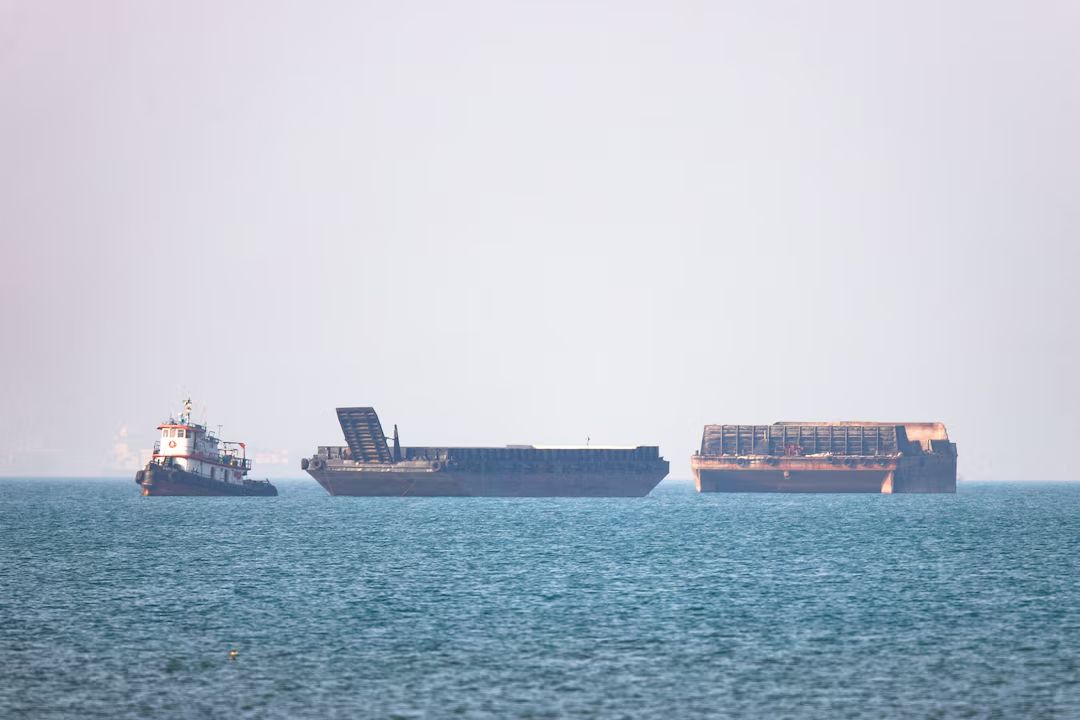
One of the most significant developments of the week was the escalation of tensions between the United States and Iran in the Strait of Hormuz. U.S. President Donald Trump announced “Operation Project Freedom,” a military-backed effort aimed at securing commercial shipping routes after repeated threats and attacks in the Gulf region.
Reports indicated that Iran allegedly launched missiles and drones targeting military and commercial vessels. The U.S. military responded by deploying naval escorts and increasing surveillance in the region. The situation sparked fears of a broader regional conflict capable of disrupting global oil supply chains and worsening inflation worldwide. (Wikipedia)
2. IMF Warns Global Economy Is Being Hit by Ongoing Wars
The global economy came under renewed pressure after the International Monetary Fund warned that ongoing wars and geopolitical instability were hurting economic recovery efforts. Rising oil prices, disrupted shipping routes, and increasing military expenditures contributed to fears of slowing growth.
Economists warned that continued instability in the Middle East and Eastern Europe could trigger fresh inflationary waves, especially in developing economies already struggling with debt and unemployment. Financial markets across Europe and Asia reacted cautiously during the week. (10things.news)
3. Fresh Fighting Threatens Fragile Gulf Ceasefire
Another major headline came from the Gulf region, where renewed clashes threatened an already fragile ceasefire agreement. Several reports indicated rising confrontations around strategic maritime zones, leading to fears that diplomatic efforts were beginning to collapse.
The United Arab Emirates strongly condemned attacks linked to Iranian-backed groups, while Western governments called for restraint. Analysts warned that if tensions continue, energy exports and international trade routes could face severe disruptions. (10things.news)
4. Mali Suffers Major Security Crisis After Rebel Offensive
West Africa remained in focus after a major rebel offensive reportedly led to the death of a senior Malian defense official. Armed groups linked to extremist organizations intensified attacks across parts of Mali, further exposing the fragile security situation in the Sahel.
The crisis renewed international concerns about terrorism and instability spreading across West Africa. Regional governments continued discussions on stronger military cooperation as violence in the Sahel region showed little sign of slowing down. (Medium)
5. Somalia Bans Israeli Vessels from Bab al-Mandeb Passage
Somalia made international headlines after reports emerged that it had banned Israeli-linked vessels from using routes connected to the Bab al-Mandeb Strait. The development added another layer of complexity to already tense Red Sea shipping conditions.
The move raised concerns among global shipping companies and security analysts, especially as maritime trade routes remain critical for oil transportation and global commerce. Shipping insurance costs reportedly climbed following the announcement. (Medium)
6. China Expands Military and Energy Strategy
China drew global attention after unveiling new hypersonic missile systems ahead of military drills in the South China Sea. Beijing also reportedly accelerated crude oil stockpiling efforts despite ongoing supply concerns and rising prices.
At the same time, Chinese researchers announced progress in hydrogen storage technology using underground salt caves, a development many experts viewed as a significant step toward future clean-energy infrastructure.
The combination of military expansion and energy innovation reinforced China’s growing influence in global strategic affairs. (Medium)
7. Spirit Airlines Shuts Down After 34 Years
The aviation industry witnessed a major shock after Spirit Airlines reportedly ceased operations after 34 years in business.
The airline’s collapse was linked to mounting operational costs, debt pressures, and persistent instability in the travel industry. Thousands of passengers were affected, while aviation analysts warned that the shutdown reflected deeper financial challenges facing low-cost carriers globally. (Wikipedia)
8. Scientific Breakthrough Reveals 118 New Exoplanets
In one of the week’s most remarkable scientific developments, astronomers from the University of Warwick announced the discovery of 118 new confirmed exoplanets using artificial intelligence and NASA telescope data.
Researchers also identified more than 2,000 additional high-quality planetary candidates. The discovery marked a major milestone in space exploration and reinforced the growing role of AI in scientific research and astronomy. (Wikipedia)
9. Giro d’Italia 2026 Begins with High Drama
Sports headlines were dominated by the opening stages of the 2026 Giro d'Italia, one of the world’s biggest cycling competitions.
The tournament began dramatically with crashes involving several top riders, reshuffling the leaderboard early in the race. Danish cyclist Jonas Vingegaard entered the competition as the leading favorite following the absence of several major rivals.
The race attracted millions of viewers globally as cycling fans anticipated another intense battle for the prestigious Maglia Rosa title. (Tom's Guide)
10. Eurovision 2026 Preparations Intensify Ahead of Vienna Finals
Entertainment headlines focused on preparations for the 2026 Eurovision Song Contest 2026 scheduled to hold in Vienna, Austria.
As Europe prepared for the semi-finals beginning May 12, excitement built around the contest’s 70th anniversary celebrations. Organizers confirmed participation from 35 countries, while fans across Europe and beyond anticipated one of the biggest entertainment events of the year. (Wikipedia)
What These Headlines Mean Going Forward
Week 19 highlighted a world increasingly shaped by geopolitical rivalry, economic uncertainty, and rapid technological transformation. The Middle East emerged once again as a flashpoint capable of influencing global oil markets and international diplomacy. At the same time, the Sahel region’s security crisis underscored the growing threat of instability across Africa.
Economically, fears of another inflationary cycle continue to rise as wars and trade disruptions pressure governments and businesses worldwide. Meanwhile, advancements in science and technology offered rare optimism, especially in astronomy and renewable energy research.
The week also demonstrated how sports and entertainment continue to provide moments of global unity amid political and economic tensions.
As the world moves deeper into 2026, these stories are likely to shape diplomatic decisions, economic policies, and international security conversations in the months ahead.