Venezuela Coach Blames Inexperience for Defeat to Nigeria's Flamingos at U-17 Women's World Cup
Venezuela coach Dayana Frías has blamed inexperience and a costly defensive mistake for her team's 1-0 defeat to Nigeria's Flamingos in the 2026 FIFA U-17 Women's World Cup quarter-finals in Morocco.
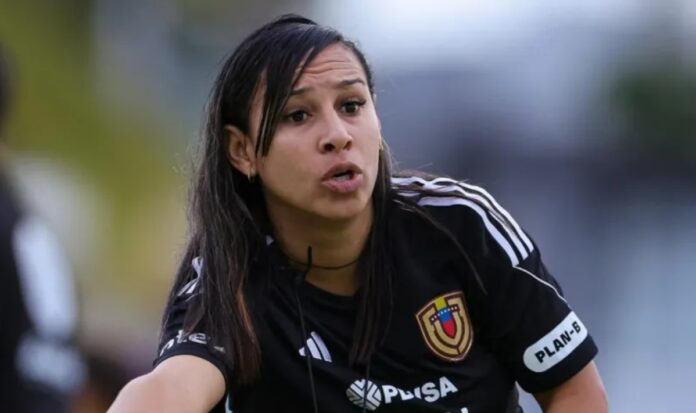
Venezuela head coach Dayana Frías has attributed her team's elimination from the 2026 FIFA U-17 Women's World Cup to inexperience and a costly defensive mistake following their narrow 1-0 defeat to Nigeria's Flamingos in the quarter-finals.
Frías admitted that her players paid dearly for one mistake during the encounter, despite producing what she described as a good overall performance against the Nigerian side.
The South American team suffered the defeat on Sunday, November 1, 2026, at the Mohammed VI Football Complex in Rabat, Morocco, after Azeezat Oduntan converted a late penalty to secure Nigeria's qualification for the semi-finals.
The result ended Venezuela's campaign in the competition, while Nigeria advanced to the last four for only the second time in the tournament's history.
Speaking to FIFA after the match, Frías expressed satisfaction with her players' overall performance but acknowledged that their lack of experience at this level contributed to the outcome.
"It was a good performance overall, but I think we made one mistake and paid for it. As for the experience, it's been really beautiful and rewarding," the Venezuelan coach said.
Her comments reflected the disappointment within the Venezuelan camp after a determined defensive performance was undone by a late incident inside the penalty area.
Azeezat Oduntan's Late Penalty Sends Nigeria Through
The quarter-final encounter was a closely contested affair, with Nigeria enjoying considerable possession and creating several opportunities but struggling to break down Venezuela's organised defence.
The Flamingos, coached by Akeem Busari, approached the match with the intention of controlling possession and using their technical ability to overcome the physical approach of their opponents.
Nigeria created opportunities through Oluebube Umejiaku and Oluwakemi Adegbuyi, but their efforts failed to produce an early breakthrough.
Venezuela, meanwhile, defended resolutely and attempted to frustrate the Nigerian attackers through aggressive marking and disciplined positioning.
As the match progressed, the possibility of a penalty shootout became increasingly realistic, with neither side able to establish a decisive advantage.
However, the contest took a dramatic turn in the closing minutes when Venezuelan defender Migleydys Bolsegui was adjudged to have fouled Nigeria's Oluebube Umejiaku inside the penalty area.
The referee awarded Nigeria a penalty, presenting the Flamingos with an opportunity to secure their place in the semi-finals.
Azeezat Oduntan stepped forward and converted the spot-kick in the 89th minute, sending the Nigerian players and technical crew into celebrations.
The late goal proved decisive as Nigeria held on to secure a 1-0 victory.
According to FIFA's official match report, Oduntan's penalty was the only goal of the encounter, while Favour Nkwocha was named Player of the Match for her contribution to Nigeria's performance.
Frías Praises Players Despite Elimination
Although disappointed by the result, Frías expressed pride in the progress her young players had made throughout the competition.
She acknowledged that the tournament had provided valuable international experience and an opportunity for the squad to develop against some of the world's strongest youth teams.
The Venezuelan coach also disclosed that seven players from the current squad remain eligible to participate in next year's competition.
She expressed optimism that those players would return with greater experience and continue developing their football abilities.
"I'm happy to see how much they have grown and how they have developed as footballers throughout the tournament. We also have seven players who are eligible to play again next year, so I think they're ready to come back and keep growing," Frías added.
Her comments suggest that Venezuela intends to build on the experience gained in Morocco as it continues developing its next generation of female footballers.
The team's elimination, therefore, represents both a setback and an opportunity to prepare more effectively for future international competitions.
Nigeria's Flamingos Overcome Difficult Route to Semi-Finals
Nigeria's qualification for the semi-finals followed a challenging campaign in Morocco.
The Flamingos initially struggled in the group stage after suffering a defeat to Poland in their opening match.
However, the Nigerian team recovered with a victory over Puerto Rico before producing an impressive 3-1 win against two-time defending champions North Korea.
That result strengthened their confidence and secured progression to the knockout stage.
Nigeria subsequently defeated Mexico 2-1 in the round of 16 to book a quarter-final meeting with Venezuela.
The victory over Mexico was another important achievement for Busari's team, which demonstrated improved attacking organisation and determination as the competition progressed.
Against Venezuela, however, Nigeria faced a different challenge, with their opponents adopting a defensive approach that restricted clear scoring opportunities.
The late penalty eventually provided the breakthrough needed to maintain Nigeria's campaign.
Busari Commends Flamingos' Determination
Following the victory, Nigeria's head coach, Akeem Busari, praised his players for their resilience and determination, particularly after struggling to convert their chances.
He acknowledged that Venezuela's physical approach created difficulties for the Nigerian side, which preferred to play possession-based football and keep the ball on the ground.
Busari explained that his players had to remain patient and continue fighting despite the frustration of repeatedly failing to find the net.
He also admitted that he became concerned as the match approached its conclusion without a goal.
According to the coach, the team remained committed to securing victory rather than allowing the possibility of a penalty shootout to affect their concentration.
The eventual breakthrough, he said, reflected the players' refusal to give up.
The Nigerian coach's comments highlighted the importance of mental strength in knockout football, where a single moment can determine whether a team progresses or returns home.
Flamingos Face Brazil in Semi-Final
Following their victory over Venezuela, Nigeria advanced to the semi-finals, where they are scheduled to face Brazil on Wednesday, November 4, 2026.
The encounter presents another significant challenge for the Flamingos as they pursue a place in the final.
Brazil secured their semi-final qualification after progressing through the quarter-final stage, setting up a meeting between two countries with established traditions in women's football.
Nigeria will be seeking to build on the confidence gained from their victories over North Korea, Mexico and Venezuela.
The Flamingos previously won the bronze medal at the 2022 FIFA U-17 Women's World Cup in India, and their latest progression provides another opportunity to compete for a place in the championship final.
Conclusion
Venezuela's 1-0 defeat to Nigeria has brought its 2026 FIFA U-17 Women's World Cup campaign to an end, with coach Dayana Frías acknowledging that inexperience and one costly defensive mistake contributed to the outcome.
For Nigeria, Azeezat Oduntan's late penalty secured a hard-fought victory and continued the Flamingos' pursuit of another historic achievement in women's youth football.
While Venezuela will return home disappointed, Frías remains optimistic about the development of her young players, particularly the seven who are eligible to compete again next year.
The Flamingos, meanwhile, must quickly turn their attention to Brazil as they continue their quest for a place in the 2026 FIFA U-17 Women's World Cup final. (FIFA)