Uzodimma Can't Speak for Entire South-East, Says Alex Otti as 2027 Tinubu Endorsement Sparks Political Debate
Abia State Governor Alex Otti has distanced himself from claims by Imo State Governor Hope Uzodimma that all South-East governors will support President Bola Tinubu's 2027 re-election bid, insisting no individual can speak for the entire region.
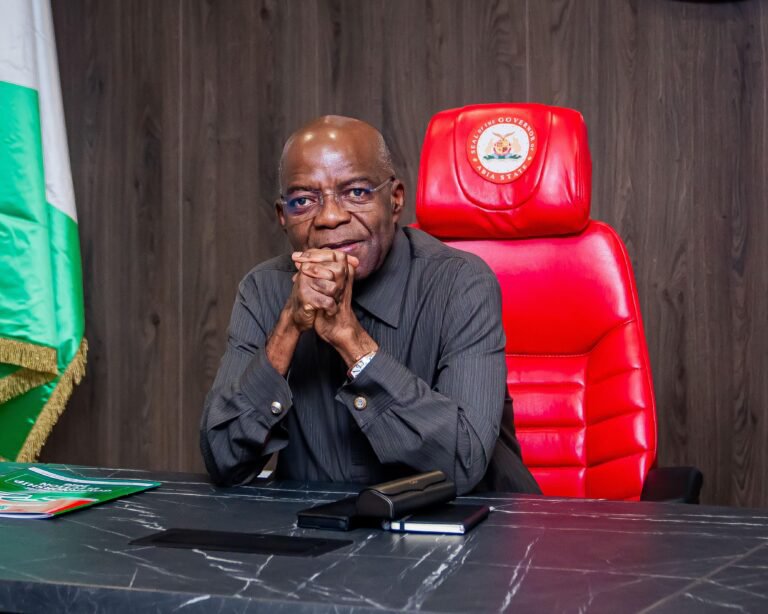
Abia State Governor Alex Otti has publicly distanced himself from remarks by Imo State Governor Hope Uzodimma, who recently declared that the five governors of the South-East had resolved to support President Bola Ahmed Tinubu's re-election in the 2027 presidential election.
Otti, the only Labour Party governor in the South-East, said while Uzodimma is entitled to his personal political views, he does not possess the authority to speak on behalf of every governor in the region or the South-East electorate.
His comments have introduced a new dimension to the growing political conversation surrounding alliances and endorsements ahead of Nigeria's 2027 general elections.
The disagreement also highlights the diversity of political interests within the South-East, where governors belong to different political parties and may pursue different political strategies as the next election cycle approaches. (Peoples Gazette Nigeria)
Uzodimma's Endorsement of Tinubu
The controversy began after Governor Hope Uzodimma, who serves as Chairman of the South-East Governors' Forum, stated that the governors of the five South-East states had agreed to support President Tinubu's second-term bid.
Speaking during a meeting with traditional rulers and members of the Imo State Elders Council in Owerri, Uzodimma said the decision was based on what he described as the Federal Government's developmental interventions in the region.
He pointed to projects including the establishment of the South East Development Commission (SEDC), railway rehabilitation projects, road construction and increased federal infrastructure investments as evidence that the Tinubu administration had demonstrated commitment to the South-East.
According to Uzodimma, the governors believed continued collaboration with the Federal Government would benefit the region. (Vanguard News)
Otti: "He Cannot Speak to Everybody"
Reacting to the remarks during an interview, Governor Otti rejected the notion that any single governor could commit the entire region to supporting a presidential candidate.
"The governor of Imo State said something about re-electing the president, but I'm not sure it is right to say that" Otti said.
"As a governor and as an individual, he can't speak for every governor."
Otti stressed that political decisions regarding the 2027 presidential election remain personal and that the people of the South-East would make their choices when the appropriate time arrives.
He added that democratic societies thrive on individual choice rather than collective declarations made on behalf of others.
"The people will speak for themselves at the appropriate time," he said.
South-East Politics Remain Diverse
Political analysts say Otti's response underscores the complex political landscape of the South-East.
Unlike some other geopolitical zones where one political party enjoys overwhelming dominance, the South-East remains politically diverse.
The region currently has governors elected on different party platforms, including the Labour Party, All Progressives Congress (APC) and Peoples Democratic Party (PDP).
This diversity makes it difficult for any individual leader to claim unanimous political consensus on major electoral decisions.
Observers note that although governors often cooperate on regional development issues through the South-East Governors' Forum, such cooperation does not necessarily translate into common electoral endorsements.
2027 Alignments Beginning to Take Shape
Although Nigeria's next presidential election is still some time away, consultations and political realignments have already begun across the country.
Political leaders are increasingly positioning themselves and their parties ahead of what is expected to be another fiercely contested election.
President Tinubu, who assumed office in May 2023, is widely expected to seek a second term, although the Independent National Electoral Commission (INEC) has not yet commenced the formal electoral timetable for 2027.
Meanwhile, opposition parties continue to strengthen their structures while evaluating possible alliances.
Analysts believe statements such as those made by Uzodimma and Otti reflect the early stages of broader political negotiations that are likely to intensify over the coming months.
Labour Party's Position
Governor Otti remains one of the Labour Party's highest-profile elected officials following the party's strong showing in the 2023 general election.
Although he has maintained cordial working relationships with leaders across party lines, Otti has consistently emphasized governance and development in Abia State rather than engaging in early presidential campaign activities.
Political observers say his refusal to endorse Uzodimma's position aligns with the Labour Party's continued efforts to preserve its independent political identity ahead of future elections.
Supporters argue that Otti's remarks reinforce the principle that political endorsements should emerge through consultation rather than assumption.
Mixed Reactions Across the Region
Uzodimma's original comments generated mixed reactions among political stakeholders.
Some supporters of the APC welcomed his endorsement, arguing that President Tinubu has initiated major infrastructure and economic projects benefiting the South-East.
Others questioned whether the South-East Governors' Forum possesses the constitutional authority to make collective electoral commitments on behalf of individual governors or the electorate.
Civil society organisations have also reminded political leaders that ultimate electoral decisions belong to voters rather than elected officials.
Political commentators say the differing positions illustrate the democratic nature of Nigeria's multiparty political environment.
The Importance of Regional Unity
Despite their disagreement over 2027 politics, both governors have repeatedly expressed commitment to regional cooperation on issues affecting the South-East.
The South-East Governors' Forum has continued collaborating on security, infrastructure development, economic growth and investment promotion.
Analysts note that regional cooperation on governance does not necessarily require political uniformity during national elections.
Many believe the governors will continue working together on developmental issues regardless of their individual political preferences.
Looking Ahead
Governor Otti's response has effectively clarified that there is no unanimous political endorsement from all South-East governors for President Tinubu's 2027 re-election bid.
While Governor Uzodimma maintains that collaboration with the Federal Government has yielded significant benefits for the region, Otti insists that every governor and ultimately every voter must retain the freedom to make independent political choices.
As Nigeria gradually moves toward another election season, more political declarations, endorsements and counter-endorsements are expected across the country's six geopolitical zones.
For now, Otti's remarks serve as a reminder that political consensus cannot simply be declared; it must be earned through consultation, persuasion and, ultimately, the democratic verdict of the electorate.