US Supreme Court Clears Way for Trump to Continue Building $400 Million White House Ballroom
The US Supreme Court has allowed Donald Trump to continue construction of his $400 million White House ballroom in a 5 - 4 ruling, despite an ongoing legal challenge.
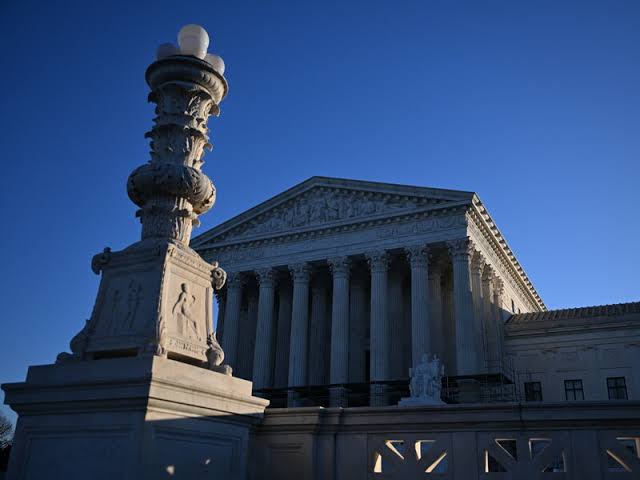
The US Supreme Court has cleared the way for President Donald Trump to continue construction of his controversial $400 million White House ballroom, delivering a major legal and political victory to the administration as challenges to the project continue.
In a narrow 5 - 4 decision on Monday, August 31, the Supreme Court blocked a lower-court order that had halted above-ground construction of the 90,000-square-foot project. The justices did not, however, make a final determination on whether Trump had the legal authority to build the ballroom without specific approval from Congress. (Reuters)
The ruling means construction can proceed while the broader legal dispute continues, potentially allowing the administration to make substantial progress on a project that has become one of the most contentious physical transformations of the White House in modern history.
Supreme Court focuses on legal standing
At the centre of Monday's ruling was not a definitive decision on the legality of the ballroom itself, but whether the National Trust for Historic Preservation, the group challenging the project, had sufficient legal standing to bring the case.
The conservative majority concluded that the preservation group had not demonstrated the type of direct, concrete injury required to stop the construction.
The ruling therefore gives Trump an immediate victory without resolving the underlying constitutional and administrative questions surrounding the project. The Washington Post reported that the justices found the preservationists had not suffered the direct personal harm necessary to maintain the lawsuit. (The Washington Post)
This distinction is significant. The decision does not necessarily mean that the Supreme Court has declared Trump's ballroom project lawful. Instead, it removes a major legal obstacle that had temporarily prevented above-ground construction.
Chief Justice John Roberts dissents
The decision exposed a sharp division within the Supreme Court.
Chief Justice John Roberts joined the court's three liberal justices in dissenting from the ruling.
Roberts argued that the project was likely unlawful because Congress had not expressly authorised the major alteration of the White House complex.
His dissent raised broader concerns about the constitutional balance between the executive and legislative branches, particularly over the president's authority to make major changes to federally controlled property. (ABC News)
The dissent means that all four members of the court's liberal wing and the chief justice opposed allowing construction to proceed under the circumstances presented to the court.
The 5-4 split therefore highlights the significance of the ruling not only for the White House project but also for the broader debate over presidential power.
What is Trump's White House ballroom?
Trump's proposed ballroom is designed to provide a much larger venue for official receptions, state dinners and other major events than the White House currently offers.
The project involves the construction of a 90,000-square-foot facility on the site where the White House's historic East Wing once stood.
The East Wing was demolished as part of the project, prompting strong criticism from preservationists and architectural historians.
Trump has promoted the ballroom as a major improvement to the presidential complex and has argued that the existing facilities are inadequate for large diplomatic and ceremonial gatherings.
The administration has also emphasised security considerations surrounding the development, including underground infrastructure associated with the new complex. (Al Jazeera)
Preservationists challenge the project
The National Trust for Historic Preservation filed a lawsuit challenging the administration's actions.
The group argued that the government had proceeded without obtaining the necessary approvals and that the demolition of the East Wing and construction of the new ballroom threatened the historic character of the White House.
The legal challenge gained traction in lower courts, where a judge ordered a halt to much of the construction.
The Trump administration appealed, eventually taking the dispute to the Supreme Court.
The administration argued that stopping construction would create serious consequences and that delaying the project could threaten security arrangements associated with the White House.
The Justice Department had previously told the Supreme Court that suspending work could threaten the safety of Trump, his family and executive branch personnel. (The Washington Post)
Trump administration celebrates ruling
The Supreme Court decision represents a significant political victory for Trump, who has personally championed the ballroom project.
The president has presented the development as part of his effort to improve the White House and reshape Washington's most prominent government spaces.
Following the ruling, Trump celebrated the decision and portrayed the project as an important part of his presidential legacy.
The administration has also maintained that the project is moving ahead on schedule.
Reports indicate that construction is already well advanced, meaning that continued work could make it increasingly difficult for opponents to reverse the physical transformation even if they eventually prevail in court. (Courthouse News)
Why the ruling matters beyond the ballroom
The case has significance beyond architecture.
At stake is the question of how much authority a president has to alter major federal property without explicit congressional approval.
Chief Justice Roberts' dissent placed the dispute within the broader constitutional principle that Congress controls federal property and spending.
Supporters of Trump, meanwhile, argue that presidents need sufficient authority to manage and secure the White House, particularly when construction is connected to security concerns.
The dispute therefore touches on the separation of powers, presidential authority, historic preservation and the limits of judicial intervention.
National security argument
The administration has increasingly highlighted national security as a justification for the project.
According to filings before the Supreme Court, government officials argued that elements of the new development have security implications and that construction delays could interfere with measures designed to protect the president and other senior officials.
That argument has become particularly important in the legal battle because courts traditionally give the executive branch significant latitude when national security is involved.
Critics, however, question whether national security considerations should be used to bypass established procedures for modifying historic federal property.
Construction is now expected to accelerate
With the Supreme Court allowing construction to continue, workers can proceed with above-ground portions of the project while the legal proceedings move forward.
That could significantly change the nature of the dispute.
The longer construction continues, the more difficult and expensive it could become to reverse the project.
The Associated Press reported that major structural elements could be completed as early as April 2027, with the broader project potentially reaching completion in 2028. (AP News)
Trump has therefore gained valuable time to advance a project that has already generated substantial political and cultural controversy.
What happens next?
The Supreme Court's decision does not end every legal challenge to the ballroom.
Instead, it allows construction to proceed while questions about the project's legality continue through the courts.
The National Trust for Historic Preservation's immediate case has suffered a major setback because of the Supreme Court's finding on standing.
Nevertheless, other legal questions surrounding congressional authority, federal property and the administration's decision-making process could continue to generate litigation.
The outcome could ultimately shape how future presidents approach major changes to the White House and other federal landmarks.
A landmark victory for Trump
The Supreme Court's 5-4 ruling is undoubtedly a major victory for Trump.
It allows his administration to continue construction of a massive new ballroom despite the objections of preservationists and a previous lower-court order.
But the ruling should not be interpreted as a blanket declaration that Trump has unlimited authority to rebuild the White House.
The court's decision centred heavily on whether the preservation group had legal standing and did not definitively resolve every question concerning the project's legality. (TIME)
For now, however, construction will continue.
The demolished East Wing is being replaced by a modern complex that Trump says will strengthen the White House's ceremonial and security capabilities.
Opponents see the development as an unprecedented alteration of an historic national landmark and a test of presidential power.
As construction advances, the White House ballroom is likely to remain a major symbol of Trump's second presidency and an increasingly important battleground over the limits of executive authority in the United States.