US Strikes Iranian Oil Tankers as Tehran Targets American Base in Jordan
The US has destroyed five Iranian oil tankers after attacks on a Navy warship, while Tehran retaliated with missiles against a US-linked base in Jordan and ships near Hormuz.
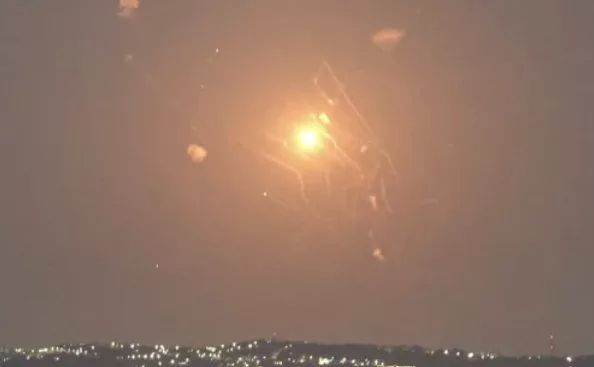
The conflict between the United States and Iran has entered a dangerous new phase, with Washington striking five Iranian oil tankers while Tehran retaliated by launching ballistic missiles at a US military facility in Jordan and attacking vessels around the strategically vital Strait of Hormuz.
The latest exchange marks one of the most serious escalations in the six-month-old war, extending the confrontation beyond military installations into oil shipping, energy infrastructure and commercial maritime routes.
The US military said its forces destroyed five Iranian crude oil carriers on September 8 after Iran's Islamic Revolutionary Guard Corps (IRGC) twice attempted to attack a US Navy warship with ballistic missiles. Washington said the American vessel successfully evaded the attacks and that no US personnel were injured. (Al Jazeera)
Iran subsequently launched missiles at a US military base near Al Azraq in Jordan, while the IRGC claimed to have attacked several American-linked vessels in the Gulf.
US Says Five Iranian Tankers Were Destroyed
The US Central Command said its forces targeted five Iranian oil carriers: the Kaviz, Charminar, Horizon 1 and Riesco in the Gulf of Oman, and the Derya near Iran's Kharg Island.
According to CENTCOM, crews were warned to abandon the ships before the vessels were struck and rendered inoperable.
The US said the attacks were a direct response to Iranian attempts to hit an American warship.
Secretary of State Marco Rubio defended the action, warning that Iran would continue to lose tankers if it continued attacking US naval assets.
The strikes represent a significant expansion of Washington's campaign against Tehran because the targets were not simply military facilities. By attacking oil carriers, the United States is also applying pressure to one of Iran's most important sources of foreign revenue.
Tehran Retaliates with Missile Strike on Jordan
Iran responded by firing ballistic missiles at a US military facility near Al Azraq in Jordan.
The Iranian Revolutionary Guard claimed the attack caused significant damage to facilities used by American forces, including hangars associated with US fighter aircraft.
Those claims have not been independently verified.
Jordan's armed forces said its air-defence systems intercepted and destroyed 18 of 20 ballistic missiles fired during the attack. The remaining missiles reportedly landed in unpopulated areas, and Jordan said there were no casualties.
The attack illustrates the risks facing Jordan because of its close military relationship with Washington.
The United States maintains military installations in Jordan, making the kingdom an important part of the American military presence in the region. Jordan has consequently become a potential target as the conflict between Washington and Tehran widens. (AP News)
Iran Also Targets Shipping Near Hormuz
The confrontation did not stop with the missile attack.
Iran's Revolutionary Guard said it attacked 10 ships near the Strait of Hormuz following the destruction of the Iranian tankers.
The IRGC also threatened shipping linked to countries supporting US efforts in the region and warned crews associated with vessels in the area.
The developments have raised fears that the conflict could seriously disrupt one of the world's most important energy corridors.
The Strait of Hormuz is a narrow waterway connecting the Persian Gulf with the Gulf of Oman and the Arabian Sea. It carries a significant share of the world's oil and liquefied natural gas shipments.
Recent shipping data show how quickly the conflict is affecting maritime traffic. Only six commodity vessels crossed the strait on Tuesday, compared with a 10-day average of 12, according to Kpler data reported by Reuters. (Reuters)
Oil Prices Surge Above $100
The latest military escalation has immediately affected global energy markets.
Brent crude oil climbed above $100 a barrel, reaching levels not seen since July, as traders assessed the possibility of prolonged disruption to oil supplies.
The concern extends beyond Iranian crude.
If shipping through the Strait of Hormuz remains severely restricted, oil producers across the Gulf could face difficulties exporting crude to international markets.
The situation has therefore created fears of higher petrol, diesel and transportation costs worldwide.
For countries heavily dependent on imported energy, sustained high oil prices could also increase inflation and put additional pressure on households and businesses.
Reuters reported that the combination of attacks on shipping and regional energy infrastructure has already heightened concerns about global supply disruptions.
Why the Oil Tankers Matter
The tanker strikes are particularly significant because Iran's oil exports have already been severely affected by the conflict.
Kharg Island, where one of the vessels was targeted, has historically been central to Iran's oil-export infrastructure.
The United States has been attempting to restrict Tehran's ability to generate revenue from oil exports as part of a broader strategy of economic pressure.
Targeting tankers therefore serves two purposes from Washington's perspective: it responds to attacks on US military assets while also reducing Iran's ability to transport and sell crude.
Iran, however, has described the US attacks on its commercial vessels as illegal aggression and warned that Washington and its allies would bear responsibility for the consequences.
The Strait of Hormuz Becomes a Major Flashpoint
The Strait of Hormuz is now at the centre of the confrontation.
Iran has threatened to impose restrictions on shipping through the waterway, while the United States has maintained efforts to protect maritime traffic and enforce its pressure campaign against Iranian oil exports.
Any prolonged closure or severe disruption could have consequences far beyond the Middle East.
Around a fifth of global oil and LNG supplies normally move through the waterway, making it one of the world's most strategically important maritime passages.
The possibility of attacks on tankers has already caused shipping companies and traders to reassess the risks of operating in the region.
Risk of a Wider Regional War
The latest escalation also demonstrates how quickly the conflict can spread.
Iran's response involved a US facility in Jordan, while attacks by Iran-backed Houthi forces have simultaneously targeted Saudi cities and energy infrastructure.
The Houthis' attacks have added another layer to the crisis, with Saudi Arabia reporting casualties and disruptions to energy operations.
The growing number of battlefronts means that a confrontation initially centred on the United States, Israel and Iran now has implications for Jordan, Saudi Arabia, Gulf shipping and international energy markets.
Analysts are increasingly concerned that continued attacks could trigger a broader regional conflict.
Washington and Tehran Show No Sign of Backing Down
Both sides have adopted increasingly forceful positions.
Washington argues that its tanker strikes are a necessary response to Iranian attacks on US naval forces.
Tehran, meanwhile, has warned that American attacks on Iranian energy assets will provoke retaliation against US military positions and shipping interests.
The exchange creates a potentially dangerous cycle: an attack on a military or commercial target triggers retaliation, which then produces another response.
That cycle could make diplomatic de-escalation increasingly difficult.
Global Economic Consequences
The consequences of the latest confrontation will be closely watched in oil-importing countries.
Higher crude prices can increase the cost of fuel, electricity, transportation and manufactured goods. Airlines, shipping companies and logistics operators could also face higher operating expenses.
Developing economies are particularly vulnerable because prolonged energy-price increases can worsen inflation and put pressure on foreign-exchange reserves.
For consumers, the effects may eventually be felt through higher transport fares and prices for goods whose production or distribution depends heavily on petroleum products.
A Dangerous New Phase in the Conflict
The US destruction of five Iranian oil tankers and Iran's retaliatory missile attack on a US-linked base in Jordan represent a significant escalation in the six-month-old conflict.
The confrontation is no longer confined to conventional military targets. Oil tankers, commercial shipping routes and energy infrastructure have become central elements of the conflict.
With oil prices already moving above $100 a barrel and maritime traffic through the Strait of Hormuz falling sharply, the economic stakes are becoming increasingly global.
The immediate question is whether Washington and Tehran can prevent the latest exchange from developing into an even wider confrontation.
For now, however, the destruction of Iranian tankers, Iran's missile response in Jordan and the growing attacks on shipping suggest that the conflict is entering a potentially more dangerous phase - one in which military escalation and global energy security are becoming inseparably linked.