US Strikes Iran on Eve of Midterm Elections Despite Trump's Promise to Avoid Military Action
US forces have launched fresh strikes against Iranian targets ahead of the November 3, 2026 midterm elections, contradicting Donald Trump's earlier promise to avoid attacks and raising fears of renewed war in the Middle East.
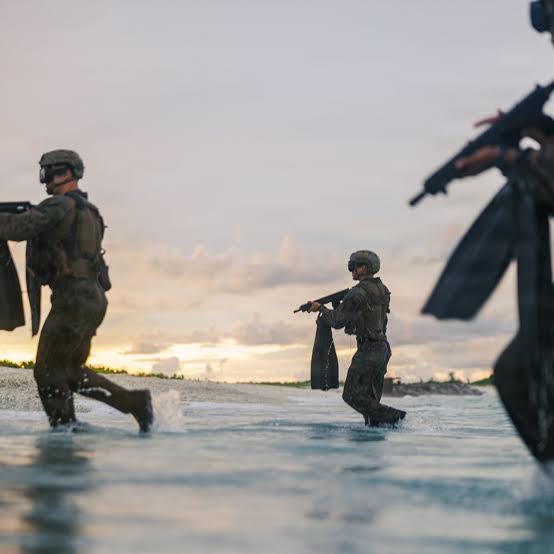
The United States has launched fresh military strikes against Iranian targets near the strategically important Strait of Hormuz, just hours before Americans head to the polls for the November 3 midterm elections, raising questions about President Donald Trump's commitment to keeping the escalating conflict away from the country's domestic political campaign.
The strikes, carried out on Monday, November 2, targeted locations on Iran's Qeshm Island, according to American officials cited by The Washington Post and Associated Press. The operation represents a significant development in the continuing confrontation between Washington and Tehran, particularly because Trump had publicly promised that American forces would not attack Iran before the midterm elections.
A US official described the latest operation as defensive, saying American forces targeted Iranian military positions associated with surface-to-air missiles being used against US forces. Another official said Iranian missile launchers were among the targets.
Iranian state media also reported explosions on Qeshm and Hengam islands, as well as in the nearby mainland area of Bandar Abbas.
The timing of the operation is particularly sensitive because Trump's Republican Party is facing a difficult electoral contest, with the administration's handling of the war, rising fuel costs and economic pressures becoming major campaign issues.
Trump Breaks His Promise Not to Strike Before Elections
The latest military action contradicts Trump's October 8 declaration that the United States would not attack Iran before November 3.
In a statement published on his Truth Social platform, the president said Washington was engaged in productive discussions with Tehran and would refrain from military attacks until after the midterm elections.
However, developments on the ground suggested that the military confrontation had not entirely stopped.
According to The Washington Post, American forces had continued conducting undisclosed airstrikes against Iranian targets in the weeks leading up to the election. These operations were reportedly designed to weaken Iran's ability to threaten commercial vessels and American military assets operating around the Persian Gulf.
The newspaper reported that the Pentagon had not publicly acknowledged several of these operations, marking a departure from the more transparent announcements that characterised earlier stages of the conflict.
The November 2 operation therefore represents not simply an isolated military incident but part of a wider campaign of pressure against Iran.
The White House has maintained that Trump retains the option of military action to protect American interests and prevent Iran from acquiring nuclear weapons.
Midterm Elections Complicate Trump's Iran Strategy
The timing of the strikes has intensified scrutiny of the relationship between Trump's foreign policy decisions and the political interests of his Republican Party.
The November 3 midterm elections will determine control of Congress, including the House of Representatives and the Senate. A poor performance by Republicans could significantly weaken the president's ability to advance his legislative agenda during the remainder of his second term.
The Iran conflict has become an increasingly difficult issue for the administration because of its economic consequences, particularly the impact on international oil supplies and American petrol prices.
The Strait of Hormuz is one of the world's most important energy transportation routes, carrying approximately one-fifth of global oil supplies during peacetime. Any prolonged disruption can increase shipping costs, fuel prices and inflationary pressures across international markets.
According to reporting by Reuters, Trump's advisers had previously pushed for a strategy that would prevent the conflict from escalating before the elections, fearing that renewed fighting and higher petrol prices could further damage Republican electoral prospects.
The administration's apparent preference for keeping military operations limited before election day was therefore partly connected to domestic political considerations, although the latest strikes have complicated that approach.
Importantly, there is no established evidence that the November 2 operation was ordered specifically to influence voters or improve Republican electoral prospects. American officials have instead described the strikes as defensive military action.
Iran Warns Washington as Diplomatic Efforts Continue
Despite the renewed military activity, diplomatic channels between Washington and Tehran remain open.
Iranian Deputy Foreign Minister Kazem Gharibabadi accused the United States of continuing aggression but indicated that Tehran remained willing to pursue negotiations through Qatari mediators.
Iranian officials have also presented a proposal for reopening the Strait of Hormuz and restarting nuclear negotiations, provided Washington agrees to certain conditions.
Among Tehran's demands are the lifting of the American naval blockade, the removal of restrictions on Iranian oil exports and a ceasefire arrangement extending to Lebanon.
Iranian parliamentary speaker and chief negotiator Mohammad Bagher Qalibaf said Tehran had delivered what he described as a firm and rational response to the American side, warning that Iranian forces remained on high defensive alert.
The diplomatic developments suggest that both countries are attempting to maintain negotiating opportunities even as military confrontation continues.
However, the latest strikes could undermine confidence in the negotiations and increase the possibility of retaliatory action.
Middle East Allies Fear Wider Regional Conflict
The latest American operation has also raised concerns among US allies in the Middle East.
Earlier, on October 28, Associated Press reported that Washington had warned several regional partners to prepare for possible renewed military action against Iran after the midterm elections.
According to diplomats briefed on the warnings, countries in the region were also advised to prepare for possible Iranian retaliation against energy facilities and other critical infrastructure.
The concerns are particularly significant for Gulf countries whose economies depend heavily on energy exports and uninterrupted maritime transportation.
Saudi Arabia, the United Arab Emirates, Qatar, Bahrain and other regional countries could face serious consequences if the confrontation develops into a wider conflict.
Israel has also been pressing Washington to consider another wave of military operations against Iran, according to regional officials cited by the Associated Press.
Meanwhile, the deployment of additional American military assets to the region has reinforced concerns that the conflict could intensify beyond the latest limited strikes.
Global Economic Consequences
Beyond military and diplomatic considerations, the confrontation carries substantial implications for the global economy.
A prolonged closure or disruption of the Strait of Hormuz could send international oil prices higher, increase transportation costs and complicate efforts by governments to control inflation.
Developing economies, particularly countries heavily dependent on imported petroleum products, could face additional economic pressure.
For Nigeria, fluctuations in international crude oil prices present a complicated situation. Higher prices could improve government revenue and foreign exchange earnings, but they could also increase domestic fuel costs and worsen inflationary pressures.
The uncertainty surrounding American military policy is therefore being closely watched by international energy markets and governments.
Conclusion
The fresh US strikes against Iran on November 2 have exposed the growing difficulty facing the Trump administration as it attempts to balance military objectives, diplomatic negotiations and domestic political considerations.
Although Washington describes the operation as defensive, its timing, coming immediately before the November 3 midterm elections, has intensified questions about Trump's earlier promise to avoid attacks before voting day.
With Iran maintaining its military readiness, diplomatic negotiations continuing and regional allies preparing for possible retaliation, the possibility of further escalation remains a major concern.
The immediate challenge for Washington is to prevent limited military operations from triggering a wider regional confrontation while managing the political and economic consequences of a war that has become increasingly unpopular among American voters.
As the midterm elections conclude, the direction of Trump's Iran policy could become one of the most consequential foreign-policy decisions of his second presidency.