US Not Under 'Systemic Attack', Marco Rubio Says Amid Wave of Technology Outages
US Secretary of State Marco Rubio says America is not under systemic attack following technology outages affecting airlines, banks, Microsoft and government agencies, insisting there is no evidence of coordinated cyberattacks.
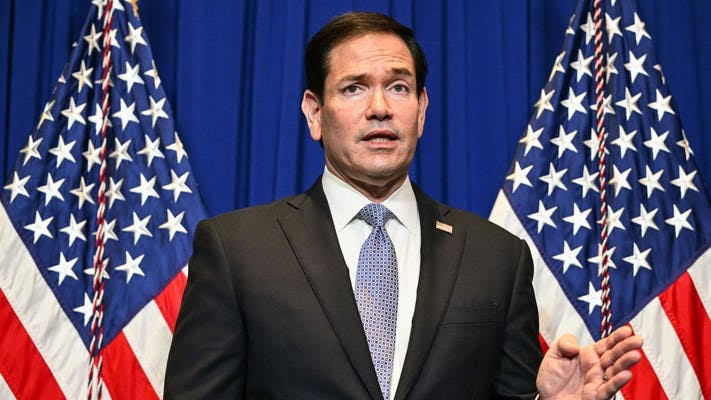
United States Secretary of State Marco Rubio has reassured Americans that the country is not under a coordinated or systemic attack following a series of technology disruptions affecting major businesses, financial institutions, airlines and government agencies.
Rubio made the declaration while addressing journalists in Manila, Philippines, on Tuesday, November 17, 2026, amid growing public concerns that the repeated failures could be connected to cyberattacks or hostile foreign operations.
The US secretary of state insisted that the Trump administration had found no evidence linking the incidents or suggesting that they were orchestrated by hackers, cybercriminals, foreign governments or other hostile actors.
"We are not under systemic attack. These events, one has nothing to do with the other. They're not interrelated. They're all separate, and they're distinct," Rubio said.
His comments came as the United States grappled with a series of technological failures that disrupted essential services, including air travel, banking operations, corporate communications and classified government networks.
According to Rubio, the administration wanted to address public anxiety by providing transparency about what intelligence and security officials knew regarding the incidents.
Rubio Rules Out Coordinated Cyberattack
Rubio said the government had examined the various disruptions but found no indication that they were connected or resulted from a coordinated malicious operation.
He specifically mentioned the Microsoft incident, disruptions involving the Federal Aviation Administration (FAA) and problems affecting major banks, maintaining that each had a separate technical explanation.
"The first thing I want to make very clear is that we have zero evidence whatsoever, we have no indication, no evidence, and no reason to believe at all that any of these incidents are related to each other," he explained.
The secretary of state added that the government had no reason to believe the incidents were connected to cyber hackers, criminals, foreign governments or any other hostile organisation.
His statement was intended to counter growing speculation that the repeated failures could represent an attempt by a foreign adversary to undermine America's technological and economic infrastructure.
Rubio acknowledged that the disruptions were unsettling but maintained that the government was taking the situation seriously.
He also expressed confidence in the country's intelligence and security agencies, saying they remained alert to potential threats against American interests.
Series of Outages Raises National Security Concerns
The reassurance followed several days of technological disruptions across different sectors of the American economy.
Among the most significant incidents was a widespread disruption involving Microsoft's services, which affected users and businesses dependent on its digital infrastructure.
The Federal Aviation Administration also experienced a major disruption that resulted in a nationwide ground stop affecting air travel.
The suspension reportedly lasted approximately four and a half hours, creating delays and operational challenges for airlines and passengers.
United Airlines subsequently experienced flight delays connected to technological problems.
Major financial institutions, including JPMorgan Chase, Bank of America and US Bank, also experienced service disruptions, raising concerns about the reliability of banking infrastructure.
Apple services were similarly affected by technical difficulties.
The situation became more concerning when the National Security Agency (NSA), one of America's most important intelligence institutions, experienced an outage involving its internal network used for storing and sharing classified information.
The NSA described the disruption as temporary and maintained that its mission-critical capabilities remained operational.
However, the accumulation of incidents within a relatively short period generated speculation about whether the United States was experiencing a broader cybersecurity crisis.
In a report published on November 17, Reuters detailed how the wave of technological failures had spread from private businesses and airlines to government infrastructure.
The report also noted that cybersecurity specialists were concerned about the vulnerabilities associated with increasingly interconnected digital systems.
Artificial Intelligence and Cybersecurity Vulnerabilities
The possible relationship between artificial intelligence and the recent disruptions has also attracted attention.
US intelligence chief Jay Clayton reportedly linked the NSA network problem to software maintenance and efforts to address a PHP vulnerability identified with the assistance of artificial intelligence.
The situation highlighted the challenges organisations face when attempting to strengthen cybersecurity systems while maintaining uninterrupted services.
AI technology is increasingly being used to identify software vulnerabilities, analyse security threats and improve digital infrastructure.
However, experts have warned that the speed at which vulnerabilities can be identified may create pressure on companies and government institutions to implement security updates quickly.
Such changes can sometimes introduce new technical problems, particularly when organisations operate complex systems that depend on multiple interconnected platforms.
Rubio declined to speculate about whether artificial intelligence contributed to the various outages, explaining that each incident had its own circumstances and should be assessed independently.
Democratic Senator Mark Warner, vice chairman of the Senate Intelligence Committee, also raised concerns about the implications of AI-driven vulnerability detection.
Warner argued that artificial intelligence was making it possible to identify weaknesses across enormous numbers of systems at unprecedented speed, creating pressure on organisations to implement patches and security improvements.
He called for stronger cybersecurity protections and appropriate safeguards to address the emerging challenges.
Trump Dismisses Concerns Over Technology Failures
President Donald Trump also played down concerns surrounding the disruptions, suggesting that technological failures were not unusual.
His position contrasted with growing public anxiety over the possibility that the incidents could expose weaknesses in the country's critical infrastructure.
While Rubio sought to reassure Americans through a detailed explanation of the administration's assessment, Trump appeared less concerned about the implications of the outages.
The administration's position, however, has not eliminated questions about the resilience of America's digital infrastructure.
The incidents have renewed discussions about the country's dependence on technology companies, digital banking systems, aviation networks and government communication platforms.
Rubio Addresses Separate Intelligence Report on Threats Against US Officials
During the same press briefing, Rubio was also questioned about intelligence reports suggesting that Iran could be planning attacks against senior officials of the Trump administration.
The reports reportedly involved potential threats against individuals in Washington, including allegations concerning the possible use of radioactive or chemical weapons.
Rubio declined to confirm the specific intelligence information, criticising the leaking of sensitive government information to journalists.
He described individuals responsible for leaking classified intelligence as either show-offs, liars or criminals if the information they disclosed was accurate.
Although he acknowledged that the United States regularly monitors threats from Iran and terrorist organisations, he said he did not believe an imminent attack against Washington was likely.
"I don't think there's any imminent threat," he stated.
Rubio nevertheless maintained that the government remained vigilant against individuals and organisations seeking to harm American citizens.
Questions Remain Over America's Digital Infrastructure
Despite Rubio's assurances, the recent disruptions have renewed scrutiny of the reliability of essential American technology systems.
The concentration of failures across airlines, banks, technology companies and government institutions has demonstrated how dependent modern economies have become on interconnected digital infrastructure.
Although the administration insists that the incidents are unrelated, the outages have highlighted the potential consequences of technical failures within systems responsible for transportation, financial transactions, communications and national security.
For now, the US government maintains that there is no evidence of a coordinated hostile operation behind the disruptions.
Rubio's message to Americans was that the administration understands their concerns but has no indication that the country is experiencing a systemic cyberattack.
Nevertheless, the incidents are likely to intensify calls for stronger cybersecurity investments, improved technological resilience and greater transparency from organisations responsible for critical national infrastructure.