US Launches Fresh Strikes on Iran as Trump Vows Retaliation for Deaths of American Soldiers
The United States has launched a fresh wave of military strikes on Iran after President Donald Trump vowed retaliation for the deaths of American soldiers. The renewed offensive has heightened fears of a broader Middle East conflict.
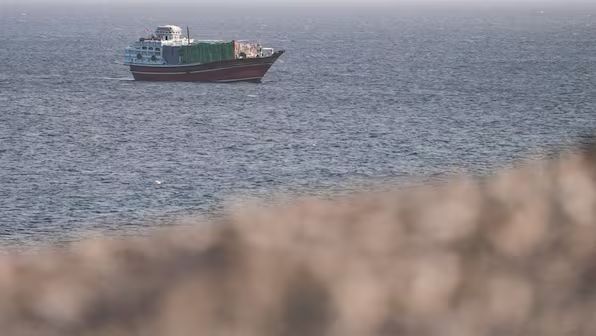
The United States has launched a fresh round of military strikes against Iran, hours after President Donald Trump vowed that Tehran would "pay many times over" for the deaths of American service members in the escalating conflict between the two countries.
The latest attacks mark another significant escalation in the war that has intensified in recent weeks, with both Washington and Tehran exchanging military strikes amid growing fears of a wider regional conflict.
According to the U.S. Central Command (CENTCOM), the new strikes targeted Iranian military installations believed to be linked to missile operations and other capabilities used to threaten U.S. personnel and commercial shipping in the Middle East. (Reuters)
Trump Promises Strong Retaliation
President Trump announced the renewed military action after a deadly weekend in which several American troops were killed in attacks attributed to Iran and its allied forces.
In a message posted on his Truth Social platform, Trump declared that every American life lost would be avenged.
"Every time Iran kills an American soldier, they will pay many times over," the president said, adding that he had instructed senior military leaders to respond decisively. (Reuters)
The White House later confirmed that Trump would attend the dignified transfer of the fallen service members at Dover Air Force Base, underscoring the administration's determination to respond forcefully to the attacks.
Fresh US Airstrikes Target Iranian Military Sites
The Pentagon said the latest operation focused on degrading Iran's military capabilities, particularly facilities linked to missile systems, coastal defences and infrastructure believed to support attacks on U.S. forces and international shipping.
CENTCOM stated that the strikes were carefully planned to weaken Iran's ability to threaten navigation through the Strait of Hormuz, one of the world's most strategically important maritime routes for global oil supplies. (Defense News)
Military officials did not immediately release details regarding the extent of the damage or whether casualties had been recorded.
Iranian state media, however, reported explosions in several areas and accused the United States of carrying out "aggressive and unlawful" attacks against the country's sovereignty.
Iran Condemns the Offensive
Iran strongly condemned the renewed U.S. bombardment, accusing Washington of escalating the conflict instead of pursuing diplomacy.
Senior Iranian officials insisted the country would continue defending itself and warned that any further attacks would be met with an appropriate response.
Tehran has repeatedly described the ongoing confrontation as an "existential war" and has maintained that its military actions are aimed at protecting national security and regional interests. (ThePrint)
Iranian authorities have also accused the United States of undermining previous diplomatic efforts and increasing instability across the Middle East.
Rising Toll on US Forces
The latest escalation follows one of the deadliest periods for U.S. forces since the conflict began earlier this year.
According to Pentagon officials, multiple American service members have been killed in recent attacks targeting U.S. military facilities in the region, while hundreds more have sustained injuries during months of hostilities.
Although many of the wounded have returned to duty, military officials acknowledged that the conflict continues to exact a heavy toll on American personnel stationed across the Middle East.
The deaths have intensified domestic pressure on the Trump administration to respond firmly while also raising questions in Congress about the long-term strategy for the conflict.
Regional Tensions Continue to Grow
The renewed strikes have heightened concerns that the conflict could spread beyond Iran and the United States.
Security analysts warn that continued military exchanges could draw additional regional actors into the confrontation, threatening stability across the Gulf.
The Strait of Hormuz, through which roughly one-fifth of the world's oil shipments pass, remains a major flashpoint.
Recent attacks on commercial vessels and military installations have already disrupted shipping and contributed to rising energy prices in international markets. (AP News)
Several neighbouring countries have strengthened security around critical infrastructure amid fears that the conflict could expand.
International Calls for Restraint
The escalating violence has prompted renewed appeals from the international community for both sides to exercise restraint.
Diplomatic efforts are continuing behind the scenes, although prospects for an immediate ceasefire remain uncertain.
Global leaders have warned that prolonged fighting could worsen humanitarian conditions, disrupt international trade and increase geopolitical instability.
The United Nations has repeatedly urged all parties to avoid actions that could further inflame tensions while encouraging renewed diplomatic engagement.
Economic Implications
Beyond the battlefield, the conflict is having significant economic consequences.
Oil prices have risen as investors react to concerns over possible disruptions to energy exports from the Gulf region.
Financial markets have also experienced increased volatility amid uncertainty surrounding the duration and potential expansion of the conflict.
Economists warn that prolonged instability in the Middle East could affect global inflation, supply chains and economic growth if tensions continue to escalate.
Uncertain Road Ahead
With fresh U.S. airstrikes underway and Iran promising retaliation, the prospect of a quick resolution appears increasingly remote.
President Trump's pledge to respond aggressively to the deaths of American soldiers signals that Washington is unlikely to ease military pressure soon.
At the same time, Iran has shown no indication that it intends to back down, raising fears of additional attacks and counterattacks in the days ahead.
As both nations remain locked in an intensifying military confrontation, the international community faces mounting pressure to revive diplomatic efforts before the conflict develops into a broader regional war with far-reaching global consequences.