US-Iran Peace Talks Make Encouraging Progress as First Round Ends with 60-Day Roadmap
The first round of high-level U.S.-Iran peace talks in Switzerland has ended with "encouraging progress," mediators say. Negotiators agreed on a 60-day roadmap toward a final deal, with technical discussions set to continue.
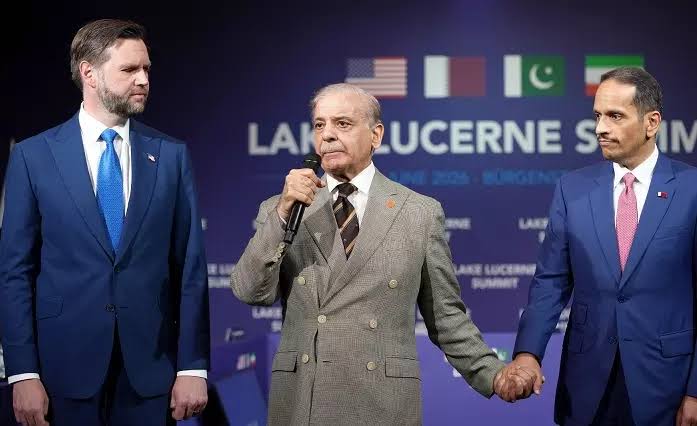
The first round of high-stakes peace negotiations between the United States and Iran has concluded with what mediators described as "encouraging progress," raising cautious optimism that decades of hostility between the two nations could be moving toward a diplomatic breakthrough.
The talks, held at the Bürgenstock resort overlooking Lake Lucerne in Switzerland, brought together senior officials from Washington and Tehran for the first major negotiating session under a preliminary agreement reached last week. After two days of discussions, mediators from Qatar and Pakistan announced that both sides had agreed on a roadmap aimed at securing a comprehensive agreement within 60 days. (Reuters)
Although negotiators acknowledged that difficult issues remain unresolved, they described the atmosphere throughout much of the meeting as constructive and forward-looking.
In a joint statement issued at the conclusion of the talks, Qatar and Pakistan said the discussions had produced "encouraging progress," including the establishment of a High-Level Committee that will oversee negotiations in the coming weeks. The committee will supervise technical working groups tasked with addressing complex political, security, and economic issues before the next ministerial meeting.
Among the most significant outcomes was an agreement to launch technical negotiations immediately, allowing experts from both countries to begin drafting proposals on key areas of disagreement.
The mediators also announced the creation of new communication mechanisms designed to reduce tensions in the strategically vital Strait of Hormuz, one of the world's busiest energy shipping routes.
Officials said the communication channel is intended to prevent misunderstandings or accidental military incidents that could threaten international shipping or escalate regional conflict.
The negotiations also focused heavily on preserving the fragile ceasefire in southern Lebanon, where hostilities involving Hezbollah and Israel have remained a major source of regional instability.
According to diplomats involved in the discussions, both Washington and Tehran agreed to support mechanisms intended to reduce violence and improve coordination with regional actors to prevent renewed fighting.
Iranian officials welcomed the progress achieved during the talks.
Iranian Foreign Minister Abbas Araghchi described the negotiations as having produced "major progress," while emphasizing that significant work remains before a final agreement can be reached.
He credited Qatar and Pakistan for their mediation efforts and said the talks had created a foundation for broader discussions on sanctions relief, regional security, and economic cooperation. (Prothomalo)
The United States has so far adopted a more measured tone.
Senior American officials acknowledged progress on several issues but cautioned that negotiations remain at an early stage.
One U.S. diplomat involved in the talks said discussions were particularly productive in clarifying Iran's position on reopening maritime access through the Strait of Hormuz and strengthening arrangements to maintain the ceasefire in Lebanon.
The official stressed that the negotiations remain highly complex and will require sustained political commitment from both governments. (NewsBytes)
The talks were not without moments of tension.
Negotiations briefly stalled after comments by U.S. President Donald Trump criticizing Iran and warning of possible consequences if diplomacy failed.
Iran's delegation temporarily paused discussions following the remarks before returning to the negotiating table through mediation by Qatar and Pakistan.
Despite that interruption, both sides ultimately agreed to continue working toward a comprehensive settlement. (The Guardian)
Financial markets reacted positively to news of diplomatic progress.
Oil prices fell sharply as investors interpreted the negotiations as reducing the immediate risk of disruptions to global energy supplies through the Strait of Hormuz.
Equity markets also advanced, with investors encouraged by the possibility that easing tensions in the Middle East could stabilize global trade and reduce geopolitical uncertainty.
Analysts noted that lower oil prices reflected growing confidence that diplomatic efforts could help prevent further escalation in the region.
While optimism has grown, diplomats cautioned that the most difficult negotiations still lie ahead.
Future discussions are expected to tackle sensitive issues including Iran's nuclear programme, sanctions relief, regional security arrangements, and long-term mechanisms for conflict prevention.
Technical teams are scheduled to remain in Switzerland throughout the week to continue detailed negotiations before senior political leaders reconvene.
The 60-day timetable established during the talks provides an ambitious framework, but negotiators acknowledge that success will depend on both sides making politically difficult compromises.
International observers have welcomed renewed diplomatic engagement.
Many analysts believe that sustained dialogue offers the best opportunity in years to reduce tensions between Washington and Tehran after decades marked by sanctions, military confrontations, and failed diplomatic initiatives.
The involvement of Qatar and Pakistan has also been praised as an example of regional diplomacy helping bridge longstanding divisions between two geopolitical rivals.
For now, both governments appear committed to keeping negotiations alive.
The coming weeks will determine whether the encouraging atmosphere established during the opening round can be transformed into a durable agreement capable of reshaping relations between the United States and Iran while improving stability across the Middle East.
Although numerous obstacles remain, the successful conclusion of the first round has injected fresh momentum into one of the world's most consequential diplomatic efforts.