US Insists Strait of Hormuz Remains Open as Military Exchanges with Iran Raise Global Oil Supply Fears
The United States says the Strait of Hormuz remains open despite escalating military exchanges with Iran. The confrontation has heightened concerns over global oil supplies, shipping security and regional stability.
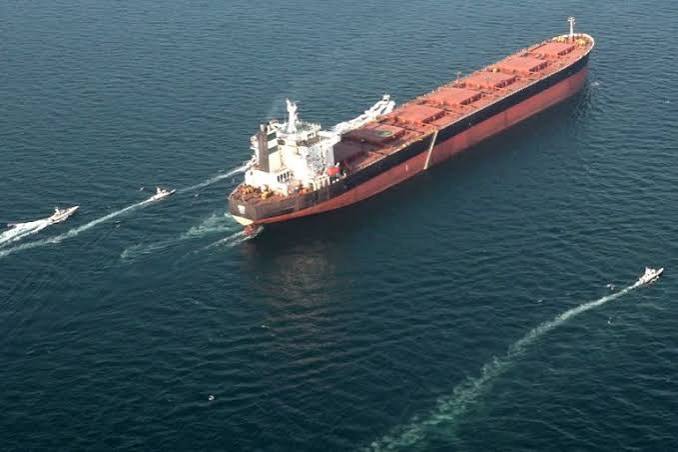
The United States has maintained that the Strait of Hormuz remains open to international maritime traffic despite an escalation in military exchanges with Iran that has heightened concerns over the security of one of the world's most important oil transit routes.
Washington's assurance comes after several days of heightened tensions in the Gulf region, with both countries accusing each other of carrying out military strikes that threaten regional stability and global energy markets.
The Strait of Hormuz, a narrow waterway connecting the Persian Gulf to the Gulf of Oman and the Arabian Sea, is regarded as one of the world's most strategically important maritime chokepoints. Roughly one-fifth of the world's oil consumption passes through the passage each day, making any disruption a major concern for governments, shipping companies and financial markets.
Speaking to reporters, U.S. officials reiterated that commercial shipping continues to move through the strait and that there is currently no official closure of the waterway despite the heightened military activity.
The U.S. Navy, alongside allied maritime forces operating in the region, has continued patrols aimed at ensuring freedom of navigation and protecting commercial vessels from potential threats.
"Our position remains that the Strait of Hormuz is open and international shipping should continue to operate safely under international law," a U.S. official said, while emphasizing that Washington remains committed to safeguarding maritime security.
Escalating Military Exchanges
The renewed tensions follow a series of military exchanges between the United States and Iran, with both sides claiming they acted in response to hostile actions by the other.
Iranian authorities accused the United States of launching strikes against military-related facilities, while Washington said its operations targeted threats against American personnel and interests in the region.
Although neither side has indicated a desire for a full-scale war, analysts warn that continued retaliation increases the risk of miscalculation and unintended escalation.
Military experts note that even limited exchanges can significantly affect regional security, especially in the Gulf, where commercial shipping routes remain vulnerable to conflict.
Global Energy Markets on Edge
Financial markets have reacted cautiously to the developments, with oil prices experiencing increased volatility amid fears that any disruption to the Strait of Hormuz could reduce global crude supplies.
The waterway is used daily by major oil-exporting countries including Saudi Arabia, Iraq, the United Arab Emirates, Kuwait and Qatar.
Energy analysts say that while the strait remains operational, the mere possibility of disruptions often leads to higher insurance costs for shipping companies and increased freight charges, which can eventually affect fuel prices worldwide.
Traders are closely monitoring statements from Washington, Tehran and regional governments for indications of whether tensions are likely to escalate further.
Maritime Security Intensified
International maritime organizations have advised commercial vessels operating in the Gulf region to remain vigilant.
Shipping firms have also been encouraged to follow updated navigation guidance and coordinate closely with naval authorities operating in the area.
Although no widespread interruption to commercial traffic has been officially reported, security experts warn that isolated incidents involving merchant vessels could have broader implications for international trade.
The U.S. has reaffirmed its commitment to working with allies to ensure the uninterrupted flow of commerce through the Gulf.
Diplomatic Efforts Continue
Despite the exchange of military strikes, diplomatic channels remain active.
Several governments have called on both Washington and Tehran to exercise restraint and prioritize dialogue over further military action.
The United Nations has also expressed concern over the deteriorating security environment, urging all parties to avoid actions that could trigger a wider regional conflict.
European and Gulf states continue to engage in diplomatic consultations aimed at preventing further escalation while protecting critical energy infrastructure.
Strategic Importance of the Strait
The Strait of Hormuz remains central to global energy security.
At its narrowest point, the waterway is only about 33 kilometers (21 miles) wide, with designated shipping lanes even narrower, making it particularly vulnerable during periods of geopolitical tension.
Any attempt to restrict access would have significant consequences for oil-importing nations across Asia, Europe and North America.
Economists warn that prolonged instability could increase inflationary pressures globally by driving up energy and transportation costs.
Markets Watch Next Moves
Investors, governments and shipping operators are expected to closely monitor developments in the coming days.
While the United States insists that the Strait of Hormuz remains open and secure, uncertainty surrounding future military exchanges continues to weigh on global markets.
Analysts say avoiding further escalation will be critical to preserving stability in the Gulf and ensuring uninterrupted energy supplies.
For now, commercial shipping continues to transit the strategic waterway, but the situation remains fluid as diplomatic and military developments unfold simultaneously.
The coming days are expected to be crucial in determining whether tensions ease through diplomacy or intensify into a broader regional confrontation with potentially far-reaching economic consequences. (REUTERS)