US House Blocks Bid to Impeach Defence Secretary Pete Hegseth, for Now, Over Iran War Controversy
The US House of Representatives has blocked an impeachment effort against Defence Secretary Pete Hegseth in a 211-204 vote, following allegations of abuse of power over the Iran war and other military operations.
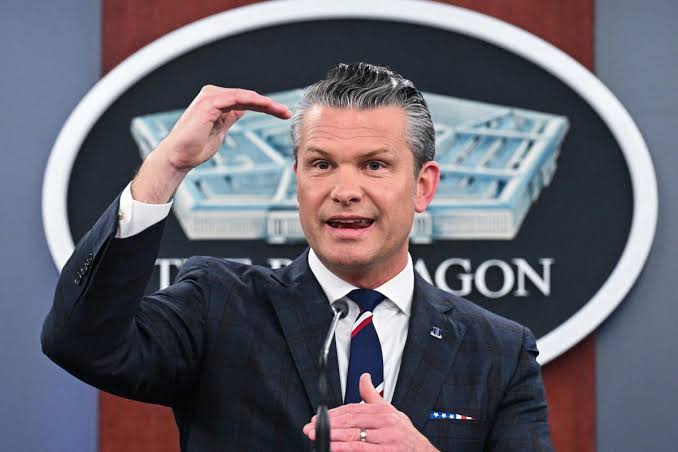
The United States House of Representatives has blocked an attempt to impeach Defence Secretary Pete Hegseth, giving President Donald Trump's embattled Pentagon chief a temporary reprieve amid growing controversy over the administration's military operations, particularly its war against Iran.
The House voted 211 to 204 on Tuesday, November 10, 2026, to refer eight articles of impeachment against Hegseth to the House Judiciary Committee, effectively derailing the immediate effort to bring the charges to a full vote.
The resolution was introduced by Republican Representative Thomas Massie of Kentucky, who accused Hegseth of abusing his office, violating constitutional provisions and directing military operations without appropriate congressional authorisation.
The vote largely followed party lines, with 210 Republicans supporting the motion to refer the impeachment resolution to committee, while Massie was the only Republican to oppose it. All 203 Democrats who voted also opposed the motion, alongside one independent member.
The development represents a significant political victory for Hegseth and the Trump administration, particularly as the president has publicly expressed confidence in his defence secretary despite mounting criticism of the Pentagon's handling of the Iran conflict.
However, the decision may only postpone the controversy, with Democrats preparing to take control of both chambers of Congress in January 2027 following their victories in the November midterm elections.
The Republican-led House's decision effectively halted the impeachment initiative before it could advance to a formal vote on the charges.
Thomas Massie Leads Impeachment Campaign
The impeachment effort was spearheaded by Massie, a Republican lawmaker who has increasingly clashed with Trump over the administration's foreign policy and military decisions.
Massie introduced eight articles of impeachment against Hegseth, alleging that the defence secretary had committed serious violations of the Constitution and abused the authority of his office.
The charges focused heavily on the administration's military campaign against Iran, which Massie argued was initiated and sustained without the necessary congressional authorisation.
He also accused Hegseth of ignoring legal safeguards designed to minimise civilian casualties during military operations.
Other allegations concerned American military strikes against suspected drug-trafficking vessels in the Caribbean Sea and eastern Pacific Ocean, the military operation that captured Venezuela's former president, Nicolás Maduro, and the administration's bombing campaign in Yemen.
The impeachment articles further accused Hegseth of retaliating against Democratic Senator Mark Kelly following his criticism of the defence secretary and comments concerning military personnel's obligation to refuse unlawful orders.
Massie argued that the allegations went beyond ordinary political disagreements and amounted to serious abuses of executive authority.
He maintained that Congress had a constitutional responsibility to hold senior government officials accountable when their actions potentially violate the law.
Why Republicans Blocked the Impeachment
Despite the seriousness of the allegations, Republican lawmakers overwhelmingly supported referring the impeachment resolution to the Judiciary Committee rather than allowing it to proceed to a full House vote.
The decision reflected the continuing political support Hegseth enjoys among Republican lawmakers and Trump's determination to defend members of his administration.
President Trump had previously dismissed the impeachment campaign and expressed confidence in Hegseth, describing the defence secretary as an important member of his administration.
Following the House vote, Trump celebrated the outcome, describing it as an exoneration of Hegseth and criticising Massie for pursuing the impeachment effort.
The Pentagon also welcomed the decision.
Sean Parnell, a spokesperson for the Department of War, described the referral of the impeachment articles to the Judiciary Committee as a total victory for Hegseth and the department.
However, the procedural decision did not amount to a judicial determination that the allegations were false or that Hegseth had been cleared of wrongdoing.
Rather, it prevented the impeachment effort from advancing at this stage.
Republicans argued that the accusations did not establish the kind of high crimes and misdemeanours required to justify impeachment.
Hegseth Dismisses Impeachment Effort as Political Stunt
Hegseth had earlier rejected the allegations, describing the impeachment campaign as a political spectacle designed to undermine his leadership at the Pentagon.
Speaking during a news conference on Tuesday, he dismissed the accusations as baseless and insisted that his decisions were guided by the administration's military objectives.
He argued that the allegations represented partisan disagreements over government policy rather than conduct amounting to impeachable offences.
Hegseth also defended the military operations conducted under his leadership, maintaining that he was proud of the decisions taken by the Pentagon.
His response came as the Trump administration faced increasing questions about the legal justification, cost and consequences of its military engagement with Iran.
The controversy has also placed Hegseth at the centre of a wider political dispute over presidential war powers and the constitutional authority of Congress to oversee military operations.
Iran War and Political Fallout Intensify Pressure on Trump Administration
The impeachment effort comes against the backdrop of growing dissatisfaction with the prolonged conflict involving Iran.
The war has generated significant political and economic consequences, including rising fuel prices and concerns about the financial and human costs of continued military operations.
Republican lawmakers have increasingly faced questions about the administration's handling of the conflict, particularly following the party's disappointing performance in the November midterm elections.
Some Republicans have blamed the Iran war and its economic consequences for the party's electoral losses.
The controversy has also exposed divisions within the Republican Party over the extent of presidential authority to conduct military operations without congressional approval.
Although most Republicans supported blocking the impeachment effort, some lawmakers have previously joined Democrats in efforts to challenge the administration's military decisions through war powers resolutions.
The dispute has become part of a broader debate about congressional oversight, military accountability and the consequences of the administration's foreign policy.
Democrats Promise Fresh Scrutiny When They Take Control of Congress
Although Tuesday's vote provided Hegseth with temporary relief, the political situation could become more difficult for the defence secretary when Democrats assume control of Congress in January 2027.
Democratic lawmakers have indicated that they intend to investigate the administration's military decisions and examine allegations involving the Pentagon.
House Democratic leader Hakeem Jeffries, who is expected to become Speaker of the House, has openly supported efforts to remove Hegseth.
Speaking to PBS, Jeffries accused the defence secretary of abusing his authority and undermining American national security.
He described the Iran conflict as an unnecessary war that had made the United States less secure while increasing the financial burden on American households.
Jeffries also indicated that Democrats would continue pursuing accountability over the administration's military operations.
The possibility of renewed impeachment proceedings therefore remains open, although it is not yet certain whether Democratic leaders will introduce another resolution or prioritise congressional investigations.
The incoming Democratic majority could also use its committee powers to demand documents, summon officials and examine the legal basis for military operations conducted under Hegseth's leadership.
How the Impeachment Process Works
Under the United States Constitution, a president, vice president and other civil officers can be impeached for treason, bribery or other high crimes and misdemeanours.
The House of Representatives has the authority to approve impeachment charges through a simple majority vote.
If the House approves the articles, the matter proceeds to the Senate, which conducts an impeachment trial.
Conviction requires a two-thirds majority of senators present, and a successful conviction results in removal from office.
Therefore, even if the House had approved Massie's resolution, Hegseth would not automatically have lost his position.
The Senate would have had to consider the charges and determine whether the evidence justified conviction and removal.
The November 10 procedural vote means that the impeachment articles have not been approved by the House.
A Temporary Victory for Pete Hegseth
The House decision has temporarily protected Hegseth from an immediate impeachment vote, allowing him to remain in office without the threat of an imminent Senate trial arising from Massie's resolution.
However, the controversy surrounding his leadership, the Iran war and the administration's military decisions remains unresolved.
With Democrats preparing to assume control of Congress, the defence secretary could face renewed investigations and further political pressure in the coming months.
For Trump, the outcome represents an important victory in his effort to protect a key member of his cabinet.
For Hegseth, however, the fight over his leadership and the legality of military operations may not be over.
The House's decision has blocked the immediate impeachment attempt, but it has not ended the political and constitutional questions surrounding his tenure at the Pentagon.