US Deports More Than 3 million Undocumented Migrants in 15 Months, White House Says
The White House says the Trump administration has deported more than 3 million undocumented migrants in 15 months, combining formal deportations with other departures.
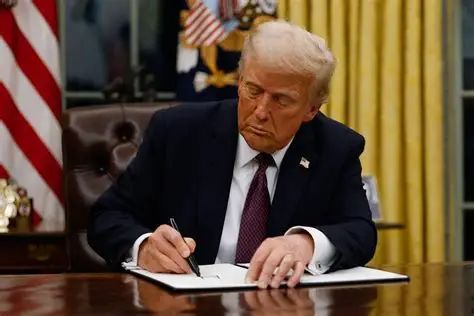
The administration of US President Donald Trump says it has deported more than three million undocumented migrants since Trump returned to the White House, describing the figure as evidence of a dramatic transformation of America's immigration system.
According to a White House fact sheet released in August 2026, the administration has also gone 15 consecutive months without releasing an illegal migrant into the United States, while thousands of people with criminal records have been removed from the country. (Punch Newspapers)
The announcement comes as the Trump administration continues one of the most aggressive immigration enforcement campaigns in recent US history, targeting illegal border crossings, expanding deportation operations and tightening rules governing visas, citizenship and access to government benefits.
White House highlights three million departures
The White House said Trump acted immediately after returning to office by declaring a crisis at the US southern border and introducing measures intended to end what the administration described as uncontrolled illegal immigration under the previous government.
In its latest account, the administration said more than three million undocumented migrants have left the United States since Trump returned to office.
However, an important distinction exists between people who were formally deported and those who left voluntarily.
An earlier White House statement from February said nearly three million undocumented migrants had left the country, comprising more than 675,000 formal deportations and approximately 2.2 million self-deportations.
By July, the White House reported that more than 605,000 people had been deported, while another 1.9 million had self-deported, bringing the total number who had left the country to more than 2.5 million. (The White House)
The latest three-million figure therefore appears to encompass both formal removals and people who voluntarily departed the United States rather than three million deportations carried out by immigration authorities.
Dramatic fall in border crossings
The administration has linked the reduction in the migrant population to a broader decline in illegal crossings at the US-Mexico border.
The White House says illegal border crossings have fallen to their lowest level in decades following Trump's immigration crackdown.
It has credited increased enforcement, stricter asylum policies, expanded Immigration and Customs Enforcement operations and efforts to discourage migrants from attempting to enter the country illegally.
The administration also claims that the United States achieved negative net international migration in 2025, which it described as the first such occurrence in more than half a century.
The sharp reduction in arrivals has become one of the central achievements Trump and his officials cite when defending their immigration policies.
Thousands of criminal migrants removed
The White House has placed particular emphasis on deportations involving migrants who have criminal records.
Its latest immigration figures say the administration has deported thousands of undocumented migrants convicted of or charged with violent crimes.
A White House public-safety briefing says more than 400,000 illegal migrants charged with or convicted of crimes have been deported.
The administration argues that removing such individuals improves public safety and prevents people who are unlawful in the country from committing additional offences.
Trump has repeatedly made criminal immigration enforcement a major part of his political message, promising to prioritise the removal of people considered threats to American communities.
Expanded ICE operations
The increase in immigration enforcement has also been supported by a significant expansion of federal immigration resources.
The White House says the administration has more than doubled the number of ICE officers and agents, increasing the workforce from about 10,000 to 22,000.
The additional personnel have helped support arrests and deportation operations away from the border, including enforcement actions in cities and communities across the country.
The administration has also pursued immigration cases through the courts more aggressively.
According to a White House statement issued in April, US immigration courts issued nearly 500,000 removal orders during fiscal year 2025, representing a 57 per cent increase from the previous year.
Stricter immigration and citizenship policies
The deportation campaign is only one part of Trump's broader immigration agenda.
The administration has also tightened eligibility for some immigration benefits, expanded scrutiny of citizenship applications and moved to terminate certain forms of temporary immigration protection.
The White House says the Department of Homeland Security conducted more than 206 million benefits eligibility checks in 2025, arguing that the process is designed to ensure government benefits are not improperly provided to ineligible people.
The administration has also targeted what it describes as fraudulent citizenship applications and increased scrutiny of naturalisation applicants.
Trump's government has argued that these measures are necessary to protect the integrity of the immigration system.
Controversy over the deportation figures
Despite the administration's claims, the three-million figure needs to be understood carefully.
The headline number refers to people who have left the country, not necessarily people who were physically deported by US immigration authorities.
The White House's earlier breakdown makes this distinction clear, separating formal deportations from self-deportations.
Independent assessments have also questioned some of the administration's immigration statistics and terminology.
The Centre for Migration Studies, for example, has warned that several immigration claims made during 2025 and 2026 require additional context and careful interpretation. (Centre for Migration Studies)
The distinction is important because deportation is a formal government action, while self-deportation generally refers to undocumented migrants leaving the country voluntarily or under pressure from the government's enforcement policies.
Impact on American immigration policy
The scale of the departures represents a major shift in US immigration policy.
Trump campaigned on a promise to secure the border and carry out mass deportations, making immigration enforcement one of the defining issues of his presidency.
His administration has subsequently expanded enforcement powers, increased resources for immigration agencies and introduced policies designed to discourage illegal entry.
Supporters say the measures have restored control over the border and reduced pressure on public services.
Critics, however, have raised concerns about due process, family separation, detention conditions and the treatment of migrants who may have legitimate asylum claims.
The debate is expected to remain politically significant as the United States approaches the 2026 midterm elections.
What comes next?
The administration is showing no indication that the immigration crackdown will slow down.
Trump officials have repeatedly stated that immigration enforcement will continue, while ICE and other federal agencies are receiving additional resources.
The administration's next challenge will be maintaining large-scale enforcement while navigating court challenges, legal requirements and humanitarian concerns.
The three-million figure will also continue to attract scrutiny because of the difference between formal deportations and voluntary departures.
Conclusion
The Trump administration says more than three million undocumented migrants have left the United States in 15 months, marking a dramatic change in America's immigration landscape.
The White House says the figure reflects both formal deportations and self-deportations, while highlighting the sharp fall in illegal border crossings and the removal of hundreds of thousands of migrants with criminal records.
The administration considers the figures proof that Trump's promise to tighten America's borders is being fulfilled.
However, the distinction between deportation and self-deportation remains important when interpreting the statistics. The administration's broader immigration programme, including tougher border enforcement, expanded ICE operations and stricter immigration rules, is likely to remain one of the most consequential and controversial aspects of Trump's presidency.