US Arrests Woman Accused of Spying on Taiwan President’s Family for China
The FBI has arrested California woman Wanying Zhang, accused of acting as an unregistered Chinese agent and surveilling Taiwan President Lai Ching-te’s son and family.
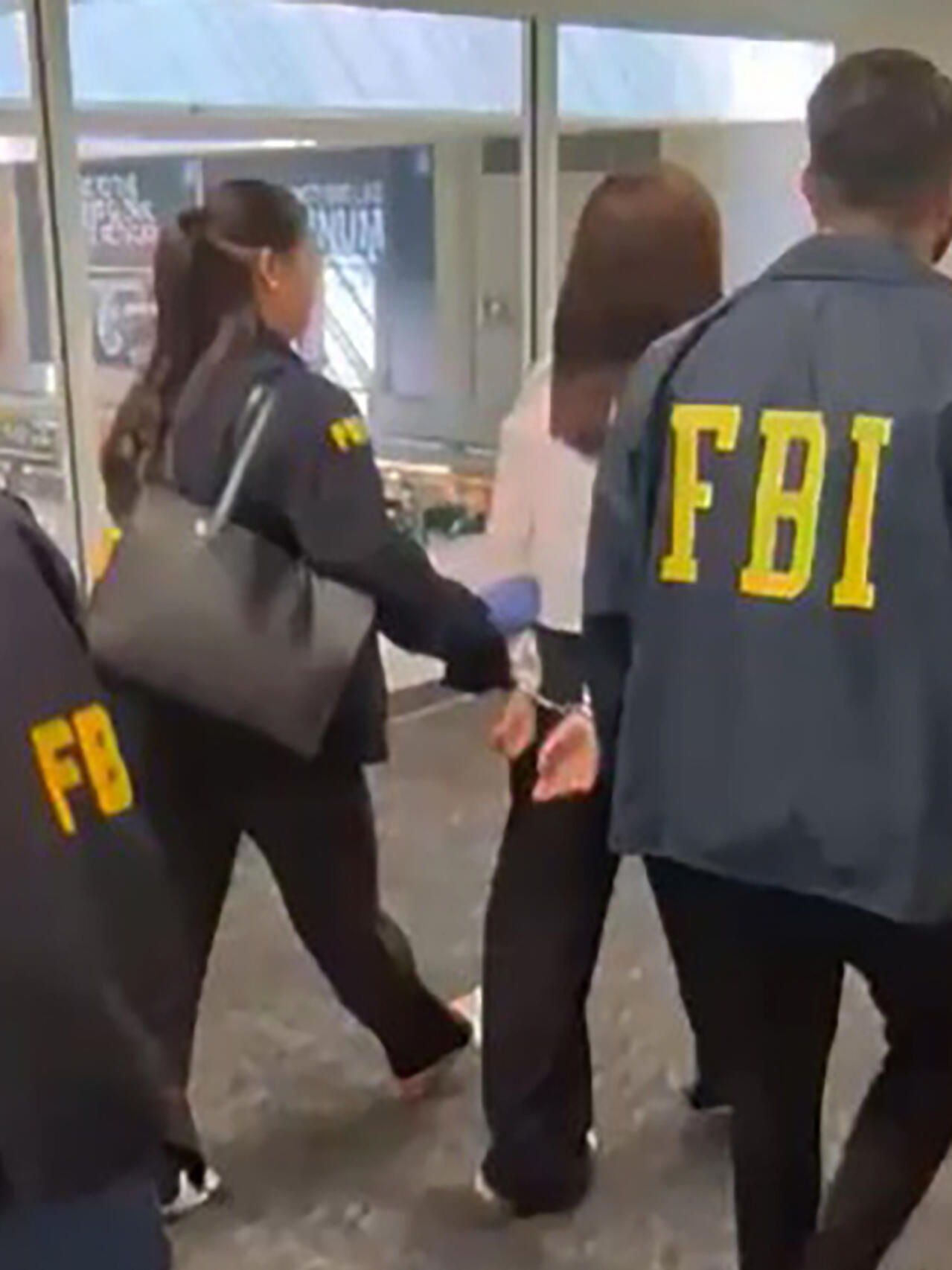
The Federal Bureau of Investigation (FBI) has arrested a California woman accused of working for Chinese officials and conducting surveillance on the family of Taiwan President Lai Ching-te while they were in the United States.
Wanying Zhang, also known as Heather, 34, was arrested Sunday, October 4, at Los Angeles International Airport as she was preparing to leave the United States for China. US authorities have charged her with acting as an unregistered agent of a foreign government.
According to the FBI and the US Justice Department, Zhang allegedly conducted surveillance on a son of President Lai and his family and transmitted information gathered during the operation to Chinese officials.
The arrest has heightened concerns in Washington and Taipei over alleged Chinese intelligence activities targeting Taiwanese officials and their relatives overseas.
Woman arrested before flight to China
Zhang was taken into custody at Los Angeles International Airport before she could board a flight to China, according to US authorities.
First Assistant US Attorney Bill Essayli said Zhang was arrested while attempting to leave the country and had allegedly operated as an agent of the People's Republic of China without registering with the US government as required by law.
The FBI said Zhang allegedly travelled to Seattle in 2025 at the direction of Chinese officials. During the trip, investigators allege that she photographed and filmed the home and vehicles associated with the Taiwanese president's son and provided license-plate information to her alleged Chinese handlers.
Authorities said she coordinated the operation with another individual and employed methods designed to avoid detection.
Zhang is scheduled to appear in federal court in Los Angeles. It was not immediately clear whether she had retained an attorney to represent her.
As with any criminal allegation, the accusations against Zhang remain allegations unless and until established in court.
Surveillance allegedly targeted president's son
US authorities have not publicly identified the alleged target in the initial federal complaint. However, the FBI subsequently referred to the target as the Taiwanese president's son, while US media reports identified him as Lai Ting-yu, who resides in the United States.
The Justice Department alleges that Zhang's activities went beyond ordinary observation. Investigators say she collected photographs, videos and vehicle information and transmitted the material to Chinese officials.
The alleged surveillance took place in the Seattle area in September 2025. According to reports based on the federal complaint, Zhang travelled there, rented a vehicle and went to a residence associated with the Taiwanese president's son.
The case has therefore attracted attention not simply because of the alleged intelligence-gathering activity but because the target was a close relative of Taiwan's head of government.
Taiwan condemns alleged operation
Taiwan's Presidential Office confirmed that relatives of President Lai were targeted and condemned the alleged surveillance.
Taiwanese officials described the case as an example of what they call "transnational repression"- alleged efforts by a government to monitor, intimidate or otherwise pressure individuals outside its territory.
Presidential Office spokesperson Karen Kuo said Taiwan strongly condemned the alleged actions, arguing that they involved violations of human rights and national sovereignty. Taipei also thanked the US authorities for protecting Taiwanese citizens living in America.
The case comes at a particularly sensitive time in relations between Taiwan, China and the United States.
China disputes allegations
China's response has been more cautious.
Chinese Foreign Ministry officials said they were not familiar with the specific case and objected to what Beijing described as attempts to sensationalise allegations of Chinese espionage.
Beijing regards Taiwan as part of China's territory and has repeatedly criticised President Lai, whose Democratic Progressive Party supports Taiwan's separate political identity. Lai has maintained that Taiwan's future should be determined by its people.
The competing positions have made Taiwan one of the most sensitive geopolitical issues in the relationship between China and the United States.
US-Taiwan security relationship
The arrest also underscores the wider security relationship between Washington and Taipei.
Although the United States does not maintain formal diplomatic relations with Taiwan, Washington is Taiwan's most important international security partner and a major supplier of military equipment to the island.
The US has increasingly highlighted concerns about Chinese influence operations, espionage and attempts to obtain sensitive information inside American territory.
For Taiwan, alleged surveillance of the president's family represents an additional security concern because relatives of political leaders may themselves become targets even when they are not directly involved in government operations.
Previous espionage cases
The Zhang case is not the first alleged Chinese intelligence operation involving Taiwanese political figures in the United States.
US authorities have previously prosecuted individuals accused of conducting surveillance of Taiwanese officials on behalf of Chinese authorities.
The latest case is particularly significant because the alleged target was a member of President Lai's family rather than a government facility or official intelligence installation.
That distinction has contributed to Taiwan's characterisation of the incident as alleged transnational repression.
What happens next?
Zhang's arrest now moves the case into the US federal court system, where prosecutors will have to establish the allegations contained in the criminal complaint.
Her scheduled court appearance is expected to provide further information about the charges, evidence and conditions surrounding her detention.
The case is likely to receive close attention from US counterintelligence officials and Taiwanese authorities as investigators determine the extent of the alleged operation and whether other individuals were involved.
For Washington, the case highlights continuing concerns about foreign intelligence operations on American soil. For Taipei, it reinforces concerns that political pressure from Beijing can extend beyond Taiwan's borders to Taiwanese citizens and their families living overseas.
The allegations also add another layer of tension to an already complicated US-China relationship, where Taiwan remains one of the most consequential points of disagreement.
For now, Zhang remains accused rather than convicted. But her arrest at a major US international airport, allegedly while preparing to travel to China, has brought renewed attention to the increasingly international dimension of the security dispute surrounding Taiwan.