US Army Secretary Dan Driscoll Resigns Amid Growing Tensions with Defence Chief Pete Hegseth
US Army Secretary Dan Driscoll has resigned after 18 months in office, amid reported tensions with Defence Secretary Pete Hegseth over Army reforms, leadership changes and military readiness.
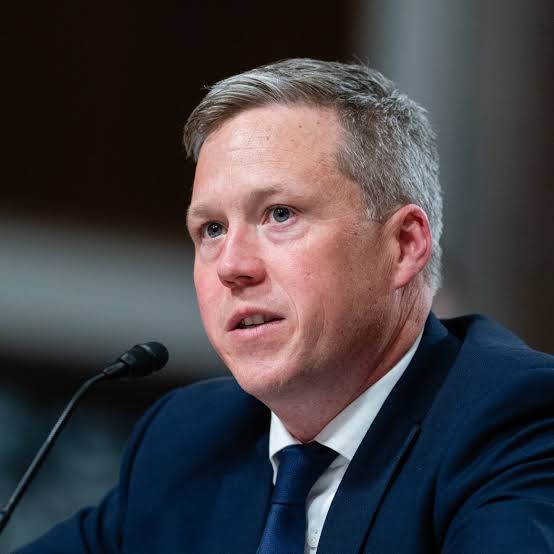
U.S. Army Secretary Dan Driscoll has resigned, becoming the latest senior Pentagon official to leave the Trump administration amid growing tensions over the direction and leadership of the American military.
Driscoll submitted his resignation to President Donald Trump on Monday, August 31, after roughly 18 months as the Army's top civilian official. The White House confirmed his departure while praising his contribution to President Trump's defence agenda.
His resignation comes after months of reported friction with Defence Secretary Pete Hegseth, with disagreements reportedly centred on Army transformation, military readiness and the removal of senior officers.
The Wall Street Journal first reported the resignation, and Reuters later confirmed it through sources familiar with the matter. Driscoll is expected to leave the Pentagon in the coming days, with one report indicating that his departure could take effect on September 3. (The Wall Street Journal)
Why did Dan Driscoll resign?
Although neither Driscoll nor the White House initially provided a detailed public explanation for his resignation, reports point to increasing disagreements between the Army secretary and Hegseth.
According to Axios, two major issues contributed to Driscoll's decision: his belief that some of his Army modernisation initiatives were being blocked and frustration over Hegseth's removal of senior military leaders responsible for implementing Army transformation plans. (Axios)
Driscoll had reportedly raised concerns directly with President Trump about the state of the Army and the direction of its transformation programme.
His concerns became particularly acute following Hegseth's decision to remove senior Army officials, including former Army Chief of Staff General Randy George, with whom Driscoll had developed a close working relationship.
The dispute was not simply about personalities. It reflected competing approaches to how the Army should modernise, restructure its forces and acquire new military technology.
White House praises Driscoll
Despite the circumstances surrounding his resignation, the White House has spoken positively about Driscoll's record.
White House spokesperson Anna Kelly described him as highly effective in advancing Trump's agenda at the Department of the Army.
She credited him with providing leadership during military operations, restoring emphasis on readiness and lethality, assisting with negotiations between Russia and Ukraine and contributing to broader defence reforms. (Breaking Defense)
The White House statement did not directly address reports of tension between Driscoll and Hegseth.
That omission has fuelled further speculation about the circumstances surrounding his departure.
Who is Dan Driscoll?
Driscoll is a former Army officer, Iraq War veteran, businessman and venture-capital investor.
President Trump nominated him to become Army secretary, and the Senate confirmed him in February 2025.
He entered the position with a relatively unusual background for a senior Pentagon official, combining military experience with a career in finance and technology investment.
His background influenced his approach to military procurement and innovation.
Rather than relying heavily on traditional defence contractors and expensive weapons systems, Driscoll promoted greater competition, faster acquisition and the development of relatively inexpensive technologies that could be deployed quickly.
He became particularly associated with the Army's efforts to develop more affordable systems for countering drones.
Driscoll pushed Army modernisation
One of the defining features of Driscoll's tenure was his emphasis on transforming the way the Army develops and purchases military technology.
He launched initiatives designed to bring private-sector investment and commercial innovation into the military acquisition process.
Among them was the Army's FUZE programme, which was structured around a venture-capital-style approach to identifying and developing emerging defence technologies.
He also promoted a low-cost interceptor initiative designed to provide the Army with affordable weapons for destroying drones.
The strategy reflected a growing concern within the U.S. military that it was becoming economically unsustainable to use extremely expensive missiles against relatively cheap unmanned aircraft.
Breaking Defence reported that Driscoll wanted the Army to become more agile in responding to rapidly evolving battlefield technology. (Breaking Defense)
Tensions over senior military leadership
Driscoll's relationship with Hegseth reportedly deteriorated as changes were made to senior Army leadership.
Hegseth's removal of General Randy George was particularly significant because Driscoll and George had worked closely on Army transformation.
Driscoll also developed a strong relationship with Vice President JD Vance, whom he had known for years.
The Wall Street Journal and other outlets have reported that Driscoll's relationship with Vance contributed to tensions within the Pentagon, although the precise extent of the disagreement remains unclear.
Driscoll and George had also travelled to Ukraine together to examine lessons from the war, particularly the growing importance of drones and emerging battlefield technologies.
That experience reinforced Driscoll's belief that the Army needed to move faster in adapting to modern warfare.
Army left without confirmed civilian leader
Driscoll's departure creates a significant leadership gap at a sensitive time.
Following his resignation, the Army is expected to be without a Senate-confirmed civilian secretary.
The service is also operating without a Senate-confirmed chief of staff. General Christopher LaNeve has been serving in an acting capacity after Hegseth dismissed his predecessor, General Randy George. (Anadolu Agency)
The simultaneous absence of confirmed civilian and military leadership is unusual for America's largest military service.
It comes as the United States remains involved in major military operations overseas, including the escalating confrontation with Iran.
That makes continuity within the Army leadership particularly important.
Who could replace Driscoll?
The immediate question is who will take over as Army secretary.
Breaking Defence reported that the Army's undersecretary, Michael Obadal, could potentially serve in an acting capacity.
However, Hegseth has authority to appoint another official to temporarily lead the department.
The eventual permanent nominee would have to undergo the Senate confirmation process.
There has also been speculation about other Trump administration officials potentially being considered for the position, although no successor has been formally announced.
The choice will be closely watched because it could determine whether Driscoll's modernisation agenda continues or is significantly altered.
Part of a wider Pentagon shake-up
Driscoll's resignation is not an isolated personnel change.
The Trump administration has overseen significant turnover among senior military officials since returning to office.
The departures and dismissals have generated debate about the administration's approach to military leadership and the extent to which senior officers are being replaced because of disagreements over policy or strategy.
Driscoll's resignation therefore adds to concerns about continuity within the Pentagon.
The Financial Times reported that the departure comes amid a broader reshaping of senior military leadership under Hegseth. (Financial Times)
Impact on Army reforms
The biggest question now is what happens to the reforms Driscoll championed.
His efforts to reduce procurement costs, accelerate weapons development and increase the use of emerging technology have attracted attention across the defence sector.
Some initiatives could continue because they have already been incorporated into Army planning.
Others, however, may be reviewed by his successor.
The departure of senior officials involved in Army transformation could also slow the implementation of reforms at a time when the U.S. military is attempting to adapt to lessons from the wars in Ukraine and the Middle East.
A significant departure
Dan Driscoll's resignation represents a significant change at the top of the U.S. Army.
He leaves after less than two years in office, having built a reputation as an unconventional defence official who sought to bring Silicon Valley-style innovation and investment principles into military procurement.
His departure also exposes the depth of tensions within the Pentagon over the future direction of the Army.
While the White House has praised his performance, reports of disagreements with Hegseth suggest that his decision to leave was influenced by fundamental differences over leadership and military transformation.
For the Army, the immediate challenge will be ensuring continuity while President Trump selects a successor.
For Driscoll, the resignation closes a relatively short but consequential chapter in a career that has taken him from military service to finance and ultimately to one of the most senior civilian positions in America's armed forces.
As the Pentagon continues to undergo major personnel changes, the appointment of his successor could provide an important indication of how President Trump and Defence Secretary Pete Hegseth intend to reshape the U.S. Army for the years ahead.