US and Iran Trade Strikes for First Time in Weeks as Hormuz Tensions Escalate
The US and Iran have exchanged strikes for the first time in about a month after American forces hit Iranian rocket launchers near the Strait of Hormuz, prompting missile retaliation from Tehran.
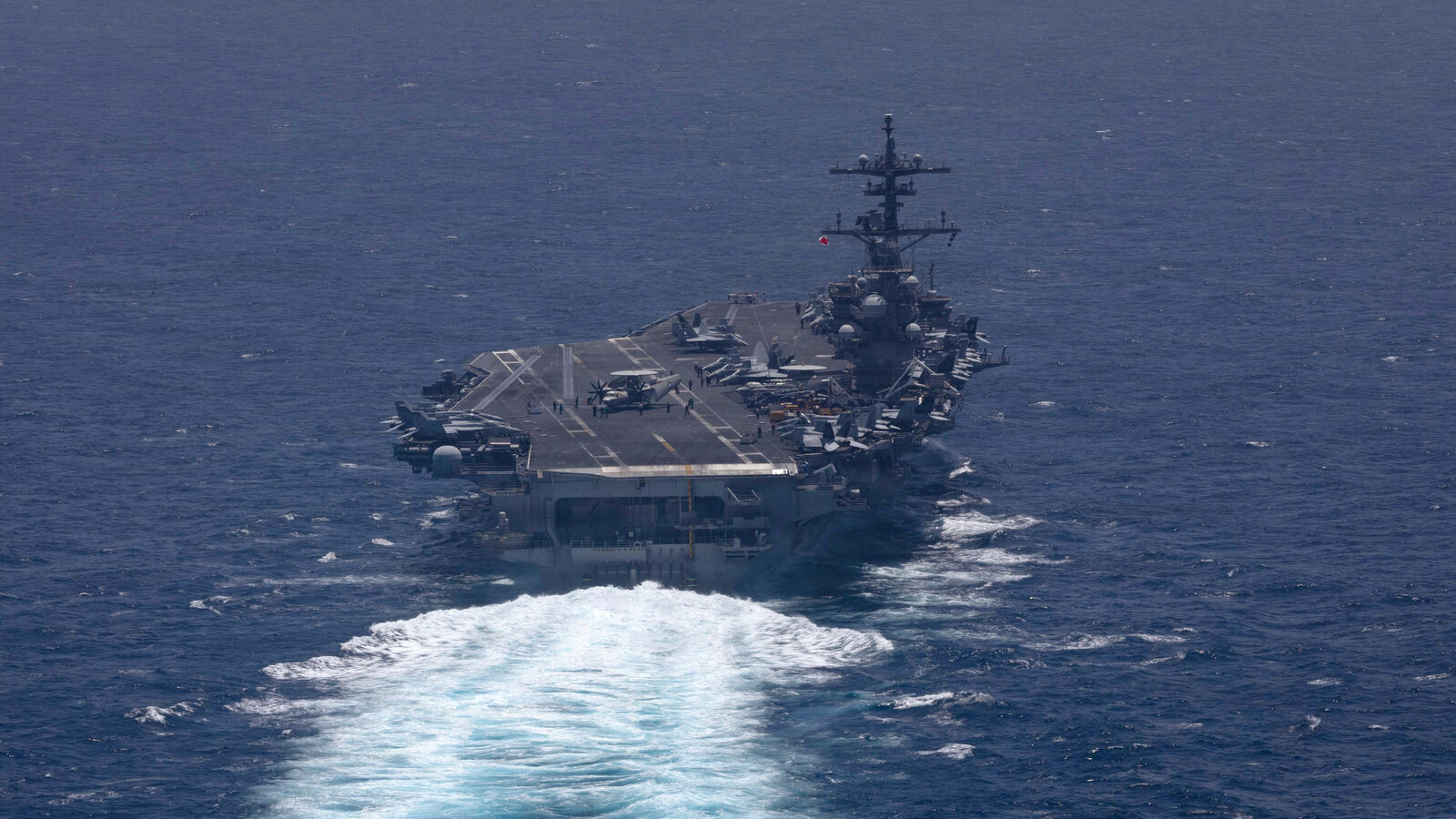
The United States and Iran have exchanged military strikes for the first time in about a month, sharply escalating tensions in the Middle East and raising fresh fears that the prolonged conflict could spiral into a wider regional war.
The latest confrontation began on Sunday, August 30, when US forces struck two Iranian rocket launchers on Larak Island, near the strategically vital Strait of Hormuz. Iran responded by firing ballistic missiles toward US military positions in Jordan and threatening further retaliation.
The exchange represents the first known direct US attack on Iranian territory since late July and breaks a period of relative calm between Washington and Tehran. The conflict, which has continued for more than six months, has already disrupted energy supplies and severely reduced commercial shipping through the Strait of Hormuz. (Reuters)
US strikes Iranian launchers
According to the US military, American forces targeted two Iranian missile launchers on Larak Island after detecting Iranian Revolutionary Guard Corps personnel preparing to use them.
US Central Command said the launchers were allegedly being prepared to fire rockets carrying sea mines into the Strait of Hormuz.
The United States has repeatedly warned Iran against mining the waterway, which carries a substantial share of global oil and liquefied natural gas shipments.
Washington has also claimed that its forces have been working to clear mines from international shipping lanes in the strait. President Donald Trump has warned that any attempt by Iran to lay new mines would trigger a severe US response.
The US military described the strike as a defensive measure designed to prevent an imminent threat to international shipping.
However, Tehran condemned the attack as an act of aggression.
Iran retaliates with missile strikes
Iran responded by launching ballistic missiles toward US military facilities in Jordan.
Jordanian authorities said they intercepted eight missiles that entered the country's airspace, with the projectiles neutralised before causing significant damage to civilians or property.
Iranian state television broadcast footage it said showed ballistic missiles being launched toward American positions.
The Islamic Revolutionary Guard Corps subsequently vowed that Iran would continue responding to US attacks.
The exchange has therefore created a dangerous new phase in the conflict, particularly because American military facilities are spread across several countries in the Gulf and wider Middle East. (ITVX)
Strait of Hormuz at centre of confrontation
The latest US-Iran confrontation is closely linked to the Strait of Hormuz, one of the world's most important maritime chokepoints.
The narrow waterway connects the Persian Gulf with the Gulf of Oman and Arabian Sea. Before the current crisis, about one-fifth of global oil and LNG supplies passed through the strait.
Iran has maintained that the waterway remains closed under the current circumstances, while Washington has sought to ensure freedom of navigation.
The dispute has dramatically reduced maritime traffic and created uncertainty for energy companies, tanker operators and international insurers.
The possibility of mines being deployed in the strait has made the situation even more dangerous because mines can remain hidden beneath the water and threaten commercial vessels long after they are placed.
New escalation follows diplomatic efforts
The latest strikes come after tentative diplomatic efforts involving Iran and Oman.
Oman has been attempting to mediate between Tehran and Washington and recently helped negotiate a temporary route for shipping through the Strait of Hormuz.
Diplomatic activity had raised hopes that the two sides could prevent another major military escalation.
Those hopes have now been weakened by the renewed exchange of fire.
Iran continues to demand that Washington meet commitments associated with an earlier agreement, while the United States has maintained economic and military pressure on Tehran.
Reuters reported that Washington has also expanded sanctions against Iranian-linked entities as part of its campaign to pressure the Iranian government.
Oil prices react to renewed fighting
The renewed military confrontation immediately affected global energy markets.
Oil prices rose sharply after news of the US strike and Iranian retaliation, with Brent crude moving above $90 a barrel amid renewed concerns about supplies through the Strait of Hormuz.
The market reaction demonstrates how quickly geopolitical developments in the Gulf can affect the global economy.
A prolonged disruption to Hormuz could increase fuel prices, raise transportation costs and add to inflationary pressure in countries that depend heavily on imported energy.
The impact could be particularly significant for Asian economies because many of the world's largest energy importers rely on Middle Eastern oil and gas.
Trump raises fresh concerns over Kharg Island
The escalation has also been accompanied by controversial statements from President Trump concerning Kharg Island, Iran's major oil export hub.
Trump posted that Kharg Island was being “blown to smithereens” and shared an AI-generated video purporting to show the attack.
However, Reuters reported that there was no evidence at the time that Kharg Island had been attacked. An Iranian official dismissed Trump's post as “laughable.”
The episode has added another layer of uncertainty to an already volatile information environment, with competing claims from Washington and Tehran making independent verification increasingly important.
Risk of a wider regional conflict
The most immediate concern is that the latest strikes could trigger a chain reaction involving other countries.
US forces operate from military facilities across the Middle East, including Jordan and Gulf states. Iran has previously demonstrated its ability and willingness to target US-linked positions in the region.
Iran also has military relationships and allied groups across parts of the Middle East, increasing the possibility that an escalation between Washington and Tehran could spread beyond their confrontation.
The United Arab Emirates, meanwhile, said on Monday that it had intercepted an Iranian drone over its territorial waters, further highlighting the risk of the conflict expanding geographically. (AP News)
Iran insists it is acting defensively
Iranian President Masoud Pezeshkian has maintained that Tehran's military actions are defensive rather than an attempt to initiate a wider war.
Iran has repeatedly accused the United States of aggression and warned that it will respond to attacks on its territory or military infrastructure.
The Iranian Revolutionary Guard has also insisted that American military pressure will not force Tehran to surrender control over the Strait of Hormuz.
This stance means that the latest confrontation could continue even if neither side wants a full-scale regional war.
US faces difficult strategic choices
For Washington, the renewed fighting presents a difficult strategic calculation.
The Trump administration has increasingly emphasised sanctions and economic pressure rather than prolonged military operations, partly because of concerns about the cost of the conflict and pressure on US military resources.
However, the Pentagon also faces pressure to protect American troops, commercial shipping and international navigation.
The Larak Island strike demonstrates that Washington remains prepared to use military force when it believes Iran is preparing to threaten the Strait of Hormuz.
The challenge will be preventing limited strikes from developing into a much larger confrontation.
What happens next?
The latest exchange has ended weeks of relative calm and placed the US-Iran conflict back at the centre of international attention.
The immediate focus will be on whether Iran carries out further attacks against US forces or whether Washington launches additional strikes.
Diplomatic channels involving Oman and other regional intermediaries could become increasingly important if both sides seek to prevent the situation from deteriorating further.
For global markets, the key concern remains the Strait of Hormuz. Any prolonged military confrontation around the waterway could further restrict shipping and send energy prices higher.
For now, the US and Iran appear locked in a dangerous cycle: Washington is determined to prevent Iran from threatening maritime traffic, while Tehran insists that it will retaliate against American military action.
The exchange of strikes marks a significant escalation after weeks of relative calm and demonstrates that, despite diplomatic efforts, the underlying dispute remains unresolved.
With the Strait of Hormuz still at the heart of the confrontation, the next US or Iranian military move could determine whether the latest exchange remains limited or becomes the beginning of a much broader regional escalation.