US and Iran Trade Blows as Hormuz Impasse Deepens, Threatening Global Oil Supplies
The US and Iran have traded fresh military strikes as the Strait of Hormuz standoff deepens, disrupting shipping, pushing oil above $100 and raising fears of a wider regional crisis.
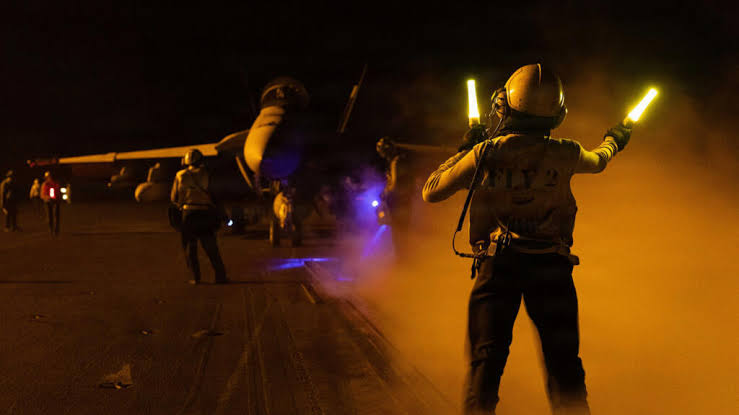
The United States and Iran have traded fresh blows across the Middle East, deepening an increasingly dangerous confrontation over the Strait of Hormuz and threatening to further disrupt global energy supplies.
The latest escalation came after the United States destroyed five Iranian oil tankers, prompting Tehran to launch missile attacks against a U.S.-used military base in Jordan and threaten or attack commercial shipping around the strategically vital waterway.
The confrontation has sent Brent crude above $100 a barrel, while shipping through the Strait of Hormuz has fallen sharply. The developments are raising fresh concerns about energy prices, inflation and the security of one of the world's most important trade routes. (Reuters)
US Destroys Five Iranian Oil Tankers
The latest escalation began with U.S. military strikes against five Iranian oil tankers.
According to U.S. Central Command, the vessels M/T Kaviz, M/T Charminar, M/T Horizon 1, M/T Riesco and M/T Derya were attacked in the Gulf of Oman and near Iran's Kharg Island.
The United States said the strikes were carried out after Iran's Islamic Revolutionary Guard Corps attempted to attack a U.S. warship with ballistic missiles.
U.S. officials said the crews of the tankers were ordered to abandon the vessels before they were struck and that no American personnel were injured in the confrontation. (Al Jazeera)
U.S. Secretary of State Marco Rubio subsequently warned that Washington would continue responding to Iranian attacks on American naval assets.
His comments have reinforced fears that the confrontation could develop into a cycle of attacks involving military ships, oil tankers and critical infrastructure.
Iran Retaliates With Attacks on US Targets
Iran quickly responded to the tanker strikes.
The Islamic Revolutionary Guard Corps said it launched ballistic missiles at Al Azraq, a military base in Jordan used by U.S. forces.
Jordan's military said its air-defence systems intercepted 18 of 20 ballistic missiles fired toward the country. Two missiles reportedly fell in unpopulated areas, and authorities said there were no casualties.
Iran also claimed that it had attacked 10 ships near the Strait of Hormuz, including two American vessels.
Those claims have not been independently verified. U.S. authorities have also disputed Iranian assertions about damage to American warships.
Nevertheless, the threats against commercial vessels have increased anxiety among shipping operators and governments whose economies depend heavily on uninterrupted access through the Gulf.
Hormuz Becomes the Centre of the Standoff
At the heart of the confrontation is the Strait of Hormuz, a narrow waterway connecting the Persian Gulf with the Gulf of Oman and the Arabian Sea.
The strait is critical to the global energy system. Before the current conflict, around one-fifth of the world's oil and liquefied natural gas supplies passed through the waterway.
But shipping activity has now dropped dramatically.
Preliminary data from Kpler cited by Reuters showed that only six commodity vessels passed through the Strait of Hormuz on Tuesday, compared with nine the previous day and a 10-day average of 12. Historically, around 125 commercial vessels crossed the waterway each day. (Reuters)
The sharp decline reflects the growing risks faced by vessels attempting to navigate the region.
Iran has effectively maintained control over passage through the strait since the war began, while the United States has imposed measures aimed at restricting Iranian oil exports and weakening Tehran's economy.
That has created a dangerous impasse: Iran wants to maintain leverage over the waterway, while Washington wants to prevent Tehran from using energy routes as an economic and strategic weapon.
Oil Prices Surge Above $100
Global energy markets have responded immediately.
Brent crude rose above $100 a barrel on September 9, reaching levels not seen since July. U.S. West Texas Intermediate also climbed sharply. (Financial Times)
The price increases reflect fears that the conflict could remove additional barrels from the global market.
Reuters reported that shipping disruptions have already severely affected regional oil flows, while Iranian crude exports have been halted amid the U.S. blockade.
The consequences extend beyond oil producers and shipping companies.
Higher crude prices can increase the cost of petrol, diesel, aviation fuel, electricity generation, transportation and manufactured goods. Countries that rely heavily on imported energy could face renewed inflationary pressure if the disruption continues.
In the United States, diesel prices have already reached a record $5.94 per gallon, according to Reuters.
Wider Regional Conflict Adds to Risks
The Hormuz crisis is unfolding alongside renewed attacks involving Iran-backed Houthi forces in Yemen.
The Houthis have intensified attacks against Saudi cities and energy infrastructure, with dozens of people reportedly injured. The renewed violence threatens another major maritime corridorthe Bab el-Mandeb Strait, which links the Red Sea with the Gulf of Aden. (AP News)
This creates the possibility of simultaneous disruption along two critical shipping routes.
If attacks continue in both the Persian Gulf and Red Sea, shipping companies could be forced to reroute vessels, increasing journey times, insurance costs and freight rates.
The economic consequences could therefore extend well beyond the Middle East.
Growing Pressure on the Global Economy
The worsening crisis comes at a particularly sensitive time for the global economy.
Central banks are already attempting to balance economic growth against inflation. A sustained oil-price shock could make that task more difficult by pushing consumer prices higher while weakening business activity.
Major oil-importing economies in Asia, Europe and Africa could be particularly exposed.
For developing economies, higher energy and transportation costs can quickly feed into food prices and household expenses.
The crisis could also put pressure on governments to release strategic oil reserves or seek alternative suppliers and shipping routes.
No Easy Way Out of the Hormuz Standoff
Diplomatic efforts to resolve the crisis appear increasingly difficult as military retaliation becomes entrenched.
Iran has warned that ships operating near its regional adversaries could be targeted, while Washington has signalled that attacks on U.S. naval forces will trigger further retaliation.
That creates the risk of a self-reinforcing cycle: an attack on a military or commercial vessel leads to retaliation, which prompts another Iranian response, further restricting shipping and pushing energy prices higher.
Iran has also warned of additional measures around the Strait of Hormuz, while the United States continues to pressure Tehran economically and militarily.
What Happens Next?
The immediate concern for global markets is whether the conflict remains limited or expands into a broader regional confrontation.
A prolonged disruption of Hormuz could have consequences far beyond the United States and Iran because the waterway remains central to international energy trade.
For now, the latest exchange of attacks has demonstrated how quickly military confrontation can translate into economic disruption.
With oil above $100 a barrel, commercial shipping declining and both sides threatening further retaliation, the Strait of Hormuz has become the critical pressure point in the U.S.-Iran conflict.
Unless a diplomatic breakthrough emerges, the standoff could continue to weigh heavily on energy markets, global trade and economic stability in the weeks ahead.