US Air Force Removes All Bombers from RAF Fairford After Suspected Terror Plot
The US Air Force has withdrawn all bombers from RAF Fairford in Britain following a suspected terror plot and security concerns linked to Iran.
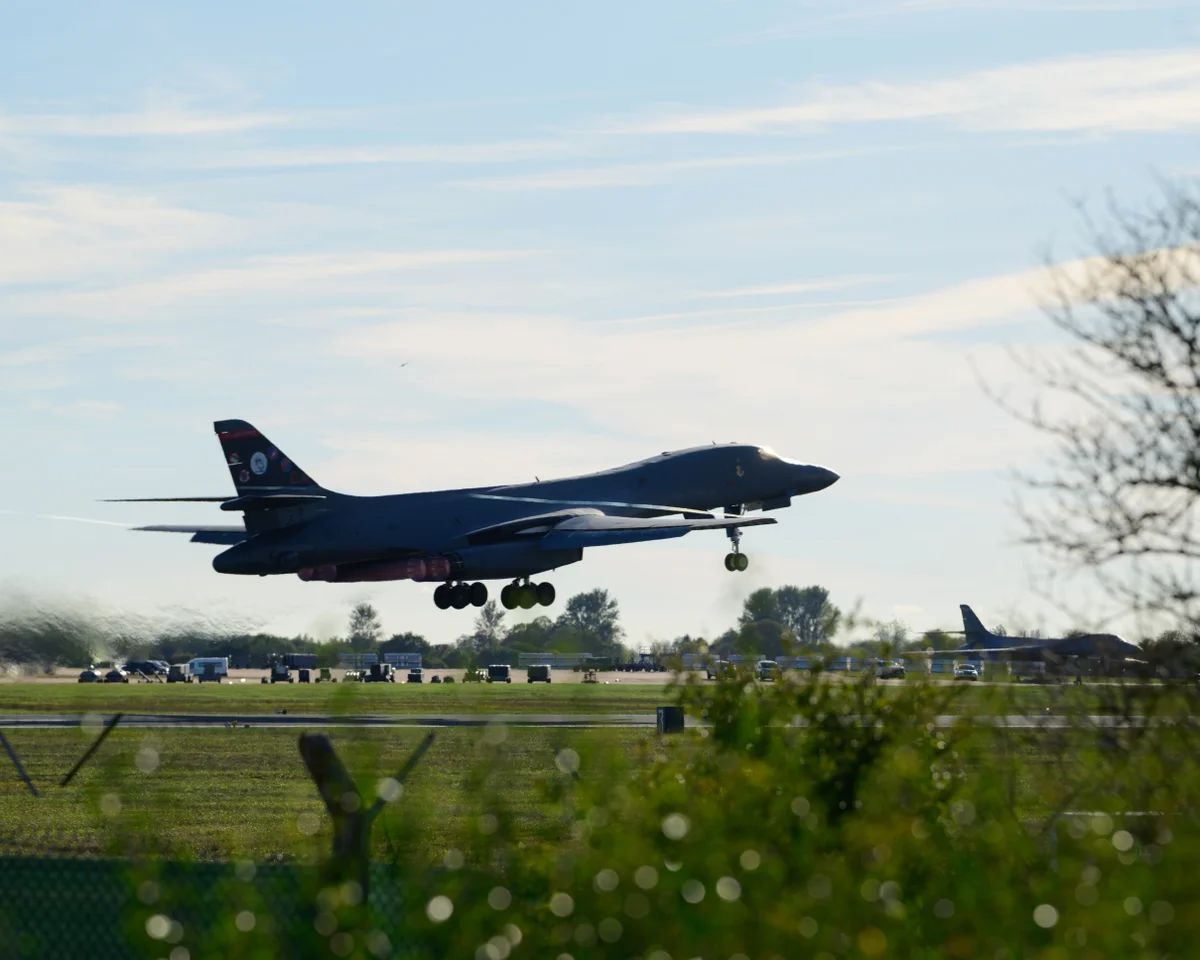
The United States Air Force has withdrawn all of its bombers from RAF Fairford, a strategically important British military base in Gloucestershire, following heightened security concerns and an investigation into a suspected terrorist plot targeting the facility.
The Pentagon confirmed that all US bombers deployed to the base have returned to their home stations in the United States. The unexpected withdrawal occurred on Sunday, October 4, 2026, with aviation observers recording the departure of multiple B-1B Lancer bombers from the British base. (AP News)
The development comes barely a week after British authorities arrested several people in connection with a suspected plot near RAF Fairford. The incident has raised fresh concerns about the vulnerability of Western military installations as the United States continues its military campaign against Iran.
Pentagon confirms bomber withdrawal
A Pentagon official said the United States had now redeployed all bombers stationed at RAF Fairford to their permanent or home bases in America.
The Pentagon explained that US bombers routinely operate from locations around the world in support of global military readiness and operational requirements. It stressed that the withdrawal did not mean America's bomber force had been taken out of operational readiness.
The aircraft involved included B-1 bombers, while the Pentagon's broader statement referred to the B-1, B-2 and B-52 bomber fleets. US officials emphasized that these aircraft remain capable of conducting long-range precision strikes even when operating from the continental United States. (Sky News)
At least 12 B-1B Lancer bombers were believed to have been at RAF Fairford immediately before the withdrawal. The aircraft reportedly departed rapidly over the course of Sunday, with footage showing B-1 bombers taking off from the base.
The withdrawal was particularly notable because some aircraft had arrived at Fairford only days earlier as part of a rotation.
Security concerns surrounding RAF Fairford
The move follows a security incident near RAF Fairford in late September.
British authorities arrested five men following an investigation into suspected explosives-related offences and terrorism near the military installation. A sixth suspect, a dual British-Iranian national, was subsequently arrested in London on suspicion of preparing terrorist acts.
All six suspects have since been released on bail while investigations continue. British authorities have reportedly examined possible links to Iran, although Iran has denied involvement in the suspected plot. (Reuters)
The arrests have nevertheless increased scrutiny of RAF Fairford because of its role in US military operations against Iran.
British officials have previously warned about the possibility of Iranian-linked activities targeting American or British interests. Iran's Revolutionary Guard has also previously described bases used by US forces to attack Iranian targets as legitimate targets.
RAF Fairford's strategic importance
RAF Fairford occupies a unique position in America's European military infrastructure.
Located about 100 miles (160 kilometres) west of London, the Gloucestershire airfield is the United States Air Force's preferred bomber forward operating location in Europe. It has hosted American strategic bombers for decades and serves as an important facility for long-range aviation operations.
The base became particularly important during the US military campaign against Iran in 2026.
In March, significant numbers of B-1B Lancers and B-52 Stratofortresses were deployed to Fairford. At one stage, reports indicated that approximately two dozen American bombers were operating from the facility. (Air & Space Forces Magazine)
Operating from Britain gave American bombers a major logistical advantage. Instead of flying all the way from the continental United States to targets in the Middle East and back, aircraft could operate from a location considerably closer to the theatre.
That reduced flight times, fuel requirements and the burden on aircrews while allowing the United States to generate more sorties.
Withdrawal does not eliminate US strike capability
Despite the significance of the withdrawal, military analysts say the decision does not prevent the United States from conducting long-range bombing missions.
B-1B, B-2 and B-52 aircraft are designed to operate over enormous distances. During earlier phases of the Iran conflict, American bombers based in the United States demonstrated their ability to conduct long-range missions into the Middle East.
The Pentagon therefore maintains that the bomber force remains ready to deliver precision global strike capabilities from US territory.
However, the removal of the aircraft could reduce the immediate operational convenience provided by RAF Fairford if Washington decides to launch further strikes against Iran.
A warning about modern military threats
The Fairford development also highlights a broader challenge facing Western militaries: protecting expensive aircraft stationed at fixed bases.
Modern conflicts have demonstrated that relatively inexpensive drones and other unconventional weapons can threaten sophisticated military installations. Recent attacks on air bases in different theatres have shown how adversaries can exploit vulnerabilities away from the battlefield.
The decision to move the bombers therefore reflects not only the investigation surrounding Fairford but also the wider difficulty of protecting high-value aircraft from unconventional attacks.
US Secretary of State Marco Rubio said Monday that the bomber withdrawal should not be directly tied to the arrests, suggesting that Washington frequently reallocates military assets for operational reasons.
Nevertheless, the timing has inevitably connected the two developments.
For now, RAF Fairford remains an important US military facility, but its empty bomber apron represents a significant change from the heightened American bomber presence seen during the Iran conflict.
The United States continues to maintain substantial military capabilities in Europe and the Middle East, meaning the withdrawal from Fairford is unlikely to signal an end to American military operations. Instead, it demonstrates how rapidly Washington can reposition its strategic assets when operational, political or security circumstances change.