UN Security Council Holds Second Poll in Race to Select Next Secretary-General
The UN Security Council has held its second informal straw poll to narrow the field of candidates seeking to succeed António Guterres as Secretary-General from January 2027.
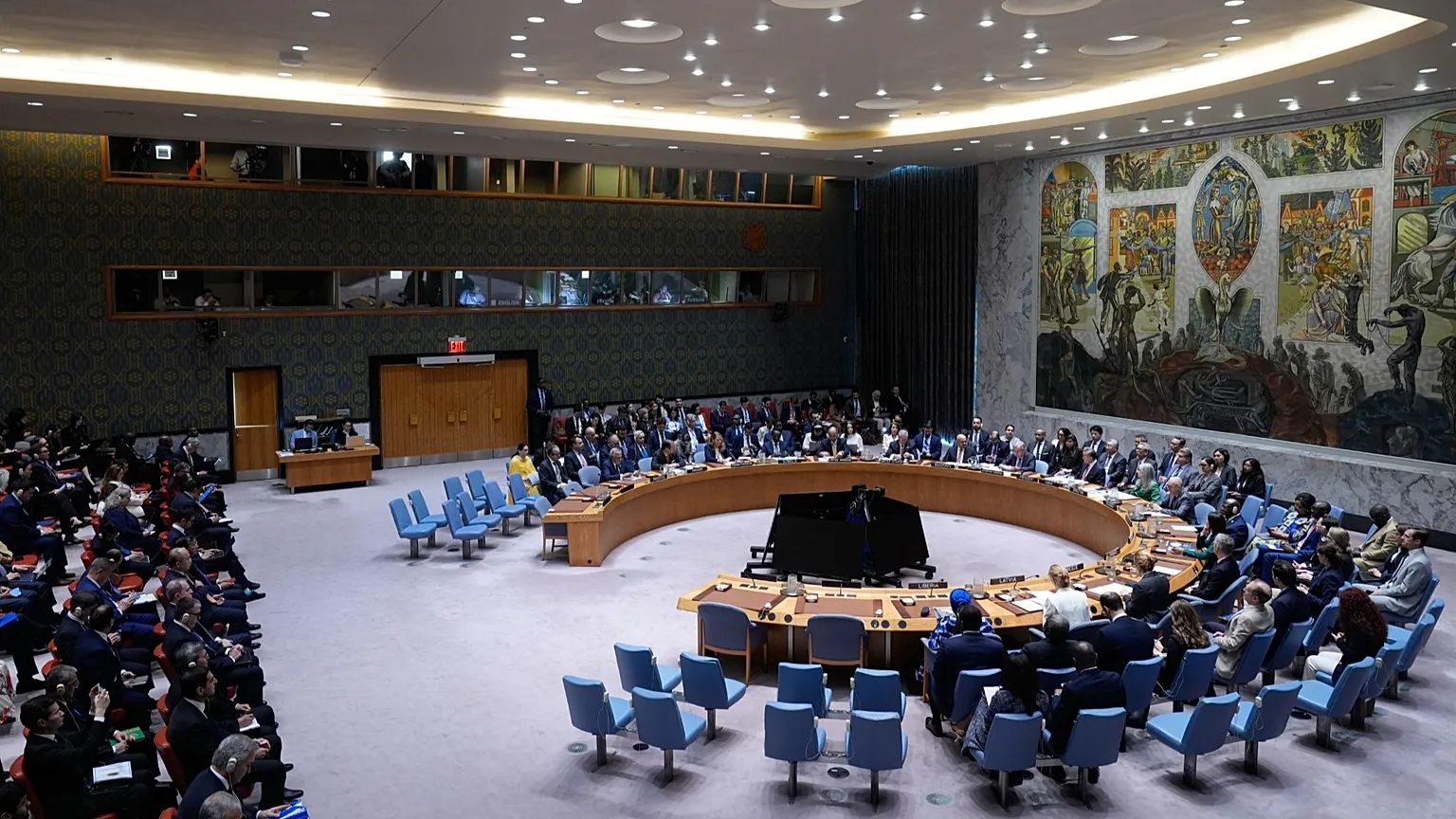
The United Nations Security Council has held its second informal straw poll in the race to select the next UN Secretary-General, as diplomats seek to identify the candidate capable of securing broad support from the 15-member council and avoiding a veto from any of its five permanent members.
The confidential exercise, held on Friday, August 21, is the latest stage in a selection process that will determine who succeeds António Guterres, whose second five-year term expires at the end of December 2026. The new Secretary-General is expected to begin a five-year term on January 1, 2027. (United Nations)
The second poll comes at a critical point in the contest. Costa Rica's Rebeca Grynspan emerged as the early frontrunner in the first straw poll held on July 30, but the field has since expanded with the entry of Ecuadorian diplomat Ivonne A-Baki, meaning eight candidates are now in the race. (Reuters)
Grynspan leads after first poll
Grynspan, a former Vice President of Costa Rica and current Secretary-General of the United Nations Conference on Trade and Development (UNCTAD), entered Friday's second poll with the strongest showing from the first round.
In the July 30 straw poll, Grynspan received 10 “encourage” votes, one “discourage” vote and four “no opinion” votes, according to diplomatic sources.
Guyana's Carolyn Rodrigues-Birkett came second with nine “encourage” votes, while Argentina's Rafael Grossi, director general of the International Atomic Energy Agency, received seven. (PassBlue)
Chile's former president Michelle Bachelet, former Ecuadorian foreign minister Maria Fernanda Espinosa, Senegal's former president Macky Sall and Ugandan diplomat Olara Otunnu are also competing for the position.
Ecuadorian diplomat Ivonne A-Baki became the eighth candidate after she was nominated by Tonga on August 17.
What is a Security Council straw poll?
The straw poll is not the final election. Instead, it is a confidential mechanism used by Security Council members to measure the level of support for each candidate.
The 15 council members indicate whether they “encourage,” “discourage” or have “no opinion” about each contender.
The process is particularly important because the five permanent members—China, France, Russia, the United Kingdom and the United States—possess veto power.
A candidate therefore needs more than general popularity. Any eventual nominee must be capable of avoiding opposition from a permanent member while building sufficient support among the council's members.
The polls are conducted behind closed doors, meaning candidates and the wider public do not immediately know which countries supported or opposed individual contenders.
Why the second poll matters
The first straw poll provided an initial snapshot of the contest, but diplomats expect the second round to offer a clearer picture of which candidates have momentum.
The arrival of A-Baki has also changed the dynamics of the race.
A-Baki, a veteran Ecuadorian diplomat who has served as ambassador to several countries, entered the contest after the first poll. She has presented herself as a candidate focused on conflict prevention, UN reform and revitalising multilateral cooperation.
Her entry demonstrates that the field remains fluid and that the process is not yet at the stage where a single candidate can be considered inevitable.
Historic possibility of a woman leading the UN
The current contest has also attracted attention because a woman could become the first female Secretary-General in the UN's 80-year history.
Four of the leading candidates are women, including Grynspan, Rodrigues-Birkett, Bachelet and Espinosa, while A-Baki has now expanded the female representation in the field.
The prospect of electing a woman has become an important theme in the campaign.
Rodrigues-Birkett, Guyana's Permanent Representative to the UN, has argued for stronger multilateral cooperation and greater attention to the concerns of smaller and developing countries. If selected, she would also become the first Caribbean Secretary-General. (The Guardian)
Grynspan, meanwhile, has emerged as the early favourite following her strong first-round showing.
Regional politics could influence race
Regional representation is another major factor.
Most of the strongest candidates come from Latin America and the Caribbean, a region that has never produced a UN Secretary-General.
The current field includes Grynspan of Costa Rica, Bachelet of Chile, Grossi of Argentina, Espinosa of Ecuador and Rodrigues-Birkett of Guyana.
Africa is represented by Sall and Otunnu, while A-Baki brings another Latin American contender into the race.
The concentration of candidates from Latin America and the Caribbean has generated expectations that the region could finally secure the top UN job.
However, regional balance is only one element of the competition. The preferences of the five permanent Security Council members will ultimately be crucial.
The next UN chief faces a difficult global environment
Whoever succeeds Guterres will inherit an organisation facing enormous challenges.
The UN is operating amid wars and geopolitical rivalries involving major powers, while international cooperation on climate change, development, humanitarian crises and global security remains under pressure.
The organisation has also faced criticism over bureaucracy, spending and institutional duplication.
Reuters reported that the next Secretary-General will be expected to revitalise an organisation facing questions about its relevance and effectiveness, while navigating increasingly divided relations among major powers.
Candidates have consequently made reform a central theme of their campaigns.
Otunnu, a former UN under-secretary-general, has called for institutional renewal and warned against continuing with “business as usual.” A-Baki has similarly emphasised reform and conflict prevention.
US, Russia and China could determine outcome
Although the Security Council has 15 members, the five permanent members will have an outsized influence over the eventual outcome.
The United States, China and Russia have different geopolitical priorities, while Britain and France have their own views on the future direction of the UN.
A candidate who receives widespread support from elected members could still fail if a permanent member signals opposition.
This makes the process as much about diplomatic acceptability as popularity.
The early poll results do not reveal which permanent members supported or opposed candidates, making it difficult to determine whether Grynspan's lead represents a genuine path to victory or merely an early advantage.
Decision may take several more rounds
The second straw poll is not expected to produce an immediate winner.
Past selection processes have involved multiple rounds of informal voting before a candidate emerges with sufficient support and without a likely veto from a permanent member.
Reuters reported earlier this month that the selection process could continue into late September or early October, although additional candidates could still enter the contest and extend the timetable.
Once the Security Council settles on a candidate, it will formally recommend that person to the 193-member UN General Assembly, which will then appoint the next Secretary-General.
Guterres prepares to leave after a decade
The process marks the final stage of António Guterres' decade-long tenure at the UN.
The Portuguese diplomat became Secretary-General in January 2017 and was reappointed for a second five-year term beginning in 2022.
He will leave office on December 31, 2026, after two terms at a time when the organisation faces some of its most difficult challenges since its creation.
The next Secretary-General will therefore inherit not only a prestigious diplomatic position but also the responsibility of rebuilding confidence in multilateralism.
Race enters a crucial phase
Friday's second straw poll is unlikely to settle the competition, but it represents an important milestone.
Grynspan enters the next phase with the advantage of having led the first vote, while Rodrigues-Birkett and Grossi remain serious contenders.
The addition of A-Baki has also ensured that the field remains competitive.
With several candidates promising UN reform, stronger conflict prevention and renewed international cooperation, the contest is increasingly becoming a debate over what the organisation should look like in an era of geopolitical fragmentation.
The most important question, however, remains behind closed doors: which candidate can win enough support while avoiding a veto from the five permanent Security Council members?
Until that question is answered, the race to become the next UN Secretary-General remains wide open.