UK to Ban Under-16s from social media as Keir Starmer Unveils Sweeping Online Safety Reforms
UK Prime Minister Keir Starmer has announced a landmark ban on social media use for under-16s, alongside new restrictions on gaming, livestreaming, and online interactions to protect children from digital harm.
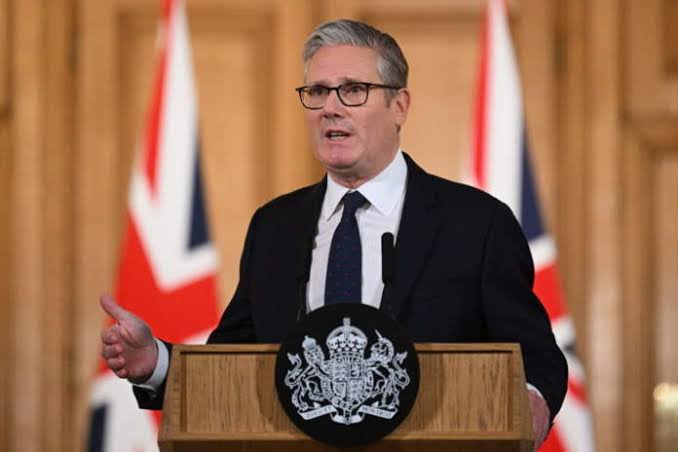
British Prime Minister Keir Starmer has announced one of the world's most far-reaching online safety measures, confirming that children under the age of 16 will be banned from accessing major social media platforms across the United Kingdom.
The landmark policy, described by the government as a move to "give kids their childhood back," will introduce strict age-based restrictions on social media, gaming, livestreaming, and online communication platforms. The measures are expected to be presented to Parliament before Christmas and could come into force by Spring 2027. (GOV.UK)
The announcement marks a significant shift in Britain's approach to online safety and places the country among the global leaders seeking stronger regulation of technology companies and their impact on children.
What the New Social Media Ban Means
Under the proposed legislation, children under 16 will be blocked from accessing major social media platforms including Instagram, TikTok, Facebook, YouTube, Snapchat, and X (formerly Twitter). The government plans to require robust age-verification systems to ensure compliance. Messaging services such as WhatsApp and Signal are expected to remain exempt from the outright ban, although some child-safety restrictions may still apply. (The Guardian)
The policy goes beyond Australia's pioneering social media restrictions and has been described by British officials as an "Australia-plus" model because it also targets gaming platforms, livestreaming services, and potentially addictive online features.
Speaking during the announcement, Starmer said the government had reached a point where stronger intervention was necessary.
"Today is a big moment for our country," he said. "It is clear to me that a full ban is the right choice. It will make our children safer, happier, and give them more freedom to grow up." (Reuters)
Additional Restrictions for Young People
The proposed reforms extend beyond traditional social media platforms.
The government plans to introduce what it describes as world-leading protection against harmful online interactions. These include restrictions on livestreaming features, preventing strangers from contacting children online, and limiting access to romantic or sexually themed AI chatbots for users under 18.
Officials are also considering curfews for teenagers on certain platforms and restrictions on "infinite scrolling" features that encourage prolonged screen time. Such measures are aimed at reducing digital addiction and improving mental health among young users.
The government argues that many technology platforms have failed to adequately protect children from cyberbullying, harmful content, online predators, and addictive algorithms designed to maximize user engagement.
Strong Public Support
The decision follows a major public consultation that received more than 116,000 responses. According to government figures, nine out of ten parents supported raising the minimum age for social media access to 16.
Campaigners who have long advocated stricter online protections welcomed the move, arguing that social media companies have been allowed to prioritize growth and engagement metrics over child safety.
Several bereaved families whose children experienced online harm also praised the government's decision, saying stronger protections are long overdue. (The Guardian)
Supporters of the ban argue that children are increasingly exposed to cyberbullying, harmful beauty standards, misinformation, explicit content, and mental health challenges linked to excessive social media use.
The government says the reforms are intended to shift responsibility away from parents alone and place greater obligations on technology companies.
Tech Companies Push Back
The announcement has sparked criticism from major technology firms and some academics who question whether a blanket ban will achieve its intended goals.
Companies including Meta, which owns Facebook and Instagram, and YouTube have warned that banning young people from mainstream platforms could drive them toward less regulated and potentially more dangerous online spaces.
Technology firms argue they have already invested heavily in child-safety measures, including parental controls, content moderation, age-appropriate experiences, and algorithm changes designed to protect younger users.
Critics also point to enforcement challenges. Many experts believe determined teenagers could attempt to bypass restrictions using virtual private networks (VPNs), false identities, or alternative platforms that fall outside the scope of the legislation.
Some child-development researchers have also noted that evidence regarding the effectiveness of outright social media bans remains limited.
A Global Trend Toward Regulation
The UK's move reflects a growing international effort to address concerns about children's online safety.
Australia became the first country to introduce a nationwide social media ban for children, while several U.S. states and other governments have explored similar measures. Policymakers worldwide are increasingly scrutinizing how social media platforms affect mental health, education, and child development. (The Wall Street Journal)
By adopting one of the strictest regulatory frameworks yet proposed, Britain is positioning itself at the forefront of the debate over children's digital rights and technology regulation.
What Happens Next?
The government plans to bring the legislation before Parliament later this year. If approved, regulators will work with technology companies to implement age-verification systems and enforcement mechanisms ahead of the planned rollout in Spring 2027.
While questions remain about implementation and enforcement, the announcement represents a major policy shift and signals a tougher stance toward large technology companies.
For supporters, the reforms are a necessary step toward protecting children in an increasingly digital world. For critics, they raise concerns about privacy, practicality, and unintended consequences.
What is certain is that the UK's decision has intensified the global debate over how governments should balance online freedom with child safety. As lawmakers, parents, educators, and technology companies continue to grapple with these issues, Britain's proposed under-16 social media ban is likely to become one of the most closely watched digital policy experiments in the world.