UK’s Keir Starmer Responds to Iran Crisis: Diplomacy, Defence and Cautious Leadership
UK Prime Minister Keir Starmer outlines Britain’s response to the escalating Iran conflict, emphasising defence, de-escalation, diplomacy, and protection of British interests following U.S. and Israeli military action.
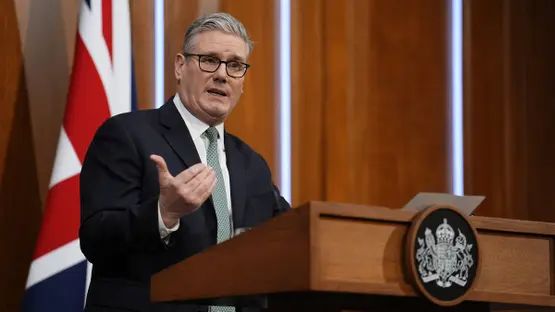
In late February 2026, as tensions in the Middle East sharply escalated following coordinated U.S. and Israeli military strikes on Iran, Keir Starmer took a measured, multifaceted stance - balancing a call for restraint, reinforcement of British defensive positions, and continued emphasis on diplomacy and international law.
His response highlights the United Kingdom’s approach amid one of the most volatile flashpoints in recent global politics.
A Defensive and Distancing Stance
Unlike the U.S. and Israel, the United Kingdom did not participate in the offensive strikes against Iranian territory. Starmer publicly clarified that British forces were engaged strictly in defensive operations aimed at protecting UK personnel, assets, and allied forces in the Middle East, rather than contributing to the attack itself. He said:
“The United Kingdom played no role in these strikes… Our forces are active and British planes are in the sky today as part of coordinated regional defensive operations to protect our people, our interests, and our allies - in line with international law.” (www.ndtv.com)
This carefully worded position underscores London’s intent to avoid direct involvement while fulfilling its obligations to allied security frameworks.
Emergency Response and Strategic Consultations
Starmer’s government convened an emergency COBRA meeting - Britain’s top crisis response committee - to review the unfolding situation and coordinate actions with defence, diplomatic, and intelligence agencies. The priority was clear: prevent escalation and ensure the safety of UK nationals in the region, as well as British bases and personnel. (Geo News)
Starmer also engaged in consultations with his European counterparts - notably the leaders of Emmanuel Macron and Friedrich Merz - to maintain a unified message of restraint and diplomacy. Together, their governments strongly condemned retaliatory Iranian attacks on neighbouring states while advocating for the renewal of diplomatic negotiations. (Le Monde.fr)
Balancing Defence with Calls for Restraint
In public addresses, Starmer expressed deep concern over Iran’s retaliatory strikes across the region - including attacks on nations not directly involved in the initial offensive. He condemned Iran’s indiscriminate actions and reiterated that the UK’s involvement focused solely on defensive measures. (The Week)
However, he stressed that further escalation would be dangerous for regional stability and global security, urging Tehran to consider de-escalation and return to diplomatic channels. “Iran can end this now,” Starmer said, urging the Iranian leadership to abandon further attacks, halt its nuclear weapons programmes, and cease internal repression.
This dual line - supporting regional defence while urging restraint - reflects the UK government’s attempt to uphold both security and legal norms.
Defending Allies, Avoiding Escalation
Starmer’s approach demonstrates a commitment to protecting allies and British interests, particularly in the Gulf and among NATO partners, while avoiding actions that could draw the UK directly into broader hostilities.
British armed forces, including fighter jets, were reported to be operating in the region to intercept potential threats. This was explicitly described as defensive and precautionary rather than offensive participation.
In his statements, Starmer also emphasized the importance of adhering to international law and avoiding involvement in strikes whose legal basis the UK was not party to - a contrast to the U.S. and Israeli operations being debated on legal grounds. (Sky News)
Solidarity with Partners and Protecting Civilians
Starmer’s communications showed solidarity with several Middle Eastern governments affected by the fallout, including leaders from Bahrain, Jordan, and Kuwait - recognizing the risk posed by Iran’s missile and drone strikes.
Downing Street noted the UK’s concern about attacks on civilian infrastructure and advocated for the safety of all civilian populations caught in the conflict. (Yahoo News)
This emphasis on civilian protection and diplomatic engagement is consistent with the UK’s broader foreign policy priorities - particularly its goal of preventing further destabilization in a region already burdened by conflict.
Legal and Diplomatic Dimensions
Starmer’s cautious stance aligns with legal considerations emphasized by British officials. While defending the UK’s right to protect its interests, the government has avoided endorsing actions whose legality under international law could be questioned unless clearly justified - an important distinction as global scrutiny intensifies.
This position has drawn both support and criticism within the UK political debate: some argue he should more forcefully condemn the U.S.-Israeli strikes, while others view his caution as vital to preventing escalation and preserving legal norms.
A Strategic Middle Ground
Starmer’s response reflects a strategic balancing act:
- Not partaking in offensive strikes, differentiating the UK from the U.S. and Israel.
- Reinforcing defensive measures to protect British forces and interests.
- Condemning indiscriminate retaliation by Iran against regional partners.
- Calling for diplomatic negotiations to resolve underlying tensions.
This approach underscores Britain’s commitment to defence without overt militarization and diplomacy without appeasement - a nuanced path amid fraught geopolitical dynamics.
Implications for UK Foreign Policy
Starmer’s reaction to the Iran crisis signals several broader foreign policy trends:
- Heightened emphasis on international law and legitimacy in military engagement;
- Strengthened coordination with European partners for crisis response;
- Support for defence cooperation without direct offensive involvement; and
- Advocacy for diplomatic channels to reduce conflict escalation.
These positions may shape the UK’s role as a mediator and stabilizing influence in future Middle East developments, even as global powers navigate a volatile diplomatic landscape.
Conclusion
Prime Minister Keir Starmer’s response to the Iran situation has been marked by pragmatism and caution - balancing Britain’s defence commitments with pressing calls for de-escalation, protection of civilians, and diplomatic engagement. By asserting that the UK played no role in initiating strikes while bolstering regional defence and advocating a return to talks, Starmer has positioned London as both a responsible ally and cautious actor amid escalating conflict.