UK Fighter Jets Intercept Russian Military Aircraft Over Norwegian Sea Amid Heightened NATO Vigilance
British Royal Air Force fighter jets intercepted a Russian military aircraft over the Norwegian Sea during a NATO air policing mission, underscoring rising tensions between Russia and the Western alliance in Northern Europe.
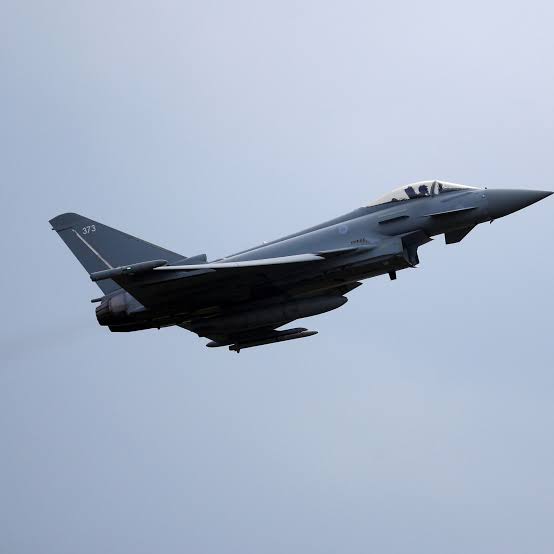
Royal Air Force (RAF) fighter jets have intercepted a Russian military aircraft flying close to NATO-monitored airspace over the Norwegian Sea, in the latest sign of heightened military activity along Europe's northern frontier.
The operation, carried out by RAF Typhoon fighter jets deployed under NATO's Air Policing mission, was launched after the unidentified Russian aircraft approached an area of strategic importance without communicating with civilian air traffic authorities or filing a recognized flight plan.
British defence officials said the interception was conducted safely and professionally, with the RAF aircraft identifying and monitoring the Russian plane before escorting it away from the area. The aircraft did not enter sovereign NATO airspace, but its proximity prompted a rapid response under established alliance procedures.
The incident comes as NATO members continue to increase surveillance and air defence operations following a series of Russian military flights near alliance borders in recent years.
RAF Responds Within Minutes
According to the UK Ministry of Defence, the Typhoon fighter jets were scrambled from RAF Lossiemouth in Scotland, one of Britain's primary Quick Reaction Alert (QRA) bases responsible for protecting UK and NATO airspace.
The jets were supported by a Voyager air-to-air refuelling aircraft, allowing them to remain airborne for an extended period while tracking the Russian aircraft across the Norwegian Sea.
Military officials said the interception formed part of routine NATO air policing measures designed to safeguard allied airspace and maintain situational awareness across the High North.
While such missions have become increasingly common, each interception serves as a reminder of the strategic importance of the Arctic and North Atlantic regions, where military activity has intensified since Russia's invasion of Ukraine in 2022.
Russian Aircraft Closely Monitored
British defence authorities did not immediately identify the specific type of Russian aircraft involved, though previous interceptions in the region have included long-range Tu-95 "Bear" strategic bombers, Tu-160 bombers, maritime patrol aircraft, and intelligence-gathering planes.
Military aircraft operating in international airspace are permitted under international law. However, NATO routinely monitors Russian flights that do not transmit transponder signals or communicate with civilian air traffic control, as these flights can present potential safety risks to civilian aviation.
The RAF pilots maintained visual contact with the aircraft until it altered course away from the monitored area.
Officials emphasized that the interception was conducted in accordance with international aviation regulations and was not considered an act of aggression.
Growing Strategic Importance of the Norwegian Sea
The Norwegian Sea has become one of Europe's most strategically sensitive maritime regions.
Situated between Norway, Iceland and the United Kingdom, the sea provides vital access routes between the North Atlantic and the Arctic Ocean.
It is also home to critical undersea communication cables, energy infrastructure and important naval transit routes used by NATO forces.
Russia's Northern Fleet, headquartered on the Kola Peninsula, frequently deploys submarines, surface vessels and military aircraft through the region.
As a result, NATO has significantly expanded surveillance operations in the area, with British, Norwegian, American and other allied aircraft regularly conducting joint patrols.
UK Reaffirms NATO Commitment
The UK Ministry of Defence said the successful interception demonstrated Britain's continued commitment to collective defence under NATO.
Defence Secretary John Healey praised the professionalism of RAF personnel, saying British forces remain ready around the clock to respond to potential threats.
"Our Quick Reaction Alert crews remain on constant standby to defend UK and NATO airspace whenever required," the ministry said in a statement.
Military officials noted that RAF Typhoon squadrons routinely conduct these missions alongside allied aircraft from Norway, Denmark, Finland and Sweden following the latter two countries' accession to NATO.
The expansion of the alliance has significantly strengthened NATO's presence across Northern Europe and the Baltic region.
Increasing Military Activity Across Northern Europe
Security analysts say Russian military aviation activity near NATO borders has remained elevated over the past several years.
Since the start of the war in Ukraine, allied fighter aircraft have intercepted hundreds of Russian military flights over the Baltic Sea, North Sea, Norwegian Sea and Arctic regions.
Many of these missions involve aircraft flying in international airspace but operating without flight plans or activated transponders.
Although such flights are legal under international law, NATO views them as requiring close monitoring to ensure the safety of civilian air traffic and maintain regional security.
The alliance has therefore expanded its Air Policing missions, rotating aircraft and personnel among member states to maintain continuous readiness.
NATO Stresses Defensive Nature of Operations
NATO officials continue to emphasize that its air policing operations are purely defensive.
Aircraft are routinely scrambled whenever unidentified or unresponsive military planes approach alliance-monitored airspace.
These missions are intended to identify aircraft, assess their intentions and ensure they do not pose risks to commercial aviation or national security.
Officials stressed that intercepting military aircraft in international airspace is a standard procedure practiced by armed forces around the world.
Regional Security Remains a Priority
The latest interception highlights the increasingly complex security environment facing Europe.
With geopolitical tensions remaining high, particularly following Russia's continued military activities in Ukraine, NATO members have significantly increased defence spending, expanded intelligence sharing and strengthened rapid response capabilities.
The United Kingdom has also announced additional investments in air defence, advanced surveillance systems and combat aircraft modernization as part of broader efforts to reinforce national and allied security.
Military planners believe maintaining a visible presence in strategically important regions such as the Norwegian Sea is essential to deterrence and stability.
Looking Ahead
Although no hostile action occurred during the latest encounter, the interception underscores the importance of maintaining constant readiness as military activity across Europe's northern flank continues.
For the RAF, such operations have become an increasingly routine part of protecting British and allied interests.
As NATO continues adapting to evolving security challenges, rapid-response missions over the North Atlantic and Arctic regions are expected to remain a central component of the alliance's collective defence strategy.
With geopolitical tensions showing little sign of easing, similar interceptions are likely to continue as both NATO and Russia maintain an active military presence in some of the world's most strategically significant air and maritime corridors.