UK Could Adopt EU Single Market Rules Under New “Dynamic Alignment” Law
The UK is preparing legislation allowing ministers to adopt EU single market rules through “dynamic alignment.” Here’s how it works, why it’s controversial, and what it means for Brexit and trade.
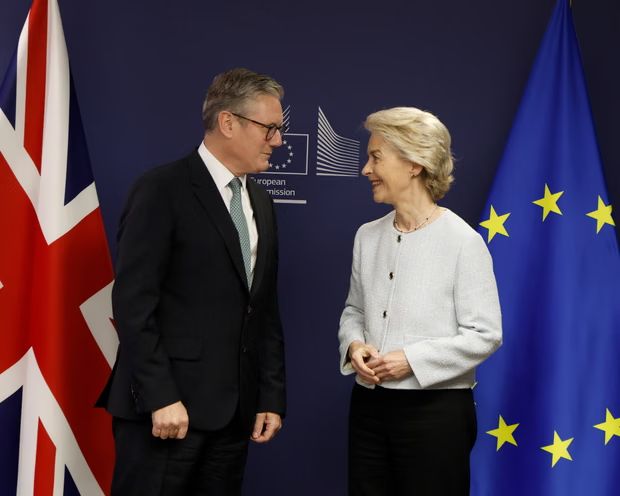
The United Kingdom is preparing to introduce new legislation that could allow parts of its economy to effectively align with evolving European Union single market rules without requiring full parliamentary votes each time.
The proposal, part of a broader “Brexit reset” strategy by Prime Minister Keir Starmer’s government, has triggered intense political debate over sovereignty, trade efficiency, and the future direction of UK - EU relations.
At the center of the plan is a concept known as “dynamic alignment”, which would enable Britain to follow selected EU regulations in areas such as food standards, animal welfare, and environmental rules as they change over time.
What the New Legislation Proposes
According to government plans reported on April 13, 2026, ministers are preparing a bill that would allow the UK to adopt EU single market-style rules in specific sectors without repeated parliamentary legislation for each update. (AOL)
The policy would be implemented using secondary legislation, often referred to as “Henry VIII powers,” which allow ministers to amend or update regulations with limited parliamentary scrutiny.
Under the proposal, once the UK agrees to a framework with the EU, future regulatory updates could be automatically adopted if deemed in the national interest.
Key areas likely affected include:
- Food and agricultural standards
- Animal welfare rules
- Pesticide and chemical regulations
- Environmental and emissions standards (AOL)
Why the UK Government Is Pursuing EU Alignment
The government argues that closer regulatory alignment with the EU is necessary to reduce trade friction and support economic growth.
1. Reducing Post-Brexit Trade Barriers: Since Brexit, UK exporters, especially in food and agriculture- have faced increased paperwork, border checks, and compliance costs. Aligning standards would reduce these barriers.
2. Boosting Economic Growth: Ministers say smoother trade with the EU, the UK’s largest trading partner, could help stimulate investment and lower costs for businesses and consumers. (The Independent)
3. Strengthening EU Trade Agreements: The move is also tied to wider negotiations on food and drink trade, emissions trading systems, and electricity market cooperation.
The Core Mechanism: “Dynamic Alignment” Explained
Dynamic alignment means that instead of negotiating and passing new laws every time the EU updates its regulations, the UK could automatically adopt equivalent changes.
This would:
- Keep UK regulations closely matched with EU standards
- Reduce delays in updating laws
- Make cross-border trade smoother
However, it also raises concerns that UK law could evolve in parallel with EU law without direct democratic input each time.
Political Controversy: Sovereignty vs. Efficiency
The proposal has reignited one of the central debates of Brexit: how much control the UK should retain over its laws.
Critics’ Concerns
Opponents argue the plan risks weakening parliamentary sovereignty by allowing ministers to adopt foreign rules with limited scrutiny.
Critics describe it as “integration by stealth,” warning that Parliament could be reduced to approving frameworks rather than debating detailed laws. (The Guardian)
Opposition parties, including Conservative and Reform UK figures, argue that:
- It undermines the Brexit mandate
- It shifts law-making influence toward Brussels
- It reduces democratic oversight
Government’s Position
The government insists that:
- The UK is not rejoining the EU or single market
- Parliament will still approve the main legislation and trade agreements
- The approach is pragmatic, not political integration
Why This Matters for Brexit
Although the UK left the EU single market in 2020, the reality of trade geography has kept the two economies deeply connected.
This proposal highlights a growing recognition that:
- The EU remains the UK’s largest export market
- Divergent regulations increase costs and complexity
- Some alignment may be economically unavoidable
However, it stops short of full reintegration, reflecting a political balancing act between economic practicality and Brexit ideology.
Implications for Businesses and Consumers
For Businesses
- Easier export processes to the EU
- Reduced compliance duplication
- More predictable regulatory environment
For Consumers
- Potentially lower import costs
- More stable supply chains
- Possible alignment in food safety and product standards
However, businesses that trade globally, not just with the EU, may face challenges if UK rules increasingly mirror EU standards.
Constitutional and Democratic Questions
One of the biggest concerns is the use of secondary legislation, which allows government departments to update rules without full parliamentary debate.
Critics warn this could:
- Reduce transparency in law-making
- Limit MPs’ ability to amend regulations
- Concentrate power in the executive branch
Supporters argue it is a necessary tool for managing fast-changing international trade rules.
Broader Political Impact
The proposal comes amid wider efforts to “reset” UK - EU relations after years of post-Brexit friction.
It also reflects shifting political reality:
- Growing business pressure for smoother EU trade
- Public fatigue with Brexit disruption
- International instability is increasing the value of economic alignment
At the same time, it risks reopening divisions in UK politics over sovereignty and EU relations.
Conclusion: A Quiet Reversal or Practical Adjustment?
The UK’s move toward potential alignment with EU single market rules does not represent a formal return to the EU, but it does signal a significant shift in how Brexit is being managed in practice.
While the government frames it as a practical solution to trade barriers, critics see it as a gradual erosion of regulatory independence.
Ultimately, the success or failure of this policy will depend on whether it delivers tangible economic benefits without triggering a political backlash over sovereignty.
What is clear, however, is that the Brexit debate is far from settled, and this new legislation may be one of its most important turning points yet.