U.S. Warnings Over Nigeria Signal Strain in Bilateral Ties and Raise Fears for Civilian Safety
Trump’s threat of further U.S. strikes in Nigeria exposes fragile diplomacy, sovereignty concerns, and growing anxiety among Nigerians at home and abroad.
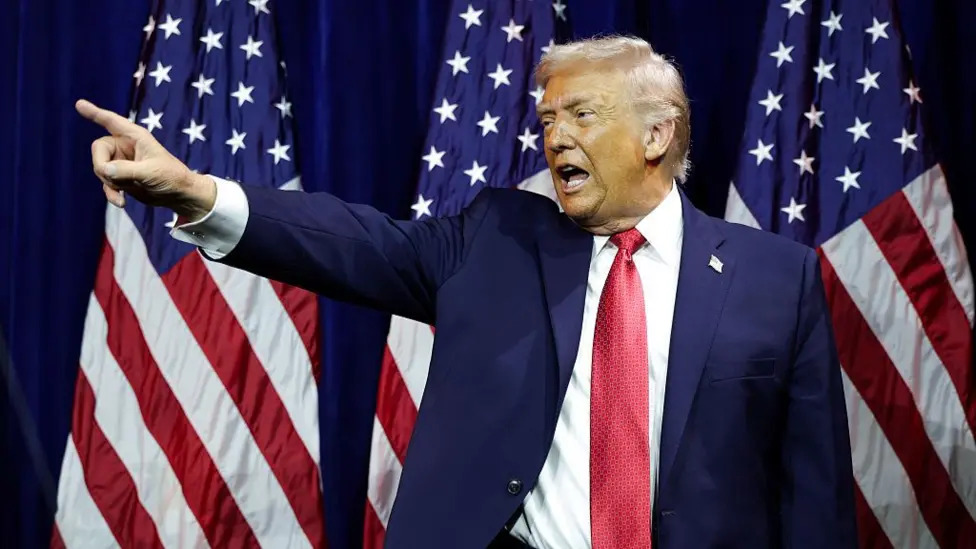
The warning by former United States President Donald Trump that Washington could carry out additional military strikes in Nigeria if attacks on Christians continue has sent shockwaves through diplomatic circles, security analysts, and ordinary Nigerians alike. Beyond its immediate military implications, the statement touches on sensitive issues of sovereignty, religious conflict narratives, and the future direction of Nigeria–U.S. relations at a time when insecurity remains one of Nigeria’s most pressing national challenges.
Trump made the remarks during an interview with The New York Times, following U.S. missile strikes against Islamic State-linked targets in Nigeria over the Christmas period. While the United States framed the operation as a counter-terrorism effort, Trump’s language went further, tying potential future strikes explicitly to the protection of Christians and warning that U.S. action could become recurrent rather than exceptional.
“I’d love to make it a one-time strike,” Trump said. “But if they continue to kill Christians it will be a many-time strike.”
Those words have resonated far beyond Washington, raising profound questions in Nigeria about foreign intervention, the framing of domestic violence, and what such rhetoric could mean for the safety and unity of a deeply diverse nation.
Nigeria–U.S. Relations at a Delicate Crossroads
Nigeria and the United States have long maintained a complex but strategic partnership rooted in counter-terrorism cooperation, trade, and regional stability in West Africa. U.S. intelligence, training, and logistical support have played roles in Nigeria’s fight against extremist groups such as Boko Haram and Islamic State West Africa Province (ISWAP).
However, Trump’s comments risk shifting that partnership from cooperation to coercion. Nigerian officials were quick to clarify that the recent U.S. strike was not a unilateral action. According to Ademola Oshodi, Senior Special Assistant to President Bola Tinubu on Foreign Affairs and Protocol, Nigeria remained firmly in control of the decision-making process surrounding the operation, pushing back against the idea of American military autonomy on Nigerian soil.
This distinction is crucial. For Nigeria, allowing the perception of unilateral U.S. strikes could undermine its sovereignty and weaken the authority of its armed forces in the eyes of citizens already sceptical about the state’s ability to provide security.
Religious Framing and Its Risks
One of the most contentious aspects of Trump’s warning is the framing of Nigeria’s security crisis primarily as violence against Christians. The Nigerian government has consistently rejected claims that Christians are being systematically targeted for genocide, arguing instead that insecurity affects communities across religious and ethnic lines.
Trump’s own senior adviser for Arab and African affairs, Massad Boulos, acknowledged in October that extremist violence in Nigeria has claimed more Muslim lives than Christian ones. Despite this, Trump maintained that Christians are disproportionately targeted, a claim that Nigerian officials and many analysts argue oversimplifies a complex conflict driven by banditry, terrorism, land disputes, and governance failures.
For many Nigerians, particularly in the Middle Belt and northern regions where violence is most acute, such framing risks inflaming religious tensions and reinforcing divisive narratives that extremists often exploit for recruitment and propaganda.
What This Means for Nigerians at Home
Within Nigeria, Trump’s remarks have sparked unease among ordinary citizens already living under the shadow of insecurity. While some Nigerians welcome international assistance in combating terrorism, many fear that repeated foreign strikes could escalate violence, provoke retaliatory attacks, or lead to civilian casualties.
There is also concern that external military pressure could distract from the deeper structural problems driving insecurity, including poverty, weak local governance, arms proliferation, and limited accountability within security institutions.
For communities affected by violence, the fear is not only of terrorists but of becoming collateral damage in a broader geopolitical contest. Repeated airstrikes, even when targeted, carry risks in densely populated or poorly mapped areas.
Implications for Nigerians Abroad
For Nigerians living in the United States and other Western countries, Trump’s rhetoric also carries consequences. The portrayal of Nigeria as a country unable to protect religious minorities risks reinforcing negative stereotypes and could influence immigration debates, visa policies, and public perception of Nigerian migrants.
Diaspora groups have expressed concern that repeated references to Nigeria in the context of religious violence and U.S. military intervention could stigmatise Nigerians abroad, regardless of their individual beliefs or backgrounds.
At the diplomatic level, sustained tension could affect educational exchanges, investment flows, and security cooperation frameworks that benefit both countries.
A Test of Nigeria’s Leadership and Diplomacy
Ultimately, Trump’s warning places Nigeria’s leadership under renewed scrutiny. The Tinubu administration faces the challenge of reassuring citizens that Nigeria remains sovereign and capable of addressing its security problems, while also maintaining constructive relations with a powerful ally.
How Nigeria responds diplomatically will shape the tone of its engagement with Washington going forward. A failure to manage the narrative could embolden calls for more foreign intervention, while a firm but measured response could reinforce Nigeria’s position as a partner rather than a proxy.
As insecurity persists, Nigerians are watching closely-not just to see whether violence declines, but to understand who defines the story of their country on the global stage.
Sources
- Reuters (Joint strike context): https://www.reuters.com/world/africa/nigeria-averts-unilateral-us-action-by-cooperating-airstrikes-2025-12-26/
- BusinessDay Nigeria: https://businessday.ng/news/article/trump-says-there-could-be-more-us-strikes-in-nigeria-new-york-times-reports-reuters/
- ThisDayLive: https://www.thisdaylive.com/2026/01/09/trump-warns-of-further-us-strikes-in-nigeria-if-they-continue-to-kill-christians/