U.S. Supreme Court Hands Trump Major Policy Setbacks While Broadening Presidential Powers
The U.S. Supreme Court has delivered a series of significant defeats to President Donald Trump's administration on key policy initiatives, even as landmark rulings continue to expand the constitutional powers of the presidency, creating a complex legal legacy.
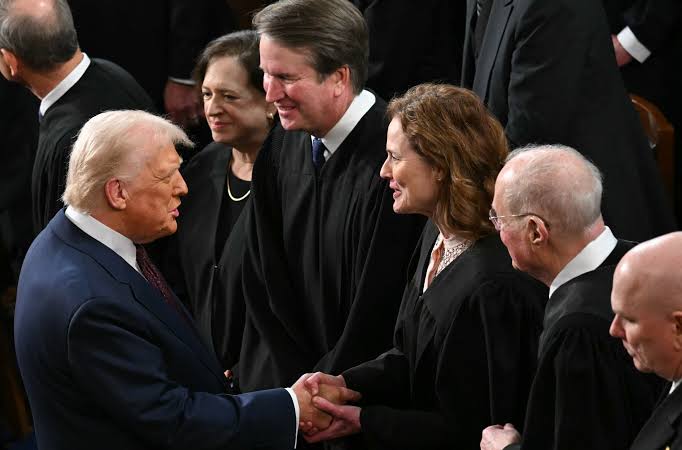
The United States Supreme Court has emerged as one of the most influential institutions shaping President Donald Trump's second term, issuing a series of rulings that have both frustrated his policy agenda and strengthened the constitutional authority of the office he occupies.
In recent months, the nation's highest court has blocked or limited several high-profile initiatives championed by the Trump administration, while simultaneously issuing decisions that legal scholars say have expanded presidential authority in ways that could benefit both current and future occupants of the White House.
The apparent contradiction has underscored the Supreme Court's role as an independent constitutional arbiter - one that evaluates the legality of executive actions rather than the political identity of the president.
Policy Setbacks Mount
Among the most significant defeats for the Trump administration have been court decisions limiting aspects of immigration enforcement, executive spending authority and the implementation of certain federal agency actions.
In several closely watched cases, the justices ruled that while the president possesses broad executive powers, those powers remain subject to constitutional limitations and congressional oversight.
Legal experts say these rulings demonstrate the Court's continued insistence that executive authority must be exercised within the framework established by the Constitution and federal law.
The decisions frustrated the administration's efforts to quickly implement parts of its policy agenda, forcing government lawyers to revise legal strategies and, in some instances, return to lower courts for further proceedings.
Expanding Presidential Authority
At the same time, the Supreme Court has handed Trump important constitutional victories that could have lasting implications for the presidency.
Most notably, the Court has reinforced the principle that presidents enjoy substantial immunity from criminal prosecution for official acts undertaken while performing their constitutional duties.
That landmark ruling, delivered in 2024 but continuing to influence subsequent litigation, significantly reshaped the legal landscape surrounding presidential accountability.
Constitutional scholars say the decision strengthened executive independence by protecting presidents from prosecution over official actions while still allowing legal scrutiny of purely private conduct.
Other rulings have affirmed the president's broad authority in areas involving foreign affairs, national security and the supervision of executive branch agencies, reinforcing long-standing interpretations of Article II of the U.S. Constitution.
A Mixed Record Before the Court
Despite appointing three Supreme Court justices during his first administration, Trump has experienced mixed success before the conservative-leaning Court.
Observers note that several of the president's most controversial initiatives have been rejected not because of their policy objectives but because of procedural or constitutional shortcomings.
"This Supreme Court has repeatedly shown that it is willing to rule against the administration when it believes legal requirements have not been met," one constitutional law professor said.
At the same time, the Court has demonstrated a willingness to embrace broader interpretations of presidential authority in cases involving separation of powers and executive independence.
Independence of the Judiciary
The contrasting outcomes have reinforced perceptions of the Supreme Court as an institution that remains independent despite its conservative majority.
Chief Justice John Roberts has frequently emphasized the judiciary's constitutional responsibility to interpret the law rather than advance partisan interests.
Several recent rulings have reflected ideological divisions among the justices, with conservative and liberal members occasionally joining unexpected coalitions depending on the legal issues involved.
Court observers say these shifting alliances illustrate that constitutional interpretation often transcends conventional political labels.
Implications for Future Presidents
Legal analysts argue that the Court's decisions are likely to influence not only Trump's presidency but also future administrations regardless of political affiliation.
Expanded presidential immunity and executive authority could strengthen future Democratic and Republican presidents alike, while rulings restricting administrative actions may require future White Houses to rely more heavily on Congress when pursuing major policy reforms.
The precedents established during Trump's presidency are expected to shape constitutional debates for decades.
Several constitutional experts have warned that expanding executive authority without corresponding congressional oversight could alter the balance of powers envisioned by the nation's founders.
Others argue that a strong presidency is essential for effective governance in an increasingly complex national and international environment.
Political Reactions
Democratic lawmakers have criticized several of the Court's recent decisions, arguing they grant excessive authority to the executive branch and weaken traditional checks and balances.
Some have called for legislative reforms designed to clarify presidential powers and strengthen accountability mechanisms.
Republicans, meanwhile, have welcomed decisions recognizing broad executive authority, describing them as necessary to ensure presidents can effectively discharge their constitutional responsibilities without constant judicial interference.
However, some conservatives have also expressed disappointment over rulings that blocked portions of Trump's policy agenda, particularly in immigration and regulatory matters.
The Road Ahead
Several major legal disputes involving the Trump administration remain before federal courts and could eventually return to the Supreme Court.
Issues involving immigration enforcement, federal agency powers, environmental regulations and executive authority are expected to dominate the Court's upcoming terms.
Legal scholars believe the justices will continue confronting difficult constitutional questions that test the boundaries between presidential power, congressional authority and judicial oversight.
The Court's willingness to both restrain and empower the presidency suggests its primary concern remains constitutional interpretation rather than political outcomes.
Balancing Power and Accountability
The Supreme Court's recent decisions highlight the enduring tension at the heart of the American constitutional system: ensuring that presidents possess sufficient authority to govern effectively while preventing excessive concentration of power.
For President Trump, that has meant experiencing both meaningful legal victories and frustrating policy defeats.
For the broader constitutional system, it reflects a judiciary seeking to preserve institutional balance even amid intense political polarization.
As new disputes continue reaching the nation's highest court, its rulings will remain central to defining the evolving relationship between the presidency, Congress and the judiciary.
Whether viewed as victories or setbacks for Trump, the Court's decisions are likely to leave a lasting imprint on the constitutional powers of every future American president.