U.S.–South Korea Deal on Nuclear Attack Submarines, and the Global Implications
The U.S. approval for South Korea to build nuclear-powered attack submarines is reshaping Indo-Pacific security. But what does this mean beyond Asia, for Africa and Nigeria’s strategic posture and global power dynamics?
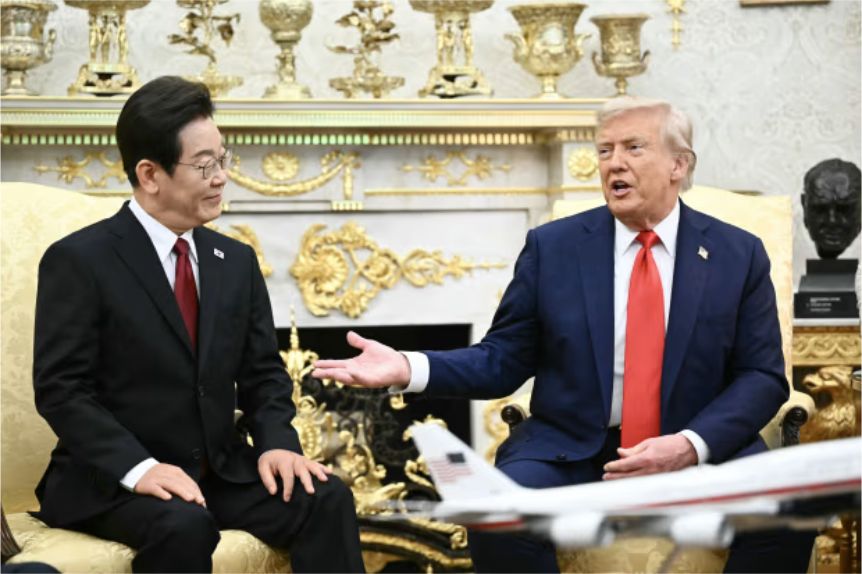
In November 2025, South Korea and the United States formalized a landmark agreement that allows Seoul to build nuclear-powered attack submarines, marking a major shift in their strategic and defense cooperation. The announcement came alongside a sweeping trade and investment pact in which South Korea committed to invest $350 billion in U.S. industries, including $150 billion in shipbuilding.
Key Elements of the Agreement
Under the deal, the U.S. has approved South Korea’s construction of nuclear-powered submarines and agreed to collaborate on fuel procurement for the reactors.
South Korea, for its part, gained support to expand its authority over uranium enrichment and spent-fuel reprocessing, albeit under U.S. legal frameworks.
On the economic side, tariffs on South Korean automobiles exported to the U.S. will be reduced from 25% to 15%, reciprocally, and South Korea plans to raise its defense spending to 3.5% of GDP.
Shipbuilding cooperation is also a key pillar: both countries will set up a shipbuilding working group to coordinate on building combat-ready vessels, modernizing yards, and supply chain resilience.
One sticking point has been where the submarines will be built. President Trump said they would be built at a shipyard owned by South Korea’s Hanwha in Philadelphia. But Seoul officials maintain the plan has always been to build the vessels domestically.
Why South Korea Wants Nuclear-Powered Submarines
South Korea has long relied on diesel-electric submarines, which must surface frequently and have a limited range. By contrast, nuclear-powered submarines can remain submerged for much longer, travel faster, and project power farther - making them more suited for tracking North Korean ballistic missile submarines and countering regional threats.
According to South Korea’s Defense Minister Ahn Gyu-back, nuclear subs would be a “major leap” for its defense capability. He has argued that their stealth and speed could keep North Korea’s leadership awake at night.
From the U.S. perspective, the deal plays into broader strategic goals: Washington’s support helps counter both North Korea and China, while also deepening its alliance with Seoul. Analysts argue that this arrangement effectively positions South Korea as a regional proxy, sharing more of the defense burden.
Risks and Tensions: Regional and Global
While the agreement is historic, it raises serious concerns. Nuclear propulsion technology is sensitive, and its proliferation can test existing non-proliferation frameworks. Experts warn of the need for strong safeguards via the International Atomic Energy Agency (IAEA) to prevent misuse.
There's also concern that North Korea could use Seoul’s move as justification to accelerate its own nuclear submarine program, which Pyongyang claims it is already developing. Some analysts suggest that, paradoxically, the deal could strengthen North Korea’s resolve to retain its nuclear capabilities.
Further, diplomatic tensions are brewing. China has expressed serious alarm. Beijing’s ambassador to Seoul warned that the submarine deal touches on “the global nonproliferation regime and the stability of the region.”
Implications for Africa
At first glance, a deal between the U.S. and South Korea over submarines may seem distant from Africa’s strategic concerns. But in reality, the ripple effects could be significant - especially for how African nations view defence, technology transfer, and geopolitical alignments.
Precedent for Technology Transfer and Strategic Partnerships
This deal could set a precedent for advanced military technology sharing beyond the traditional U.S.-European or Indo-Pacific frameworks. If Seoul gains access to nuclear propulsion, other U.S. partners - potentially including African states - may press for deeper cooperation in areas like nuclear energy, shipbuilding, or naval platforms.
Geopolitical Realignment
As the U.S. leans more into high-end security ties in Asia, it may also reevaluate how it engages in Africa. Increased U.S.-Asia leverage could push African countries to diversify their strategic partnerships - not just leaning on China or Europe, but also looking to allies like South Korea for defense or technology collaboration.
Non-Proliferation and Governance Models
The deal raises important non-proliferation questions. African states that operate nuclear energy programs - such as South Africa will be watching closely. How the U.S. and South Korea manage fuel controls, reprocessing, and security could influence global non-proliferation norms and perhaps create a model (or a cautionary tale) for future agreements.
Economic Ties Through Industrial Cooperation
The shipbuilding component of the deal could open opportunities for African shipyards or maritime nations to forge partnerships with South Korean firms. African states seeking to bolster their naval infrastructure may benefit from South Korea’s growing capabilities in nuclear-powered ship building and industrial modernization.
What Does This Mean for Nigeria?
Nigeria - Africa’s most populous nation and a major maritime actor - can also glean strategic lessons from this shift:
Naval Modernization Ambitions: Nigeria has been increasing its maritime presence in the Gulf of Guinea, tackling piracy, and investing in naval capacity. While nuclear subs are unlikely to be on Nigeria’s short-term agenda, the technological leap by South Korea demonstrates how medium powers can significantly upgrade their naval platforms. This could motivate Nigeria to deepen its ties with technologically advanced nations, including South Korea, for conventional or potentially nuclear-capable maritime assets in the future.
Defense Diplomacy Diversification: Nigeria has traditionally balanced defense relationships among Western and non-Western powers. This development reinforces the benefit of engaging with non-traditional partners (like South Korea) that bring both industrial capacity and advanced tech.
Education and Skill Transfer: As South Korea scales up its nuclear submarine program, it may invest in building skilled labour, engineers, and nuclear specialists. Nigeria, which already has a nuclear regulatory commission and a growing energy sector, could explore academic or industrial partnerships to benefit from knowledge transfer in reactor technology, enriched fuel handling, or nuclear safety.
Non-Proliferation Responsibility: Nigeria has been a strong voice in the Non-Proliferation Treaty (NPT) framework. The global response to Seoul’s agreement - especially how fuel and enrichment are managed- will matter for Abuja. Nigeria might use diplomatic channels to encourage restraint, transparency, and IAEA safeguards, ensuring that similar deals elsewhere don’t undermine global norms.
Risks for Africa and Nigeria
Escalation Pressure: If other countries follow Seoul’s path, there could be pressure on non-nuclear African states to pursue advanced military capabilities, increasing proliferation risks.
Strategic Dependence: Building high-end naval capabilities requires more than technology - it demands long-term fuel supply, maintenance, and regulatory frameworks. African nations entering similar deals risk strategic dependence on major powers for their defense infrastructure.
Governance Challenges: History shows that nuclear programs often run into governance, safety, and corruption risks. For nations like Nigeria, modeling strong institutional safeguards will be vital if deep tech and defense partnerships deepen globally.
Conclusion
The U.S.–South Korea agreement to build nuclear-powered attack submarines is more than a bilateral defense coup: it's a signal of how strategic technology transfer is evolving in the 21st century. While the immediate impact is on the Indo-Pacific balance of power - especially vis-à-vis North Korea and China - the ripple effects are already being felt in regions far removed geographically, including Africa.
For Nigeria, this deal offers a strategic mirror: it demonstrates how nations outside the traditional nuclear superpowers can acquire advanced capabilities - but only with rigorous safeguards and long-term planning. It also underscores the importance of diversified international partnerships in defense, technology, and industrial development.
As global power centers realign, Africa’s role and strategies will be shaped not only by how it reacts to such agreements but whether it positions itself proactively in the emerging network of defense, nuclear, and industrial cooperation.
Source Links
“US, South Korea to ‘move forward’ on building nuclear-powered submarines” - Al Jazeera:
“U.S. approves South Korean nuclear submarine program in $350B trade deal” - upi.com
Final wording in joint fact sheet over security, reactor design - Korea Times
South Korea seeks U.S. fuel for subs; uranium enrichment discussion - Reuters