U.S. Navy Turns to AI Firm Domino to Counter Iranian Naval Mines
The U.S. Navy is partnering with AI firm Domino to counter Iranian naval mines. Discover how artificial intelligence is reshaping mine warfare and maritime security.
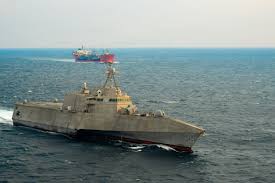
The United States Navy is accelerating its adoption of artificial intelligence in military operations, turning to tech firm Domino Data Lab to develop advanced solutions for detecting and neutralizing Iranian naval mines. The move reflects growing concern over Iran’s ability to disrupt critical shipping routes, particularly in the strategically vital Strait of Hormuz, and signals a broader shift toward AI-driven warfare in maritime environments.
As tensions in the Middle East remain high following months of conflict, the Pentagon is investing heavily in technologies that can respond faster, adapt more intelligently, and reduce risks to human personnel. The partnership with Domino is a key part of that strategy.
Why Iranian Naval Mines Are a Serious Threat
Naval mines are among the most effective and low-cost weapons in maritime warfare. Iran has long invested in mine warfare capabilities, building a diverse arsenal that includes contact mines, influence mines, and remotely controlled devices.
These mines can be deployed quickly in narrow waterways like the Strait of Hormuz, a chokepoint through which a significant portion of the world’s oil supply passes. Even a limited deployment could disrupt global trade, spike oil prices, and trigger wider military escalation.
In past conflicts and exercises, Iran has demonstrated its ability to deploy mines in ways that are difficult to detect and clear quickly. This asymmetric capability allows Tehran to challenge more technologically advanced navies at relatively low cost.
The U.S. Navy’s Response: Enter AI
To counter this threat, the U.S. Navy is working with Domino Data Lab, a leading artificial intelligence platform company, to enhance its mine countermeasure (MCM) capabilities.
Domino specializes in helping organizations build, deploy, and manage AI models at scale. In a military context, this means using machine learning to analyze massive amounts of sensor data from sonar, underwater drones, satellite imagery, and surveillance systems, to identify potential mine threats more quickly and accurately than traditional methods.
The goal is simple but ambitious: reduce the time it takes to detect, classify, and neutralize mines, while minimizing risks to sailors and ships.
How AI Changes Mine Warfare
Traditional mine detection is slow, labor-intensive, and dangerous. It often involves ships or divers physically scanning areas using sonar and other tools, with high uncertainty and risk.
AI introduces several game-changing advantages:
1. Faster Detection: Machine learning algorithms can process sonar and imaging data in real time, identifying anomalies that may indicate the presence of mines.
2. Improved Accuracy: AI systems can be trained on vast datasets of known signatures, improving their ability to distinguish between actual threats and harmless objects.
3. Autonomous Operations: AI can power unmanned underwater vehicles (UUVs) and drones, allowing them to search for and even neutralize mines without direct human control.
4. Continuous Learning: Unlike traditional systems, AI models can improve over time as they are exposed to new data and scenarios.
These capabilities are especially important in high-risk environments like the Strait of Hormuz, where speed and precision are critical.
Domino’s Role in the Military Ecosystem
Domino’s platform is not a weapon itself but a tool that enables faster development and deployment of AI models. For the Navy, this means:
- Building predictive models to anticipate where mines might be deployed
- Integrating data from multiple sources into a unified system
- Accelerating testing and validation of AI tools
- Ensuring models can be updated quickly in response to new threats
By providing the infrastructure for AI development, Domino helps the Navy move from experimental projects to operational capabilities more efficiently.
Strategic Context: Rising Tensions with Iran
The Navy’s move comes amid heightened tensions between the United States and Iran following months of military confrontation and a fragile ceasefire.
Iran’s naval strategy has long focused on asymmetric tactics using mines, fast attack boats, and missile systems to challenge larger forces. In such a scenario, mine warfare becomes a critical tool for disrupting U.S. operations and global shipping.
Recent incidents involving vessel seizures and threats to maritime routes have reinforced the urgency of improving mine countermeasures.
The Strait of Hormuz: A Critical Flashpoint
The Strait of Hormuz is one of the most strategically important waterways in the world. Roughly 20% of global oil supply passes through this narrow channel.
Any disruption, whether through mining, blockades, or military confrontation can have immediate global economic consequences.
By investing in AI-driven mine detection, the U.S. Navy aims to ensure that this vital corridor remains open, even in the face of escalating threats.
Broader Implications: The Rise of AI Warfare
The partnership with Domino reflects a broader trend: the integration of artificial intelligence into every domain of warfare.
From autonomous drones to predictive analytics, AI is reshaping how militaries operate. In naval warfare, this includes smart surveillance systems, autonomous vessels, real-time threat analysis, and decision-support tools for commanders.
However, this shift also raises important questions about ethics, reliability, and control. Critics warn that over-reliance on AI could introduce new risks, including system errors or unintended escalation.
Challenges and Limitations
Despite its promise, AI is not a silver bullet.
1. Data Quality: AI systems are only as good as the data they are trained on. Inaccurate or incomplete data can lead to errors.
2. Environmental Complexity: Underwater environments are highly variable, with noise, currents, and debris complicating detection.
3. Cybersecurity Risks: AI systems themselves can become targets for hacking or manipulation.
4. Human Oversight: Military experts emphasize that AI should support and not replace human decision-making.
What This Means for the Future
The U.S. Navy’s collaboration with Domino signals a clear direction for future military strategy: faster, smarter, and more automated systems.
If successful, AI-driven mine countermeasures could:
- Reduce the risk to personnel
- Improve response times in crises
- Enhance maritime security
- Deter adversaries by reducing the effectiveness of mine warfare
For Iran, this development may force a reassessment of its naval strategy, as one of its key asymmetric advantages becomes less effective.
Final Analysis
The decision by the U.S. Navy to turn to AI firm Domino is more than a technological upgrade, it is a strategic shift.
In a world where conflicts are increasingly defined by speed, data, and adaptability, artificial intelligence is becoming a central pillar of military power.
Naval mines may be an old weapon, but the tools used to counter them are rapidly evolving. And in that evolution, AI is not just an advantage - it is becoming a necessity.