U.S. Military Exits Iraq, leaving a Nation Facing New Security Risks
The U.S. military has completed its withdrawal from Iraq, ending a 12-year anti-ISIS mission while raising concerns over Islamic State sleeper cells, powerful militias and Iran’s growing influence.
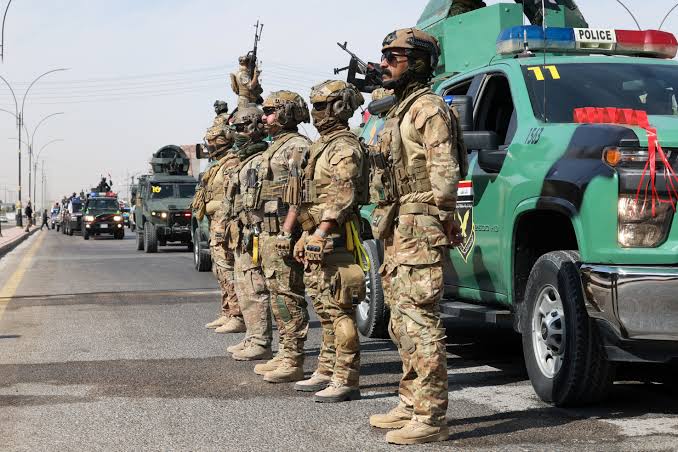
The United States has completed the withdrawal of its military forces from Iraq, ending a 12-year mission against the Islamic State group and closing a major chapter in America’s more than two-decade involvement in the country.
The final U.S. troops left an air base in northern Iraq on Wednesday, September 30, 2026, under an agreement reached between Washington and Baghdad in 2024. The departure marks the end of the U.S.-led coalition's military mission in Iraq, although Washington says security cooperation with Baghdad will continue through training and intelligence support.
The withdrawal comes at a sensitive moment. While the Iraqi government has celebrated the departure as a restoration of sovereignty, Iraqi security officials and regional analysts have raised concerns about what could follow, particularly the ability of Iraqi forces to contain Islamic State sleeper cells and manage the influence of powerful armed groups aligned with Iran.
According to the Associated Press, Pentagon spokesman Sean Parnell said the withdrawal represented the conclusion of a campaign that had defeated ISIS as an organised military threat in Iraq and the wider region. He described the next phase as an Iraqi-led security effort supported by a more conventional bilateral relationship.
From Invasion to Anti-ISIS Mission
The U.S. military presence in Iraq has undergone several dramatic transformations.
American forces invaded Iraq in 2003, overthrowing President Saddam Hussein. U.S. troops eventually withdrew in 2011, but returned less than three years later after Islamic State militants captured large areas of Iraq and Syria.
The extremist group's territorial expansion prompted the creation of a U.S.-led international coalition to support Iraqi forces. The campaign helped drive ISIS from major urban strongholds, including Mosul, and eventually destroyed its territorial control in Iraq.
The United States and Iraq agreed in 2024 to wind down the coalition's military mission, with the final withdrawal scheduled for 2026.
Reuters reported that the United States had maintained a military presence in Iraq for more than two decades and that about 4,500 Americans died during that broader period of conflict and military involvement.
Security Concerns Remain
The end of the U.S. mission does not mean that the Islamic State has disappeared from Iraq.
Although the group no longer controls the large territory it once occupied, it retains sleeper cells capable of carrying out attacks. Reuters reported that Iraqi security officials and Kurdish commanders had observed signs of renewed Islamic State activity ahead of the withdrawal.
One concern is that Iraqi forces could lose access to some of the intelligence, surveillance and logistical capabilities previously supplied by the United States.
The Washington Post reported that remaining U.S. personnel were being relocated to Jordan, where Washington will continue supporting anti-Islamic State operations.
That arrangement means the American military is not completely disengaging from the broader regional counterterrorism effort, but its direct presence inside Iraq has ended.
Iran’s Influence
Another major question surrounding the withdrawal is the future balance of power inside Iraq.
Iran has developed extensive political, economic and security relationships in Iraq since the fall of Saddam Hussein. Several powerful Iraqi armed groups maintain close relationships with Tehran, while some are formally incorporated into Iraq's security structure.
Reuters reported that Iranian officials and Iran-aligned armed groups have portrayed the American withdrawal as a victory for what they describe as the regional resistance against U.S. influence.
The departure could therefore give Iran and its Iraqi allies greater room to influence security and political decisions, although the extent of that influence will depend on Baghdad's ability to maintain control over national security institutions.
Baghdad Welcomes Sovereignty
The Iraqi government has rejected the idea that the withdrawal necessarily creates a security vacuum.
Prime Minister Ali al-Zaidi described the departure as the beginning of a new phase centred on Iraqi sovereignty, stronger institutions and an Iraqi-led security system.
The government has also said that non-state armed groups should eventually surrender weapons to the state.
That objective, however, presents another challenge. Iraq has struggled for years to balance the authority of the state with the power of armed factions that have developed substantial political and military influence.
The Al Jazeera analysis noted that Iraq is entering a new security environment in which it must manage these competing pressures without the direct presence of American forces.
A New Test for Iraq
For many Iraqis, the end of the U.S. military presence represents an important symbol of independence after years of foreign intervention.
But sovereignty also brings responsibility.
Iraq's security forces must now demonstrate that they can prevent the resurgence of Islamic State, manage armed groups and protect the country's borders while navigating the competing interests of Iran, the United States and other regional powers.
The U.S. departure therefore represents both an ending and a beginning. The military campaign that brought American forces back to Iraq in 2014 is over, but the security problems that contributed to that intervention have not entirely disappeared.
Whether Iraq can translate the withdrawal into lasting stability will depend largely on the strength of its institutions, the effectiveness of its security forces and the government's ability to maintain a unified national security policy.
For Washington, the mission has moved from a direct military presence in Iraq to a more limited regional counterterrorism and security partnership.
For Baghdad, the next chapter will be a test of whether greater sovereignty can be matched by the capacity to protect the country from the threats that remain.
The article uses the “nation in peril” framing as the central concern being discussed, while distinguishing documented security risks from the Iraqi government’s position that the country is ready to assume full responsibility for its security.