U.S. Halts Afghan Immigration After Washington Shooting - Rising Tensions Over Vetting Protocols
The U.S. government has suspended all immigration applications from Afghan nationals after a shooting near the White House wounded two National Guard members. The move, ordered by Donald Trump, comes amid calls for tighter vetting of Afghans admitted under post-2021 resettlement programs.
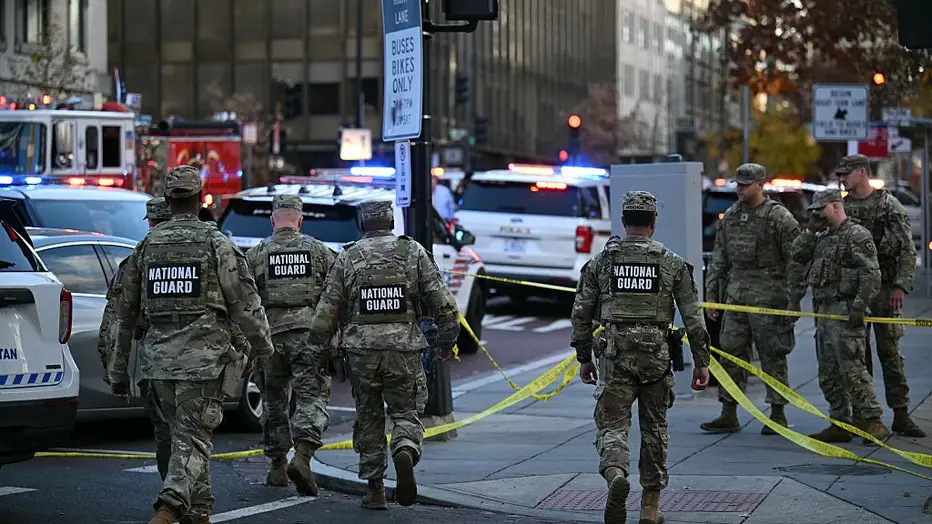
On November 26, 2025, a gunman opened fire on two members of the United States National Guard (USNG) near the White House in Washington, D.C., critically injuring both. The suspect, identified as a 29-year-old Afghan national, was taken into custody following an exchange of gunfire with law enforcement. The shocking attack prompted the U.S. to immediately suspend all immigration processing for Afghan nationals. - The Washington Post
In an order issued late Wednesday, the U.S. Citizenship and Immigration Services (USCIS) announced that it had “stopped indefinitely” all immigration requests submitted by Afghan nationals. The freeze applies to visas, asylum applications, and any other immigration pathways involving Afghan citizens. The suspension is to remain in place while authorities conduct a comprehensive review of “security and vetting protocols.” - Anadolu Ajansı
The shooting, which occurred at about 2:15 p.m. local time near the Farragut Square / Farragut West Metro area, jolted the capital. According to police, the suspect “came around the corner and immediately started firing” at the Guard members who were on patrol. His attack was described as a brazen, targeted ambush aimed at uniformed officers.
Authorities said that other Guard members swiftly intervened, subduing the suspect until police arrived. The suspect was reportedly wounded and taken into custody, while the two injured soldiers were rushed to hospital, where they remain in critical condition.
Suspect Admission Under 2021 Evacuation Program Raises Questions
Federal officials identified the suspect as Rahmanullah Lakanwal (also spelled “Lakamal” in earlier reports), an Afghan man admitted to the U.S. in September 2021 under the post-withdrawal resettlement initiative Operation Allies Welcome (OAW). The program was established after the U.S. military withdrawal from Afghanistan to resettle Afghans, many of whom had assisted U.S. forces or faced persecution under Taliban rule. - Al Jazeera
According to the Department of Homeland Security (DHS), Lakanwal later applied for asylum in 2024; his application was approved earlier this year. His more permanent residency application is still pending. - CBS News
In a statement, DHS officials emphasized that all individuals admitted under OAW had undergone screening at the time of their arrival. However, they acknowledged that the shooting has triggered renewed scrutiny of the vetting process - with a review of past and pending OAW cases now underway.
Investigators have not yet determined the motive behind the attack. The suspect is believed to have acted alone, though authorities continue probing for possible accomplices or extremist ties. At present, no organization has claimed responsibility. - Military.com
Trump Administration Response: Immigration Clamp-Down and Security Surge
In reaction to the shooting, President Donald Trump described the attack as “a cowardly ambush” and labeled it “an act of terror.” He called for a re-evaluation of all Afghan nationals admitted under prior administrations, and ordered additional security reinforcements in the capital. - euronews
Echoing Trump’s remarks, the newly installed Pete Hegseth, Secretary of Defence, announced the deployment of an additional 500 National Guard troops to Washington, D.C. - on top of the roughly 2,200 already stationed in the city as part of a security operation initiated earlier this year. The move aims to “stiffen resolve” and reassure the public amid fears of further attacks. t
White House and DHS officials argue the indefinite freeze on Afghan immigration is necessary to protect national security, pending a full reassessment of entry procedures and asylum vetting. They say that while the vast majority of Afghan arrivals posed no threat, the Lakanwal case exposed potential vulnerabilities that need to be addressed.
Afghan Resettlement Under Spotlight - Broader Implications for US Immigration Policy
The shooting and immediate visa freeze have reignited a heated debate over the admission and integration of Afghan evacuees under OAW. Between 2021 and 2022, tens of thousands of Afghans were evacuated to the U.S., many under humanitarian or special-immigration visas designed for individuals who helped U.S. forces. Critics now argue that the mass resettlement may have stretched vetting capacities, potentially exposing the country to security risks.
On the other hand, advocates warn that the response risks scapegoating entire communities for the actions of an individual. They argue that the OAW process included biometric screening, background checks, and coordination among multiple security agencies - and that revoking protections or halting applications en masse may punish innocent people fleeing persecution.
The indefinite suspension of Afghan immigration applications will likely cause uncertainty for thousands of asylum-seekers, refugees, and individuals seeking family reunification. Many of them may now face prolonged waiting periods, or in some cases, risk denial or deportation hearing depending on the outcome of the security review.
For the Trump administration, the episode strengthens its case for tighter border controls, stricter asylum policies, and deportation, especially for individuals with recent admission. But for human-rights and refugee-advocacy groups, the new measures carry a heavy human cost: potential persecution, loss of legal status, and disruption of lives for tens of thousands brought to safety under official humanitarian commitments.
What Happens Now: Review, Repercussions, and Risk of Backlash
USCIS says the freeze on Afghan immigration processing will remain in place “until further notice,” pending the results of a comprehensive vetting and security audit. It is not yet clear how long that could take or whether some categories (e.g., family reunification, Special Immigrant Visas) might be exempted.
Meanwhile, federal, state, and local law enforcement agencies are working alongside the Federal Bureau of Investigation (FBI) to determine whether the shooting was a lone act or part of a larger network. Investigators caution that no motive has been established, and are yet to determine whether extremist ideologies played a role.
For many Avghan nationals - especially those waiting for asylum or long-term settlement - the freeze creates a precarious limbo, as legal status, access to services, and ability to reunite with family hang in the balance.
The incident underscores the tension at the heart of U.S. policy: balancing national security and immigration controls against humanitarian obligations toward refugees and wartime allies. As Washington becomes a testing ground, the world is watching whether the United States broadens the freeze or eventually reinstates processing with stricter safeguards.