Trump Warns Iran: U.S. Will Use ‘Force That Has Never Been Seen Before’ If It Targets America
U.S. President Donald Trump warns Iran that any retaliatory attack against American forces will be met with unprecedented force, escalating tensions after U.S.–Israeli strikes. Here is an expose on the context, global reactions, and implications.
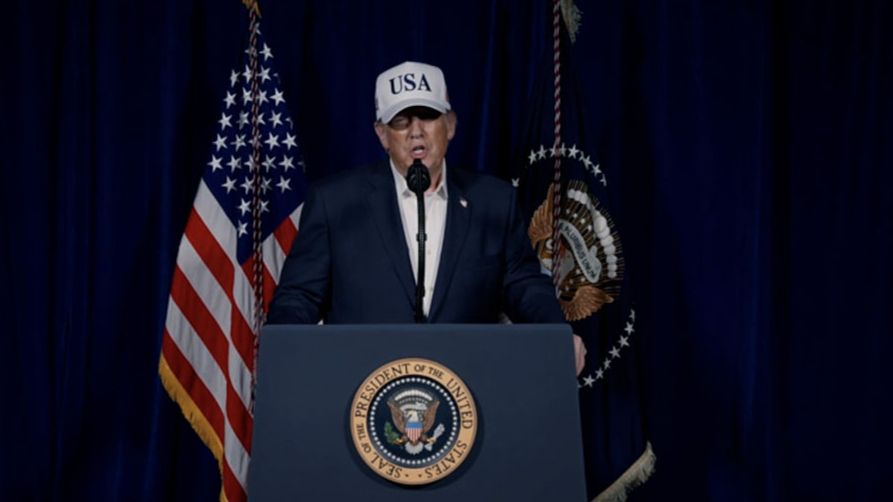
In the midst of one of the most serious U.S.–Iran confrontations in decades, U.S. President Donald Trump issued a stark warning to Tehran on March 1, 2026, stating that any Iranian counter-attack against the United States would be met with "a force that has never been seen before." The declaration, made on Trump’s social media platform in the wake of recent U.S. and Israeli strikes on Iranian targets, has intensified global concern over the prospect of a wider regional conflict and raised questions about nuclear diplomacy, military strategy, and international law.
Context: U.S.–Israel Military Strikes and Rising Tensions
The warning came as part of an ongoing crisis triggered by a joint U.S.–Israeli military campaign against Iran, codenamed “Operation Epic Fury,” which began on February 28, 2026 and targeted Iranian nuclear and military infrastructure. The offensive followed years of mounting tensions over Tehran’s nuclear ambitions and military capabilities and marked a dramatic escalation in U.S.–Iran hostilities. (Wikipedia)
Iran’s state media and military leaders responded to the strikes by threatening counterattacks against U.S. forces and allied targets in the Middle East. In response to those threats, Trump posted an explicit warning on Truth Social that any retaliation “harder than they have ever hit before” would trigger an unmatched U.S. military response. (ABC News)
Trump’s Statement and Its Message
Trump’s warning was emphatic and unambiguous. He wrote that Iran appeared ready to “hit very hard today, harder than they have ever hit before,” but cautioned that “if they do, we will hit them with a force that has never been seen before!”
The U.S. president’s message was aimed not only at Tehran’s military leadership but also at domestic and international audiences. It reflects a broader U.S. policy stance combining military pressure with diplomatic exhortations, and underscores that Washington sees itself as willing to use overwhelming force to deter Iranian attacks on American personnel, assets, and allies. The language used - “never been seen before” - marks a notable escalation from typical deterrence rhetoric and suggests that the U.S. is prepared to go beyond conventional military responses.
Iran’s Reaction and Regional Fallout
Tehran’s response to both the strikes and Trump’s warning has been defiant. Iran’s parliamentary speaker publicly condemned the U.S. and Israeli leadership as “filthy criminals,” vowing retaliatory actions and “devastating blows” for the continued assault. Such rhetoric underscores the possibility of significant escalation rather than de-escalation. (Arab News)
Iran’s strategy up to this point appears to include missile and drone strikes against U.S. military bases in the region as well as against Israeli targets - actions that have already contributed to rising tensions in the Gulf and broader Middle East. The dynamic creates a perilous security environment that risks drawing in other regional actors. (Malay Mail)
Diplomacy, Nuclear Talks, and Military Posture
The warning follows months of mixed signals in diplomatic engagement. Before the escalation, Trump publicly stated that diplomacy remained the preferred course and that the United States sought to prevent Iran from acquiring nuclear weapons - insisting that Tehran must capitulate to certain demands. But with negotiations in Geneva reportedly failing to produce an agreement, the U.S. pivoted toward a combination of pressure tactics and military readiness. (mint)
A large U.S. military presence has been deployed in the region, and defense officials have signaled preparedness to act on Trump’s orders if Iranian actions threaten American interests. Previous statements suggested that U.S. forces were prepared to respond but favored negotiation where possible.
Legal and Political Considerations
Trump’s aggressive stance has triggered debate within the United States about the legality of such military actions without explicit congressional authorization. Critics argue that bombing campaigns and threats of overwhelming force raise constitutional concerns about executive war powers, while supporters contend that decisive action is necessary to deter Iranian aggression and protect U.S. personnel overseas. Congressional voices are reportedly considering war-powers resolutions to curb unchecked presidential military authority. (The Wall Street Journal)
Global Security Implications
The implications of Trump’s warning extend far beyond U.S.–Iran bilateral relations. Analysts warn that the use of “unmatched force” could provoke even broader regional conflict, elevate the risk of miscalculation, and draw in other actors such as Gulf states, Syria, Hezbollah, and non-state militias aligned with Tehran. The Middle East, already beset by overlapping conflicts, could see an intensification of hostilities affecting global energy markets, refugee flows, and international diplomatic alignments.
International response has been mixed. Some nations have called for restraint and diplomatic engagement, while others have expressed support for diplomatic solutions that avoid full-scale war. Many global leaders emphasize that escalatory rhetoric must be coupled with efforts to reduce tensions and avoid widespread destruction. (euronews)
What Comes Next?
As of early March 2026, the situation remains fluid:
- Iran has indicated intentions to launch significant retaliation - statements that triggered Trump’s warning.
- U.S. and Israeli forces remain on heightened alert in the Middle East following the initial wave of airstrikes.
- Diplomatic channels continue to operate, though with uncertain prospects of success.
Security analysts caution that mutual threats and retaliatory capabilities make this phase of the crisis one of the most dangerous in years, with the potential to reshape not only U.S.-Iran ties but the broader geopolitical landscape.
Conclusion
President Trump’s statement that the U.S. will unleash “force that has never been seen before” if Iran retaliates marks one of the most stark and public warnings in recent U.S. foreign policy. Coming amid direct military action and diplomatic stagnation, the warning highlights both the high stakes involved and the fragile nature of peace efforts in the Middle East. As global attention focuses on this crisis, the paths of diplomacy, deterrence, and military engagement remain deeply intertwined - with far-reaching consequences for international security.