Trump Threatens to Bomb Iran’s Bridges and Power Plants Unless Tehran Resumes Nuclear Talks
U.S. President Donald Trump has warned that the United States could target Iran’s bridges, power plants and other infrastructure unless Tehran returns to negotiations, escalating tensions amid renewed military exchanges.
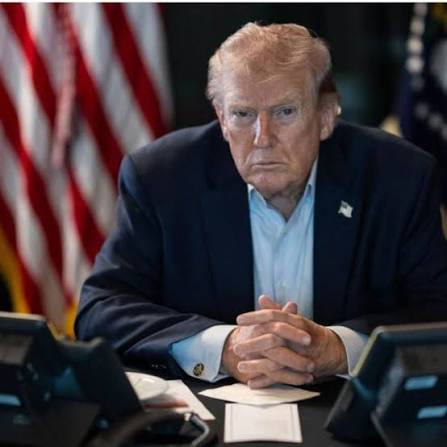
U.S. President Donald Trump has sharply escalated his rhetoric against Iran, warning that the United States could begin targeting the country's bridges, power plants and other critical infrastructure unless Tehran agrees to return to negotiations over its nuclear program and broader regional security issues.
The warning comes amid renewed hostilities between the United States and Iran, with both sides exchanging military strikes in recent days following the collapse of earlier diplomatic efforts aimed at easing tensions in the Middle East.
Speaking during a televised interview, Trump said U.S. forces would intensify their campaign against Iran if its leadership refused to resume negotiations, suggesting that attacks on civilian infrastructure could become the next phase of military operations.
"We're going to knock out all their power plants. We're going to knock out their bridges unless they get to the table and negotiate," Trump said, adding that the United States believed Iran had "no choice" but to return to talks. (MarketScreener Australia)
Military Pressure Intensifies
Trump's remarks followed a fresh wave of U.S. airstrikes targeting Iranian military installations and coastal defense systems that Washington says have been used to threaten commercial shipping in the Strait of Hormuz.
The U.S. military said the strikes were intended to degrade Iran's military capabilities after Tehran allegedly launched attacks against commercial vessels and U.S.-linked facilities in the Gulf region. (Reuters)
Iran has responded by launching missiles and drones toward U.S. military positions in several Middle Eastern countries while maintaining its opposition to American military actions.
The exchange has significantly heightened fears of a broader regional conflict involving Gulf states and other international actors.
Focus on Critical Infrastructure
Trump indicated that energy infrastructure would become a primary target if negotiations remain stalled.
According to his comments, U.S. military operations would initially continue against military objectives before expanding to include bridges, electricity generation facilities and other strategic infrastructure.
Military analysts note that bridges and power plants are often regarded as dual-use infrastructure because they can support both civilian life and military logistics.
However, international humanitarian law places strict limitations on attacks that may disproportionately affect civilian populations.
Legal experts have warned that deliberate attacks on infrastructure essential to civilian survival could raise serious legal and humanitarian concerns under the Geneva Conventions and customary international law. (The Guardian)
Iran Rejects Pressure Tactics
Iranian officials have consistently rejected attempts to negotiate under military pressure.
Tehran has maintained that Washington must first halt military operations and remove sanctions before meaningful diplomatic discussions can resume.
Iran also accuses the United States of undermining previous diplomatic agreements through unilateral sanctions and military action.
Government officials insist that the country's nuclear activities remain peaceful while accusing Washington of using force to achieve political objectives.
Iran has repeatedly stated that external threats will not influence its strategic decisions.
Strait of Hormuz Remains a Flashpoint
The crisis continues to revolve around the Strait of Hormuz, one of the world's most strategically important maritime chokepoints.
Approximately one-fifth of globally traded crude oil passes through the narrow waterway connecting the Persian Gulf with international markets.
Disruptions in the Strait have already fueled concerns about global energy supplies and contributed to increased volatility in oil markets.
The United States accuses Iran of threatening commercial shipping, while Tehran argues that foreign military operations in the region have destabilized maritime security.
Shipping companies have increased security measures as naval forces from several countries continue monitoring developments.
Diplomatic Efforts Face Uncertainty
Despite the escalating military confrontation, diplomatic efforts have not entirely ceased.
Regional governments and international mediators continue exploring opportunities to revive negotiations aimed at preventing a wider conflict.
Several countries have urged both Washington and Tehran to exercise restraint and return to diplomatic channels before further escalation occurs.
Analysts believe that although public rhetoric has become increasingly confrontational, both governments may still prefer a negotiated settlement over prolonged military conflict.
However, continued military exchanges have complicated those diplomatic efforts.
International Reaction
Trump's latest warning has drawn significant international attention.
Several governments have expressed concern about the possibility of attacks on civilian infrastructure and have called for adherence to international humanitarian law.
Humanitarian organizations warned that damage to electricity generation and transportation networks could have severe consequences for civilian populations, including disruptions to healthcare services, water supply and emergency response systems.
Energy markets also remain sensitive to developments, with traders closely monitoring any actions that could affect oil exports from the Gulf.
Political Implications
The renewed confrontation is likely to influence both domestic and international political debates.
Supporters of Trump's approach argue that sustained military pressure may compel Iran to negotiate from a weaker position.
Critics, however, contend that escalating threats against infrastructure could increase regional instability and reduce the prospects for diplomatic resolution.
Foreign policy experts note that previous confrontations between Washington and Tehran have demonstrated how rapidly military incidents can escalate into broader regional crises.
The coming days are expected to be critical in determining whether diplomacy regains momentum or military operations continue to expand.
Looking Ahead
With tensions at one of their highest levels in recent years, uncertainty continues to dominate the Middle East security landscape.
Trump's warning has reinforced Washington's strategy of combining military pressure with demands for renewed negotiations, while Iran remains publicly resistant to talks conducted under threat of force.
International observers say preventing further escalation will require sustained diplomatic engagement, effective crisis management and restraint by all parties involved.
As military operations continue and political rhetoric intensifies, the global community remains focused on whether renewed negotiations can be achieved before the conflict expands further.
For now, the prospect of additional strikes against Iranian infrastructure has added a new and potentially dangerous dimension to an already volatile confrontation, with implications extending well beyond the Middle East to global energy markets and international security.