Trump Says “Iran Wants a Deal Badly” as He Pushes Allies to Reopen the Strait of Hormuz
U.S. President Donald Trump claims Iran “wants to make a deal badly” while urging NATO allies and major powers to help reopen the Strait of Hormuz. This analysis examines the realism of these claims and the geopolitical implications.
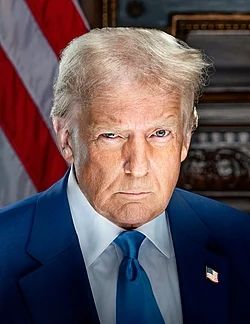
The escalating confrontation involving the United States, Israel, and Iran has taken a new diplomatic turn after U.S. President Donald Trump declared that Iran “wants to make a deal badly” even as he demands that NATO allies and major global powers help reopen the Strait of Hormuz, the world’s most critical oil transit route.
Trump’s comments come amid rising global tensions after Iran effectively restricted shipping through the strait in retaliation for U.S. and Israeli strikes. The situation has triggered soaring oil prices and fears of a wider regional conflict. (Financial Times)
While Trump portrays Tehran as eager to negotiate, analysts remain divided over whether such optimism reflects reality or political strategy.
Trump’s Claim: Iran Wants a Deal
Speaking amid the ongoing crisis, Trump said Iran appears desperate to reach an agreement that could end the conflict and ease international pressure.
However, the U.S. president also insisted that any deal must meet American demands and indicated that negotiations would not begin unless Iran accepted stronger conditions.
The remarks reflect a continuation of Trump’s long-standing strategy of combining military pressure with diplomatic leverage.
In fact, even before the latest conflict escalated, Washington had attempted to reopen nuclear negotiations with Tehran. The two sides held indirect talks mediated by Oman during 2025 – 2026, focusing primarily on Iran’s nuclear program and sanctions relief. (Wikipedia)
Those talks, however, failed to produce a breakthrough, largely because Washington demanded that Iran dismantle major parts of its nuclear and missile programs conditions Tehran has historically rejected.
Trump’s Demand for Global Cooperation
At the same time, Trump has called on NATO allies and major oil-importing nations to help secure the Strait of Hormuz.
According to reports, the U.S. administration has asked roughly seven countries to contribute warships or naval forces to patrol the vital shipping corridor. (Arab News)
Trump has argued that countries benefiting from Gulf oil, such as China, Japan, South Korea, France, and the United Kingdom, should share the burden of protecting the waterway.
He even warned that NATO could face a “very bad future” if allies fail to support the effort. (AOL)
The demand reflects Washington’s concern that the United States cannot shoulder the responsibility of securing global energy routes alone.
Why the Strait of Hormuz Matters
The urgency behind Trump’s call stems from the enormous economic importance of the Strait of Hormuz, a narrow maritime passage connecting the Persian Gulf to global shipping routes
About 20 percent of the world’s oil supply flows through the strait, making it one of the most important energy chokepoints on the planet.
Following recent U.S.–Israeli strikes on Iran, Tehran retaliated by launching attacks on shipping and warning vessels not to pass through the waterway.
The resulting disruption has already damaged merchant ships and caused global oil prices to surge.
Because many major economies rely heavily on oil transported through the strait, even a temporary closure could trigger inflation and economic shocks worldwide.
How Realistic Is Trump’s Claim?
The key question facing analysts is whether Iran truly wants a deal “badly,” as Trump suggests.
1. Iran’s Strategic Position
Iran’s ability to disrupt the Strait of Hormuz gives it significant leverage in the conflict.
By threatening global energy supplies, Tehran can impose economic pressure not only on the United States but also on major global powers dependent on Gulf oil.
From this perspective, Iran may believe that time is on its side.
Rather than rushing into negotiations, Iranian leaders could calculate that prolonged disruption will force Western countries to seek diplomatic solutions.
2. Political Dynamics Inside Iran
Another factor complicating negotiations is domestic politics within Iran.
Hardline factions within the Iranian political system often oppose concessions to the United States, especially after military confrontations.
For these groups, negotiating immediately after attacks could be interpreted as weakness. As a result, even if Iranian leaders privately consider negotiations, they may hesitate to publicly pursue a deal until they can demonstrate strength.
3. The Alliance Problem
Trump’s call for international cooperation to reopen the Strait of Hormuz also faces challenges.
While many countries depend on Gulf oil, they may be reluctant to deploy military forces into an active conflict zone.
Some governments worry that participating in naval patrols could escalate tensions with Iran or drag them into a broader war. Early reactions from several allies have been cautious, suggesting that building a multinational coalition may take time.
4. Military vs Diplomatic Strategy
Trump’s strategy appears to combine military pressure with diplomatic signaling.
On one hand, U.S. and Israeli strikes are intended to weaken Iran’s military capabilities.
On the other hand, statements about Iran wanting a deal may be aimed at shaping global perceptions and encouraging negotiations.
Such tactics are not unusual in international diplomacy, where public messaging can be used to influence negotiations behind the scenes.
Potential Outcomes
Several scenarios could emerge from the current crisis.
First, negotiations could eventually resume if both sides conclude that continued escalation carries too many risks.
Second, the United States and its allies might form a naval coalition to escort ships through the Strait of Hormuz, reducing Iran’s leverage.
Third, the confrontation could escalate further if Iran expands attacks on shipping or regional military bases.
Each of these outcomes carries significant consequences for global security and energy markets.
Global Economic Stakes
The crisis has already sent shockwaves through global oil markets. Because the Strait of Hormuz carries such a large share of the world’s oil supply, any prolonged disruption could:
- Push oil prices sharply higher
- Increase global inflation
- Disrupt supply chains
- Slow economic growth
For this reason, governments around the world are closely watching the situation and exploring ways to stabilize energy markets.
Conclusion
Trump’s assertion that Iran “wants to make a deal badly” reflects the complex interplay of diplomacy, military pressure, and geopolitical messaging surrounding the current crisis.
While negotiations remain possible, the reality is far more complicated than the president’s claim suggests.
Iran retains significant leverage through its ability to disrupt global energy supplies, while the United States is seeking international support to reopen one of the world’s most important maritime corridors.
Ultimately, whether a deal emerges will depend not only on the willingness of Washington and Tehran to negotiate but also on the broader strategic calculations of global powers whose economies depend on the stability of the Strait of Hormuz.