Trump Says FBI Investigating Nvidia CEO Jensen Huang’s Affair With Alleged Chinese Spy
US President Donald Trump says the FBI is investigating Nvidia CEO Jensen Huang's relationship with a woman accused of spying for China, raising fresh national security concerns over America's critical AI technology.
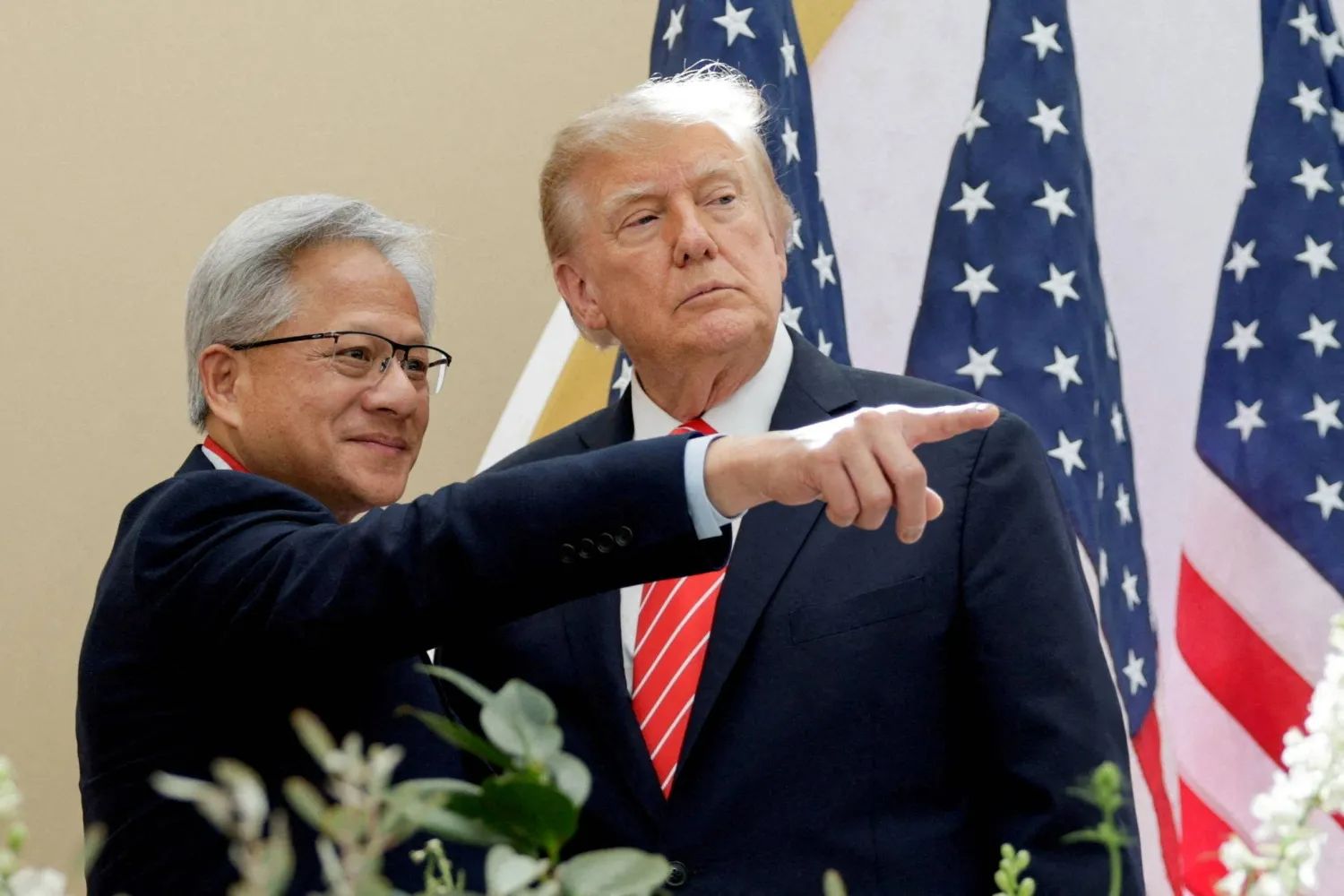
US President Donald Trump has confirmed that the Federal Bureau of Investigation (FBI) is looking into allegations surrounding Nvidia Chief Executive Officer Jensen Huang's relationship with a Chinese businesswoman suspected of working for Beijing's intelligence services.
The controversy, which has sent shockwaves through America's technology and political establishments, centres on allegations that the relationship may have exposed sensitive information about Nvidia's advanced artificial intelligence (AI) chips to Chinese interests.
Trump disclosed the investigation during a White House briefing on Monday, November 9, following a telephone conversation with Huang, one of the most influential executives in the global technology industry.
The president said Huang had denied knowing that the woman was allegedly connected to Chinese intelligence and indicated that he believed the Nvidia chief's explanation.
"I know the FBI is looking into it, and I think that he'll be in good shape," Trump told reporters.
According to Trump, he personally contacted Huang to check on his wellbeing and asked whether he knew that the woman was allegedly a spy.
Huang reportedly responded that he had absolutely no idea about her alleged intelligence connections.
Trump described Huang as an honourable individual and expressed confidence that the investigation would not necessarily damage his position.
Jensen Huang Admits to Extramarital Affair
The allegations emerged after reports revealed that Huang had maintained a close personal relationship with a Chinese businesswoman identified as Alice Huang, who is reportedly unrelated to the Nvidia CEO.
Huang, 63, subsequently acknowledged being unfaithful to his wife in an open letter addressed to Nvidia employees and published through the company's communication channels.
Although he did not publicly identify the woman involved, he apologised to his wife, family and colleagues for the personal and professional consequences of his actions.
The Nvidia founder also acknowledged the seriousness of the situation and pledged to cooperate fully with investigations.
In his statement, Huang said he supported the investigation and remained committed to protecting Nvidia and America's national security.
His admission followed reports that US intelligence officials believed Alice Huang had been gathering information for the Chinese government.
According to reporting by The New York Times, the woman was allegedly connected to China's Ministry of State Security, raising concerns that her relationship with the Nvidia chief could have been part of a broader intelligence operation.
Nvidia Launches Independent Investigation
Nvidia's board of directors has announced an independent investigation into reports that its chief executive may have been targeted by a foreign intelligence operation.
The investigation, which will be overseen by external legal advisers, is expected to examine the circumstances surrounding the relationship and determine whether any confidential corporate information or sensitive national security interests were compromised.
However, Nvidia has maintained that it currently has no reason to believe that either company secrets or national security information were compromised.
The investigation is particularly significant because Nvidia occupies a central position in the global artificial intelligence industry.
Its graphics processing units and specialised AI accelerators are widely used by technology companies, research institutions and governments to develop and operate advanced AI systems.
Consequently, any possibility that sensitive information about its technology, business operations or supply chains may have reached foreign intelligence networks is likely to attract considerable attention from American security agencies.
Chinese Businesswoman's Alleged Connections Raise Questions
Attention has increasingly focused on Alice Huang's reported business connections, particularly her association with Megaspeed International, a Singapore-based data centre company.
According to media reports, the company has had business dealings involving Nvidia technology and has faced allegations connected to the movement of advanced semiconductor products into China.
US intelligence officials reportedly believe Alice Huang was involved in gathering information for Beijing.
The allegations have raised questions about whether personal relationships involving influential technology executives could be exploited to obtain commercially sensitive information or gain access to strategically important technology.
A separate Reuters report published on November 10, citing The Information, alleged that Alice Huang's business network facilitated shipments of at least $7.5 billion worth of Nvidia chips to Chinese companies.
The report said the network involved companies operating across China and Singapore and reportedly helped secure supplies of advanced processors.
These claims have not been independently established as findings of the FBI investigation, and Nvidia has not publicly confirmed that its CEO's relationship facilitated any illegal shipments.
China Rejects Espionage Allegations
Beijing has strongly rejected allegations that Chinese intelligence services orchestrated an operation targeting Huang.
Chinese Foreign Ministry spokesperson Guo Jiakun described the accusations as unsubstantiated and an attempt to smear China.
The Chinese government's response reflects the broader tensions between Washington and Beijing over advanced semiconductor technology, artificial intelligence and national security.
For years, the United States has imposed restrictions on the export of sophisticated computer chips to China, arguing that access to advanced semiconductor technology could strengthen Beijing's military and surveillance capabilities.
Nvidia has been directly affected by these restrictions because China represents an important potential market for its products.
Huang has previously advocated a more flexible approach to semiconductor exports, arguing that American companies should remain competitive in the global technology market.
This position has made the investigation particularly sensitive, given the potential implications for US technology policy and relations with China.
Congressional Scrutiny Intensifies
The controversy is also attracting attention from senior American lawmakers, who want greater clarity about the possible national security implications.
Democratic Senator Mark Warner and House Minority Leader Hakeem Jeffries have expressed interest in obtaining detailed briefings from intelligence officials.
Jeffries disclosed that the Nvidia issue had been raised during a closed-door meeting involving the CIA director and the Director of National Intelligence.
He stressed the need for lawmakers to understand what happened, whether sensitive information was exposed and what the implications could be for American national security.
There are also growing calls for Huang to explain his relationship with the alleged intelligence operative and provide information about Nvidia's security procedures.
The investigation could therefore extend beyond Huang's personal conduct to examine the company's internal safeguards, executive relationships and exposure to foreign intelligence activities.
Nvidia Shares Come Under Pressure
The allegations have also affected investor confidence in Nvidia, whose market valuation makes it one of the world's most important publicly traded technology companies.
Nvidia shares declined by more than four per cent on Monday, November 9, amid growing uncertainty surrounding the investigation.
The stock's decline added to losses recorded in previous trading sessions, reflecting investor concerns about the potential consequences of the controversy.
Beyond the immediate financial impact, the situation raises questions about corporate governance and the responsibilities of executives leading companies whose products have strategic importance to national governments.
For Nvidia, maintaining confidence among investors, customers and government regulators will be essential as the investigation progresses.
Trump Faces Potential Diplomatic Questions
The controversy comes at a particularly sensitive moment in US-China relations, with Trump expected to meet Chinese President Xi Jinping at the Asia-Pacific Economic Cooperation summit in Shenzhen.
Asked whether he would raise the allegations with Xi, Trump appeared uncertain, suggesting that the Chinese leader might bring up the matter himself.
The president's comments also highlighted his personal relationship with Huang, whom he has repeatedly praised for his contribution to America's technology industry.
Nevertheless, the FBI investigation could complicate discussions surrounding semiconductor exports, artificial intelligence competition and Washington's broader concerns about China's technological ambitions.
What Happens Next?
For now, several critical questions remain unanswered: whether Alice Huang was genuinely working for Chinese intelligence, whether Jensen Huang was deliberately targeted, and whether any confidential Nvidia information was obtained or transferred to foreign interests.
It is also unclear whether the investigation will result in criminal charges, regulatory action or further restrictions on technology exports.
The FBI has not publicly provided details about the scope of its investigation, while Nvidia's independent inquiry is expected to establish whether the allegations have any implications for the company's operations or security.
China continues to deny the espionage claims, and the allegations against Alice Huang have not been established in a court of law.
Ultimately, the controversy represents more than a personal scandal involving one of the world's most powerful technology executives. It has become a national security issue at the intersection of artificial intelligence, international espionage, corporate governance and the increasingly competitive technological relationship between the United States and China.