Trump’s ‘Jesus Image’ and Explosive Feud with the Pope: Why the Backlash Is Growing Worldwide
Donald Trump’s AI-generated Jesus-like image and escalating feud with Pope Leo XIV have sparked global outrage, raising questions about religion, politics, and leadership in a volatile era.
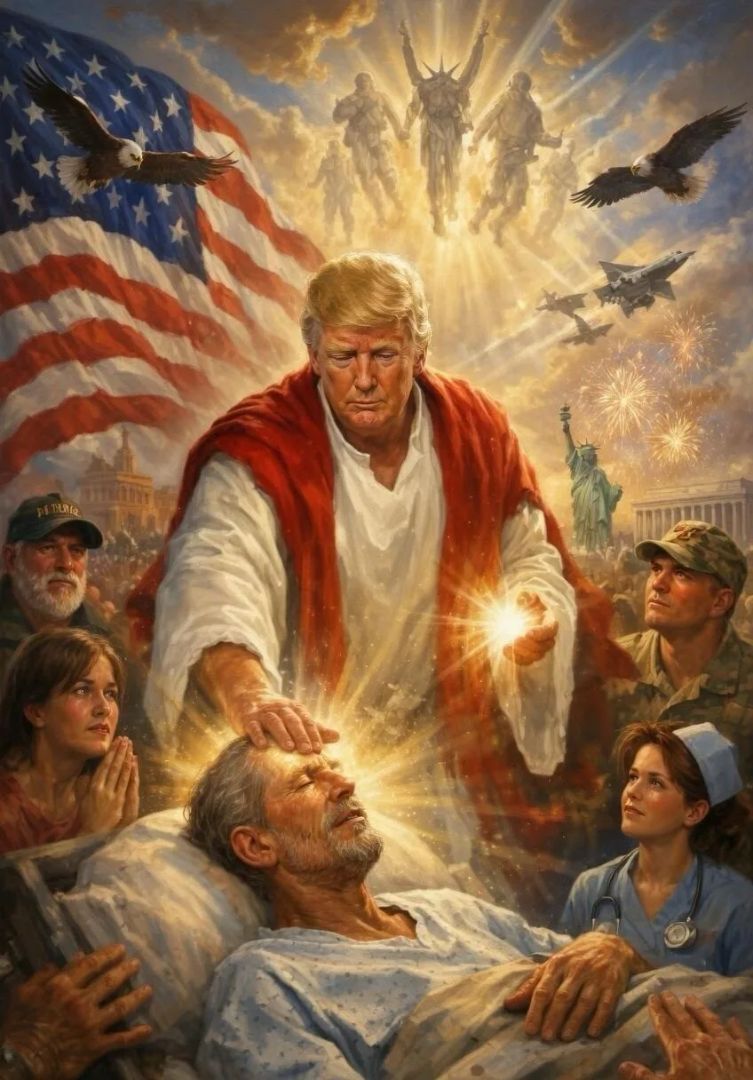
A political controversy with deep religious undertones is unfolding on the global stage, as Donald Trump faces mounting backlash over an AI-generated image portraying him in a Christ-like form alongside a bitter public feud with Pope Leo XIV.
What might once have been dismissed as provocative political theater has now evolved into a full-blown cultural and religious flashpoint, drawing criticism from Christians, political allies, and global leaders alike.
The Image That Sparked Outrage
The controversy began when Trump posted an AI-generated image on his Truth Social platform depicting himself in a glowing, Christ-like pose, reportedly healing a sick man, evoking strong biblical symbolism.
Though Trump later claimed the image was intended to represent him as a “doctor,” not Jesus, the explanation did little to calm the storm. (Reuters)
Critics across religious and political lines quickly condemned the image as inappropriate and even blasphemous. Some conservative commentators, traditionally among Trump’s strongest supporters, were unusually vocal, calling the portrayal offensive to Christian beliefs. (New York Post)
The backlash was so intense that Trump eventually deleted the post, a rare retreat in his typically defiant communication style. (The Guardian)
A Feud Rooted in War and Morality
The controversy did not emerge in isolation. It followed an escalating dispute between Trump and Pope Leo XIV, largely centered on global conflicts, particularly the ongoing Iran war.
The pope has repeatedly called for peace and condemned what he described as reckless displays of power and violence.
Trump, in response, launched a direct attack, labeling the pope “weak on crime” and “terrible for foreign policy.”
The exchange marked a significant moment in the growing rift between Washington and the Vatican, part of a broader diplomatic tension now referred to as the 2026 United States–Holy See rift.
While disagreements between political leaders and religious figures are not new, the public and personal tone of this feud has raised eyebrows.
Religion Meets Political Messaging
Trump’s use of religious imagery is not unprecedented. Throughout his political career, he has frequently aligned himself with Christian symbolism and rhetoric, appealing to a strong evangelical base.
However, experts say this latest incident crosses a different line.
Portraying oneself in a Christ-like role, especially in a literal visual depiction, touches a sensitive boundary in Christian theology, where Jesus Christ is not merely symbolic but divine.
This is why the backlash has been particularly sharp. Even among supporters, there is discomfort with what some see as self-deficiency.
Religious leaders have emphasized that faith should not be instrumentalized for political gain, especially in ways that risk distorting core beliefs.
Backlash from Within Trump’s Base
Perhaps the most striking aspect of the controversy is where the criticism comes from.
Prominent conservative voices, media personalities, and Christian commentators, many of whom have defended Trump in past controversies, have openly condemned the image.
American Catholic leaders have also expressed outrage, stressing that the pope’s role is spiritual, not political, and warning against disrespect toward religious institutions. (Le Monde.fr)
This internal backlash suggests a potential fracture within Trump’s support base, particularly among religious voters who played a crucial role in his electoral success.
Global Reactions and Diplomatic Fallout
The controversy has not been confined to the United States.
International leaders and religious figures have weighed in, with some condemning both the image and Trump’s rhetoric toward the pope as disrespectful and divisive.
The timing has also amplified the impact. The incident comes amid heightened global tensions and humanitarian concerns, making the use of religious imagery in political messaging even more sensitive.
In many parts of the world, where religion plays a central role in public life, the episode has been seen as a troubling sign of how political discourse is evolving.
The Role of AI in Political Controversy
Another dimension of the controversy is the use of artificial intelligence.
AI-generated imagery has become increasingly common in political communication, offering powerful tools for storytelling but also raising ethical concerns.
In this case, technology allowed for the creation of a highly symbolic and emotionally charged image, blurring the line between satire, propaganda, and personal branding.
Experts warn that as AI tools become more accessible, similar controversies could become more frequent, making it harder to distinguish between intent and accountability.
A Deeper Cultural Divide
At its core, the backlash reflects a deeper cultural and ideological divide.
On one side is a political movement that often embraces bold, provocative messaging as a form of strength. On the other is a religious tradition that emphasizes humility, reverence, and moral authority.
The clash between these two approaches is now playing out in real time, with global audiences watching closely.
Conclusion: A Defining Moment for Politics and Faith
The controversy surrounding Trump’s Jesus-like image and his feud with Pope Leo XIV is more than a fleeting media storm; it is a defining moment in the intersection of politics, religion, and technology.
It raises fundamental questions: How far can political messaging go? Where should the line be drawn between symbolism and sacrilege? And what happens when faith becomes a battlefield for political identity?
For now, one thing is clear: the backlash is not just about an image, but it is about the values and boundaries that shape both leadership and belief in a rapidly changing world.