Trump’s Iran Escalation Sparks Backlash: Kamala Harris Slams U.S. ‘War of Choice’
Former U.S. Vice President Kamala Harris sharply criticizes President Donald Trump for U.S. strikes on Iran, accusing him of dragging America into an unwanted war. Read her full statements, context, and global reactions.
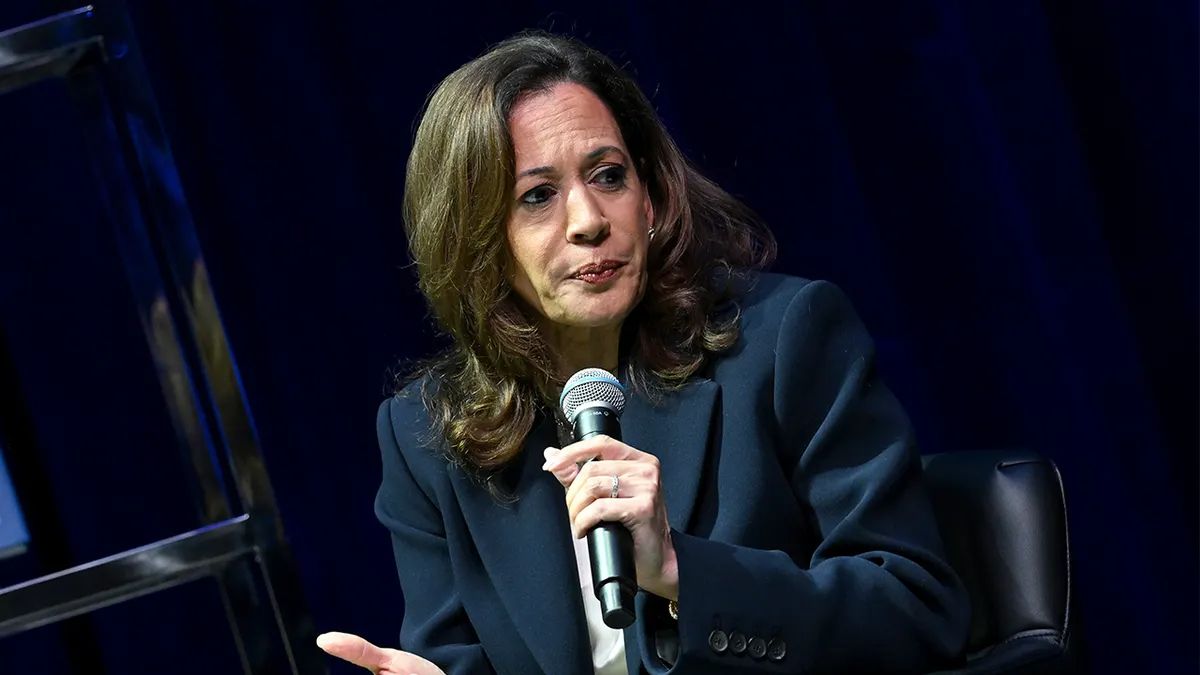
Former United States Vice President and prominent Democratic leader Kamala Harris has strongly admonished Donald Trump over recent U.S. military strikes on Iran, accusing his administration of dragging the United States into an unwanted and unnecessary conflict that risks American lives, constitutional norms, and regional peace. Her public condemnation continues a growing political backlash as Middle East tensions escalate following the U.S.–Israeli offensive against Iranian targets. (CGTN News)
Harris’s Core Criticism: ‘War the American People Do Not Want’
In a statement shared widely on social media and reported across multiple outlets, Harris called the strikes on Iran “a dangerous and unnecessary gamble” that could embroil the United States in a full-scale conflict. She wrote that Trump was “dragging the United States into a war the American people do not want,” asserting that the administration’s justification does not reflect public sentiment or constitutional propriety. (National Herald)
Harris asserted she is “opposed to a regime-change war in Iran” and contended that the decision to use military force has placed American troops and U.S. interests in serious jeopardy, describing it as “Trump’s war of choice.”
Her tone reflects deep anxiety within parts of the U.S. political establishment about the direction of U.S. foreign policy and the potential for protracted military engagement abroad.
Echoing Broader Concerns: Risk to U.S. Troops & Strategic Credibility
Harris emphasized that the conflict could produce American casualties, noting that even Trump acknowledged this risk. She underscored the human cost of these decisions, saying that U.S. service members - “who show exceptional skill, discipline, and precision”-deserve a leader who approaches matters of war and peace with “steadiness and discipline.” (National Herald)
This concern also mirrors legal arguments made by other critics who argue that the U.S. Constitution requires Congressional authorization for war, a step Harris noted Trump had not taken, raising questions about the legitimacy of the strikes under U.S. law. (TheConclaveNg)
Trump’s Broken Promises and Public Confidence
Another pillar of Harris’s critique was her contention that Trump has broken key campaign pledges regarding U.S. military engagement. She pointed to promises made by Trump to “end wars rather than start them” and criticized previous claims that prior strikes had successfully “obliterated” Iran’s nuclear program - suggesting that both assertions were false.
This critique seeks to paint Trump’s military posture as not only reckless but also politically inconsistent, potentially eroding public confidence in the administration’s strategic judgment.
Harris Calls for Congressional Action
In her statement, Harris urged Congress to use all available powers to prevent further escalation, emphasizing that unchecked military action could have long-term consequences for U.S. global leadership and democratic governance. She argued that the legislative branch must assert its constitutional authority to oversee decisions that could lead to war.
Her comments reflect long-standing debates in the U.S. about the war powers clause of the Constitution and the executive’s authority to order military action without explicit congressional approval.
Political and Public Backlash Intensifies
Harris’s criticism is part of a broader domestic response. Other Democratic leaders, including senators and party influencers, echoed her concerns that the military strikes risked a wider conflict and lacked clear legal or strategic justification.
Protests also erupted in several U.S. cities, with demonstrators denouncing the strikes and calling for diplomatic solutions, reflecting a segment of public opinion wary of foreign entanglements and fresh combat operations.
Global Context: Escalating U.S.–Iran Tensions
Harris’s remarks come amid one of the most serious periods of U.S.–Iran confrontation in years. A coordinated military offensive by U.S. and Israeli forces struck Iranian infrastructure and leadership targets, dramatically escalating tensions across the Middle East. Some reports link the operation to the deaths of senior Iranian figures, triggering fears of broader retaliation and geopolitical instability. (The Guardian)
Iran’s government condemned the strikes, and worldwide leaders have responded with mixed reactions - some condemning the use of force, others urging de-escalation. (AP News)
In this fraught environment, Harris’s comments add to international scrutiny of U.S. policy, especially regarding long-standing debates over military intervention and diplomatic engagement.
Why Harris’s Opposition Matters
Harris’s critique carries weight for several reasons:
1. Domestic Political Impact: As a former Vice President and national political figure, her denunciation contributes to a growing partisan divide over foreign policy and reflects broader public unease about prolonged conflicts.
2. Constitutional Debate: Her emphasis on congressional authority touches on enduring tensions between the executive branch’s military powers and legislative oversight - a debate likely to shape future policy decisions.
3. Messaging on American Values: Harris framed her opposition in terms of representing the will of the American people, arguing that elected leaders must pursue diplomacy and protect lives over entering conflicts that lack broad support.
Critics and Counterarguments
Supporters of Trump’s strategy argue that decisive action is necessary to counter Iran’s regional influence and nuclear ambitions. They contend that military pressure can deter threats and protect U.S. interests. Yet Harris and other critics warn that escalation may instead destabilize the region and entangle the United States in open-ended warfare.
This clash of perspectives underscores the deep divisions within American politics on how best to deter global adversaries while safeguarding national security and democratic norms.
Conclusion
Former Vice President Kamala Harris’s criticism of President Trump’s actions in Iran reflects a profound political and constitutional debate at a pivotal moment in U.S. foreign policy. By branding the strikes “dangerous, unnecessary, and a war of choice,” she has sharpened scrutiny over the administration’s strategy and amplified calls for greater accountability, diplomatic alternatives, and congressional oversight.
As tensions continue to escalate in the Middle East, Harris’s voice represents a significant domestic counterweight to unilateral military actions - raising essential questions about leadership, legality, and the future of American involvement abroad.