Trump’s Attacks on European Leaders Deepen Transatlantic Frost
Donald Trump’s renewed attacks on European leaders are straining U.S.-EU relations, raising concerns about NATO unity, trade tensions, and the future of the transatlantic alliance.
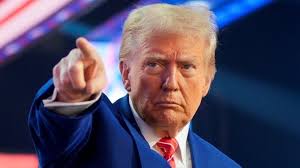
Tensions between the United States and Europe are once again rising, as Donald Trump intensifies his criticism of European leaders, policies, and institutions. The remarks delivered through speeches, interviews, and social media have sparked diplomatic unease and raised fresh concerns about the stability of the transatlantic alliance.
At a time when global security challenges are mounting, Trump’s rhetoric has added another layer of uncertainty to relations between Washington and key European capitals such as Berlin, Paris, and Brussels.
What Trump Said and Why It Matters
In recent statements, Trump sharply criticized European leaders over defense spending, immigration policies, and economic practices. He accused some governments of failing to meet their obligations under the North Atlantic Treaty Organization (NATO) and suggested that the United States has been unfairly burdened by the cost of European security.
Trump also took aim at the European Union, describing it as an economic competitor rather than a strategic partner. His comments revived longstanding grievances about trade imbalances, regulatory barriers, and what he views as protectionist policies.
While such rhetoric is not entirely new, analysts say the tone and timing have amplified its impact, particularly amid ongoing geopolitical tensions involving Russia, Iran, and global trade disruptions.
Europe’s Reaction: Concern and Frustration
European leaders have responded cautiously but firmly.
Officials in Germany and France emphasized the importance of maintaining strong transatlantic ties, while also defending Europe’s policy choices. Some leaders expressed concern that Trump’s remarks could undermine unity at a time when cooperation is essential.
Diplomatic sources suggest that behind closed doors, frustration is growing. European officials worry that repeated public criticism from a major ally could weaken political cohesion within NATO and embolden adversaries.
In Brussels, where EU institutions are headquartered, policymakers have also raised concerns about the potential economic fallout of renewed tensions, particularly if trade disputes escalate.
NATO Under Pressure
One of the most sensitive issues in the current dispute is NATO.
Trump has long argued that European countries should increase their defense spending, a position that has found some support within the alliance. However, his confrontational approach has often strained diplomatic relations.
Recent comments suggesting that the U.S. might reconsider its commitments to NATO if allies do not meet spending targets have raised alarm among European governments.
For many European leaders, NATO is not just a military alliance but a cornerstone of regional security. Any perceived weakening of U.S. commitment could have far-reaching consequences.
Trade Tensions Resurface
Beyond security, economic issues are also fueling the transatlantic frost.
Trump’s criticism of the European Union includes allegations of unfair trade practices, particularly in sectors such as automobiles, agriculture, and technology. He has hinted at the possibility of new tariffs or trade restrictions, which could trigger retaliatory measures from Europe.
Such a scenario would risk escalating into a full-scale trade dispute, potentially affecting billions of dollars in transatlantic commerce.
Economists warn that renewed trade tensions could slow economic growth on both sides of the Atlantic, especially at a time when global markets are already facing uncertainty.
The Broader Geopolitical Context
The timing of Trump’s remarks is significant.
The United States and Europe are currently navigating multiple global challenges, including the ongoing conflict involving Iran, tensions with Russia, and concerns about China’s growing influence.
In this context, unity among Western allies is widely seen as crucial. Trump’s criticisms, however, have introduced new divisions at a time when coordination is needed.
Analysts note that adversaries may view these divisions as an opportunity to exploit weaknesses within the alliance.
Domestic Politics and International Impact
Trump’s statements are also influenced by domestic political considerations.
Criticism of European allies has historically resonated with segments of the American electorate who favor a more isolationist approach to foreign policy. By emphasizing “America First” principles, Trump reinforces his political brand while challenging traditional alliance structures.
However, this approach carries risks. While it may appeal to domestic audiences, it can complicate diplomatic relations and reduce the effectiveness of international cooperation.
Why the “Transatlantic Frost” Matters
The term “transatlantic frost” refers to the cooling of relations between the United States and Europe, a partnership that has been central to global stability since World War II.
Deterioration in this relationship could have several consequences:
- Reduced coordination on security issues
- Weakened collective response to global crises
- Increased economic uncertainty
- Greater geopolitical fragmentation
For decades, the transatlantic alliance has been a pillar of international order. Any sustained tension within it is likely to have global repercussions.
Lessons From the Current Tensions
1. Alliances Require Constant Maintenance: Even long-standing partnerships can weaken without consistent diplomatic effort and mutual respect.
2. Communication Style Matters: The way leaders express concerns can influence how those concerns are received and addressed.
3. Shared Interests Must Be Reinforced: Common goals such as security and economic stability need to be actively emphasized, especially during periods of disagreement.
4. Domestic Politics Shapes Foreign Policy: Leaders often balance international obligations with domestic political pressures, sometimes creating tension between the two.
What Happens Next?
The future of U.S.-Europe relations will depend on several factors:
- Whether diplomatic channels can ease tensions
- How NATO members respond to defense spending debates
- Whether trade disputes escalate or are resolved
- The broader geopolitical environment
For now, both sides appear committed to maintaining the alliance, even as disagreements persist.
Final Analysis
Trump’s renewed attacks on European leaders have deepened an already fragile moment in transatlantic relations.
While the alliance between the United States and Europe remains intact, the current tensions highlight its vulnerabilities. Differences over defense, trade, and political priorities are not new but the way they are being expressed has intensified their impact.
In an increasingly uncertain world, the strength of alliances may depend not just on shared interests, but on the ability to navigate اختلافات without allowing them to become divisions.
The coming months will determine whether this “transatlantic frost” is a temporary chill or the beginning of a more lasting shift in global diplomacy.