Trump Rules Out Fresh War With Iran as Washington Signals Preference for Diplomatic Settlement
US President Donald Trump says he is unlikely to launch fresh military strikes against Iran if negotiations make progress, raising hopes of a diplomatic breakthrough despite continuing tensions over nuclear weapons, sanctions and the Strait of Hormuz.
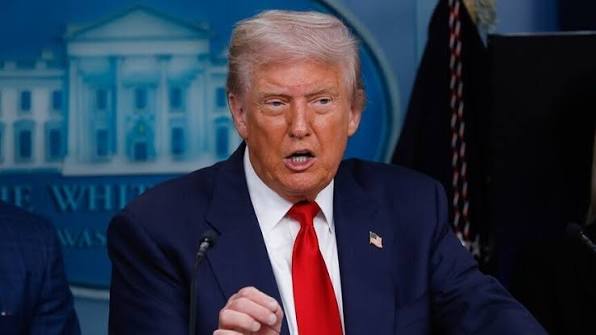
United States President Donald Trump has indicated that he is highly unlikely to order another round of military attacks against Iran if ongoing negotiations between Washington and Tehran make meaningful progress, raising fresh hopes of a diplomatic resolution to the eight-month conflict.
Trump's remarks represent a significant shift in tone following months of threats to resume military operations against Iran after the November 3 US midterm elections.
In a telephone interview with CNN, the American president said another military attack would probably not be necessary if Iran agreed to a strong agreement addressing Washington's security concerns.
The comments came amid renewed diplomatic contacts involving American officials, Iranian representatives and regional mediators seeking to prevent the conflict from escalating further.
However, Trump maintained that the United States remained prepared to use military force if negotiations failed to produce an agreement acceptable to his administration.
The development is particularly significant given the strategic importance of the Middle East to international energy supplies and the wider economic consequences of the conflict.
Trump Signals Preference for Negotiated Agreement
Trump's latest comments suggest that Washington may be increasingly inclined to pursue negotiations rather than immediately return to large-scale military operations.
According to Reuters, the president said he was highly unlikely to order fresh attacks if negotiations continued to progress.
He reportedly indicated that the decision would depend on whether Tehran agreed to what he described as a very strong agreement.
Nevertheless, Trump warned that the United States had identified several Iranian infrastructure targets that could be attacked if military operations resumed.
He specifically mentioned 38 bridges, claiming American forces could destroy them within an hour.
The warning demonstrated that despite his preference for diplomacy, the administration had not abandoned its military options.
Trump's position also reflects the complicated balance facing Washington: securing an agreement that addresses its concerns over Iran's nuclear programme while avoiding another escalation that could further destabilise the international economy.
Iran War Becomes Political Liability for Trump
The president's latest comments came against the background of significant political consequences from the conflict.
The war, which began with US-Israeli military operations against Iran on February 28, 2026, has become an increasingly controversial issue in American domestic politics.
Rising fuel prices, disruptions to international shipping and concerns about the financial cost of prolonged military operations have generated criticism of the administration.
The November 3 midterm elections delivered substantial losses for Trump's Republican Party, with Democrats securing control of Congress.
Trump subsequently acknowledged that the Iran conflict contributed to the Republicans' disappointing electoral performance.
Vice President JD Vance also identified the war as a factor behind the party's losses.
The political consequences have increased pressure on the administration to demonstrate progress towards ending the conflict.
Secretary of State Marco Rubio, however, defended the military campaign, arguing that preventing Iran from obtaining a nuclear weapon remained a central national security objective.
His comments reflected the administration's continued insistence that any diplomatic settlement must address Iran's nuclear capabilities.
Nuclear Programme Remains Central to Negotiations
At the heart of the diplomatic disagreement is Iran's nuclear programme.
Washington has repeatedly insisted that Tehran must not acquire nuclear weapons, while Iran maintains that its nuclear activities are peaceful and rejects demands it considers violations of its sovereignty.
The disagreement has complicated efforts to establish a lasting ceasefire.
American officials want an agreement that provides credible guarantees against Iran developing nuclear weapons, while Tehran has demanded broader concessions involving sanctions, frozen assets and the economic consequences of the war.
Iran has also sought an end to the American blockade affecting its ports and a resolution to restrictions on its oil exports.
According to Reuters, Iranian proposals have included compensation for war damage and arrangements addressing the security of the region.
These competing demands mean that even though both sides have continued communicating through intermediaries, a comprehensive settlement remains difficult to achieve.
Strait of Hormuz Remains a Major Concern
Another major obstacle to ending the conflict is the security of the Strait of Hormuz.
The strategic waterway connects the Persian Gulf with international shipping routes and is one of the world's most important energy transportation corridors.
Before the conflict, a substantial proportion of internationally traded oil passed through the strait.
Iran's restrictions on shipping, combined with the American blockade of Iranian ports, have disrupted energy exports and contributed to volatility in international oil markets.
Reports of attacks involving commercial vessels have further complicated the situation.
The consequences extend beyond the Middle East, affecting oil-importing countries, international shipping companies, manufacturers and consumers.
For countries heavily dependent on imported petroleum, prolonged disruption could translate into higher transportation costs, inflationary pressures and increased economic uncertainty.
The restoration of safe and predictable shipping through the Strait of Hormuz is therefore likely to be a central component of any lasting agreement.
Qatar and Regional Mediators Continue Diplomatic Efforts
Regional diplomacy has remained important in efforts to prevent the conflict from escalating.
Qatar has been involved in facilitating communication between Washington and Tehran, while other regional and international actors have encouraged both sides to pursue a political solution.
Iranian Foreign Minister Abbas Araghchi said consultations through mediators remained intensive, following discussions in Doha.
He indicated that Tehran had presented its conditions and proposals, stressing that progress depended on Washington's willingness to respond.
Vice President Vance also previously reported that there had been several positive conversations with Iranian representatives.
However, Rubio cautioned that a breakthrough was not imminent, citing significant differences between the two countries' positions.
The involvement of regional mediators demonstrates the importance of diplomatic channels in a conflict with consequences extending far beyond the immediate parties.
What Trump's Latest Position Means for the Future
Trump's decision to signal reluctance towards fresh military strikes could create additional opportunities for negotiations.
However, his comments should not be interpreted as confirmation that the conflict has ended or that a comprehensive peace agreement is imminent.
The United States continues to maintain military capabilities in the region, while Iran has repeatedly warned that it would respond to renewed attacks.
The possibility of further confrontation therefore remains.
For the international community, the priority is preventing another escalation that could threaten energy supplies, international commerce and regional stability.
The coming diplomatic discussions will determine whether Washington and Tehran can bridge their differences over nuclear restrictions, sanctions, maritime security and compensation.
For now, Trump's latest remarks suggest that the United States is prepared to give diplomacy more room, provided Iran accepts an agreement that addresses Washington's central demands.
The challenge will be translating that willingness into a lasting settlement capable of ending the conflict and restoring stability to one of the world's most strategically important regions. (Reuters)