Trump Labels Nigeria “Country of Particular Concern”
Trump’s religious-freedom designation on Nigeria raises diplomatic tensions, global security concerns, and new debates over terrorism, faith, and national identity.
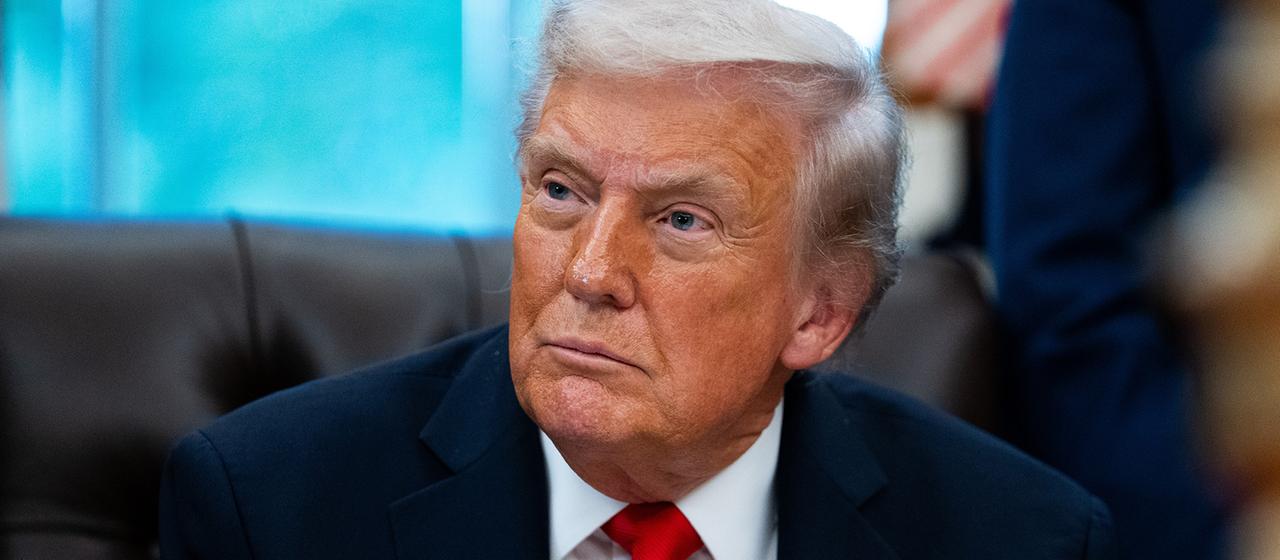
U.S. President Donald Trump’s designation of Nigeria as a “country of particular concern” (CPC) due to alleged mass killings of Christians has reignited global debate on security, religion, and foreign policy in Africa’s most populous nation. The controversial classification - placing Nigeria alongside nations like North Korea, Saudi Arabia, Iran, Pakistan, Russia, and China - is being viewed by analysts as a decision with far-reaching economic and diplomatic consequences.
In a Truth Social post, Trump claimed that “radical Islamists are committing mass slaughter” and that Christianity faces “an existential threat” in Nigeria. He cited 3,100 Christians killed but provided no verifiable data source.
Trump drew from evangelical advocacy campaigns in Washington pushing for greater U.S. intervention on religious persecution issues. His remarks have significantly amplified global scrutiny of Nigeria’s internal security weaknesses.
Violence in Nigeria: A Complex Crisis Beyond Religion
Nigeria continues to battle a decade-long insurgency involving Boko Haram and Islamic State in West Africa Province (ISWAP). According to the U.S. Commission on International Religious Freedom, extremist groups have killed more than 37,000 people since 2011 - https://www.uscirf.gov
Security analysts say Trump’s narrative oversimplifies a deeply complex crisis as key realities on ground are that most attacks occur in Muslim-majority northern states, many victims are Muslim civilians, violence stems from terrorism, criminality, and governance failures, and conflicts are often driven by land, identity, and economic pressure
Also, in the UNDP Extremism Study (2023) - https://www.undp.org/publications/journeys-extremism-africa, experts caution that framing Nigeria’s insecurity as purely religious risks boosting extremist propaganda and escalating sectarian division.
Nigeria’s Government Pushback
The Nigerian government has strongly rejected the CPC label, calling the claims exaggerated and politically motivated. Officials argue that the move do not only damage Nigeria’s global reputation, but also could slow foreign investment and tourism as well as open the door to U.S. sanctions, threatening security cooperation and aid
Nigeria remains a major partner in regional counterterrorism and intelligence-sharing programs. - Nigeria Ministry of Information Statements (https://fmic.gov.ng)
Stakeholder Impact Analysis
For the United States, President Trump and his party will likely benefit politically among evangelical voters, risks strain with an essential African security ally, and may push Nigeria closer to China or Russia diplomatically
The African Union sees this as a precedent-setting intervention into internal religious dynamics - https://au.int
For Faith Communities, the Christians gain global acknowledgement for suffering while the Muslims fear stigma and wrongful generalizations. On the other hand, Ordinary Nigerians are likely to face reputational harm abroad, risk worsening internal mistrust, and could suffer economically if sanctions escalate. - Pew Religion & Global Affairs (https://www.pewresearch.org/religion/)
Implications for Africa’s Stability
Nigeria is the continent’s biggest economy and its most populous nation. Deepening religious polarization could undermine regional counterterrorism efforts, increase displacement and refugee flows, and also encourage extremist recruitment narratives - UNHCR West Africa Data (https://data.unhcr.org/en/region/13)
Consequently, if Nigeria destabilizes, West Africa would face broader insecurity and economic downturns.
A Geopolitical Recalibration?
Some experts argue Trump’s declaration is part of a broader ideological realignment that seek to frames conflicts globally as West vs. Radical Islam, attempts to influence religious political blocs globally, and may shape foreign policy toward faith-driven strategies rather than development-first approaches
This sentiment was echoed in campaigns led by U.S. evangelical advocacy groups lobbying Congress on Nigeria - Council on Foreign Relations – Nigeria Security Tracker (https://www.cfr.org/nigeria/nigeria-security-tracker)
What Needs to Happen
A multi-level strategy involving stakeholders will be required to tackle the issue and avoid escalating the consequences or worsening instability, experts recommend that Nigeria must enhance intelligence and policing operations, address youth unemployment in the north, and strengthen accountability for attackers, regardless of religion.
For the United States, there is the need to anchor decisions in verified humanitarian data, support African-led peacebuilding investments, and avoid inflammatory language in public diplomacy
Religious leaders must also increase interfaith dialogue as well as counter conspiracy narratives that fuel retaliation attacks, while African Regional Institutions should expand AU & ECOWAS crisis response coordination. - ECOWAS Peace & Security - https://www.ecowas.int
Conclusion: Responsible Action Needed to Avoid a Dangerous Narrative
Nigeria’s security crisis is undeniable - thousands of lives have been lost, families displaced, and entire communities traumatized. But oversimplifying the crisis as a “Christian slaughter” risks fanning the flames of division in a country with a near-equal Christian–Muslim population.
Foreign intervention must be rooted in credible data, context-informed diplomacy, and equal protection for all Nigerian lives. The world must respond with partnership, not policies that amplify fear or weaponize religion.
Nigeria’s future depends on shared truth, resilient unity, and sustained peacebuilding, not polarizing politics.