Trump Fumes as South African Judge Navi Pillay Wins 2026 Nobel Peace Prize
Donald Trump criticises the Nobel committee after South African jurist Navi Pillay wins the 2026 Nobel Peace Prize for her work promoting international law and human rights.
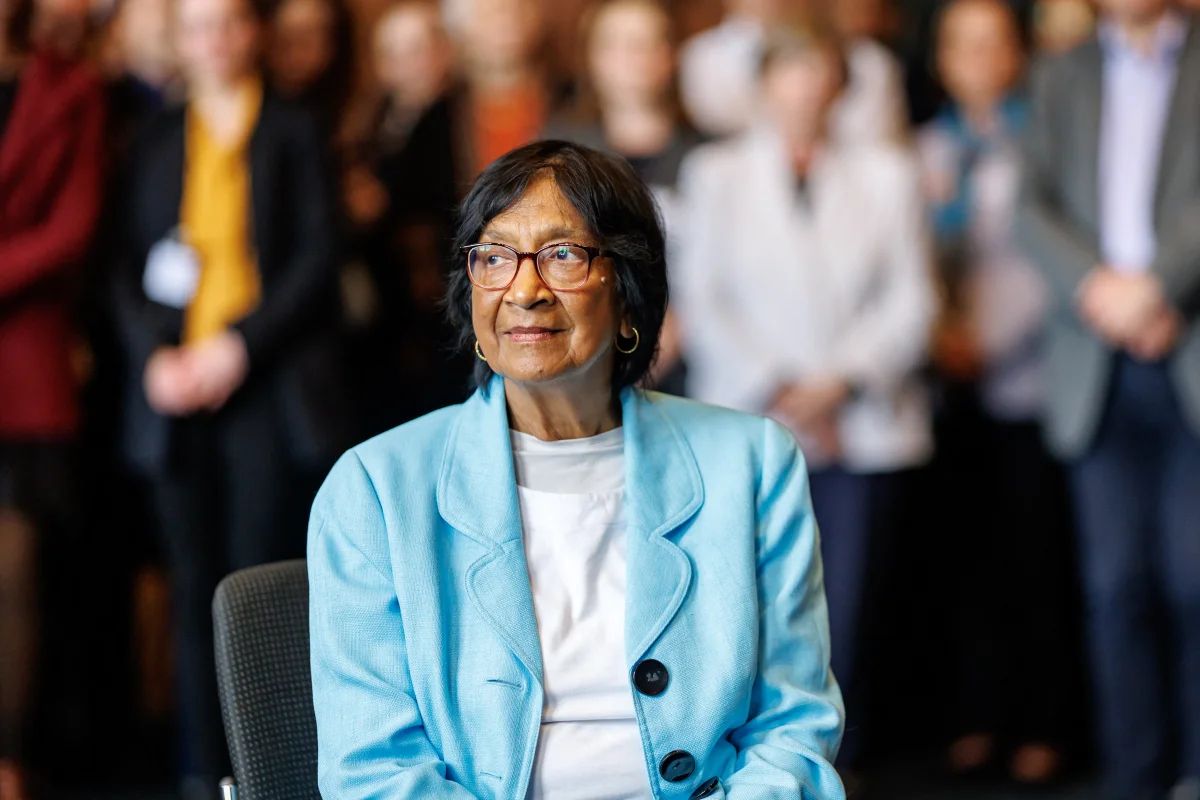
US President Donald Trump has expressed anger after the 2026 Nobel Peace Prize was awarded to South African jurist Navanethem “Navi” Pillay, a former judge of the International Criminal Court (ICC) and former United Nations High Commissioner for Human Rights.
Pillay, 85, received the prestigious award on Friday, October 9, in recognition of her decades-long work promoting international justice, human rights and accountability for war crimes. The decision drew international attention because of her role in global judicial institutions that have faced criticism and sanctions from the Trump administration.
Trump, who has repeatedly argued that he deserves the Nobel Peace Prize for his diplomatic efforts, criticized the Norwegian Nobel Committee after it selected Pillay instead. At a rally in Syracuse, New York, he complained that he should have received the honor and described the committee's decision as a stain on Norway. His reaction followed an announcement that placed the South African lawyer at the center of a global debate about international law, political power and the accountability of national leaders.
Why Navi Pillay won the Nobel Peace Prize
The Norwegian Nobel Committee said Pillay was recognized for her efforts to promote peace and international law, highlighting her contribution to legal institutions established to address atrocities and protect human rights. The committee's decision came amid mounting pressure on international courts and judges. It argued that the international legal system was under significant strain and that institutions responsible for prosecuting serious crimes needed support.
Pillay's career spans several decades and includes work as a lawyer in apartheid-era South Africa, where she defended activists opposing racial discrimination, including Nelson Mandela and others who challenged the apartheid system.
After South Africa's transition to democracy, she became the first non-white woman appointed to the country's High Court. She subsequently served on international judicial bodies dealing with genocide, war crimes and other serious violations of international law.
The Nobel Committee said her work demonstrated the importance of ensuring that individuals responsible for grave international crimes can be held accountable, regardless of their political position or power.
Trump's anger over Nobel snub
Trump's reaction reflected his long-running campaign to secure recognition for what he describes as his contribution to global peace.
Speaking at a political rally in New York on the day of the announcement, the US president criticized the Nobel Committee for overlooking him and argued that his diplomatic record deserved recognition.
He has repeatedly claimed to have ended several international conflicts, although the extent of his role in resolving some of those disputes has been contested.
Pillay's selection was particularly sensitive for the administration because of her association with the ICC, an institution Trump has repeatedly criticized. The court issued arrest warrants for Israeli Prime Minister Benjamin Netanyahu and his former defense minister over alleged crimes connected with the Gaza war. It has also issued a warrant for Russian President Vladimir Putin over alleged war crimes relating to Russia's invasion of Ukraine.
The United States is not a member of the ICC and has opposed its jurisdiction over American citizens and certain nationals of allied countries. Trump's administration has imposed sanctions on court officials in response to investigations and actions it considers unacceptable. The Nobel announcement therefore came against the backdrop of a broader confrontation between Washington and international judicial institutions.
Pillay's controversial role in Gaza investigation
Pillay's recent work has also made her a controversial figure in the Middle East conflict. She chaired a United Nations commission of inquiry that concluded in 2025 that Israel had committed genocide in Gaza. Israel strongly rejected the finding, describing the report as biased and politically motivated.
The commission's conclusions intensified an already bitter international dispute over the conduct of the war, civilian casualties and the interpretation of international law. The Israeli government condemned the Nobel decision, arguing that the award was undeserved because of Pillay's involvement in the Gaza investigation.
Supporters of Pillay, however, viewed the award as recognition of her commitment to legal accountability and the principle that allegations of serious international crimes must be examined through established legal processes.
The distinction is important: the Nobel Committee's decision recognized Pillay's wider career and work on international law, rather than constituting a separate judicial ruling on the Gaza conflict.
From apartheid-era lawyer to international jurist
Born in Durban, South Africa, in 1941 to a family of Indian Tamil origin, Pillay built her legal career during a period when apartheid imposed severe restrictions on the rights of the country's Black population and other racial groups. She became the first woman to establish a law practice in Natal in 1967 and later represented people affected by the apartheid system.
Following the end of apartheid, she served as a judge of South Africa's High Court before moving into international judicial work. Between 1999 and 2003, Pillay served as a judge and president of the International Criminal Tribunal for Rwanda, which prosecuted individuals responsible for crimes committed during the 1994 genocide.
She later served as a judge at the ICC from 2003 to 2008 and as UN High Commissioner for Human Rights from 2008 to 2014. Her judicial career has included cases involving genocide, sexual violence during armed conflict and the responsibility of political and military leaders for international crimes. She has also served as an ad hoc judge at the International Court of Justice in a case concerning allegations of genocide against Myanmar's Rohingya population.
Pillay dedicates award to victims of international crimes
Pillay received news of her Nobel victory while attending a legal conference in Nuremberg, Germany, a city associated with the post-Second World War trials of Nazi leaders. She dedicated the award to survivors of international crimes and the lawyers, judges and human rights defenders who work to prevent impunity.
Her remarks emphasized the obligations of world leaders to protect human rights and respect international law. South African President Cyril Ramaphosa congratulated Pillay, describing the award as a source of national pride and recognition of her contribution to justice and human rights. International legal figures and rights organizations also welcomed the decision.
The Nobel Peace Prize carries a monetary award of 12 million Swedish kronor and is scheduled to be presented in Oslo on December 10, 2026.
Nobel decision highlights global legal divisions
Pillay's victory has become more than a personal achievement. It has exposed the competing views of international justice held by governments, courts and political leaders. For supporters, the award affirms the importance of independent legal institutions and accountability for alleged atrocities. For critics, Pillay's involvement in politically sensitive investigations raises questions about the impartiality of international bodies.
Trump's reaction adds another dimension to that debate, given his administration's opposition to aspects of the ICC's work and his repeated public desire for Nobel recognition. Ultimately, the award recognises Pillay's long career in human rights and international law. The controversy surrounding it demonstrates how questions of justice, sovereignty and political influence remain deeply contested in global affairs.